




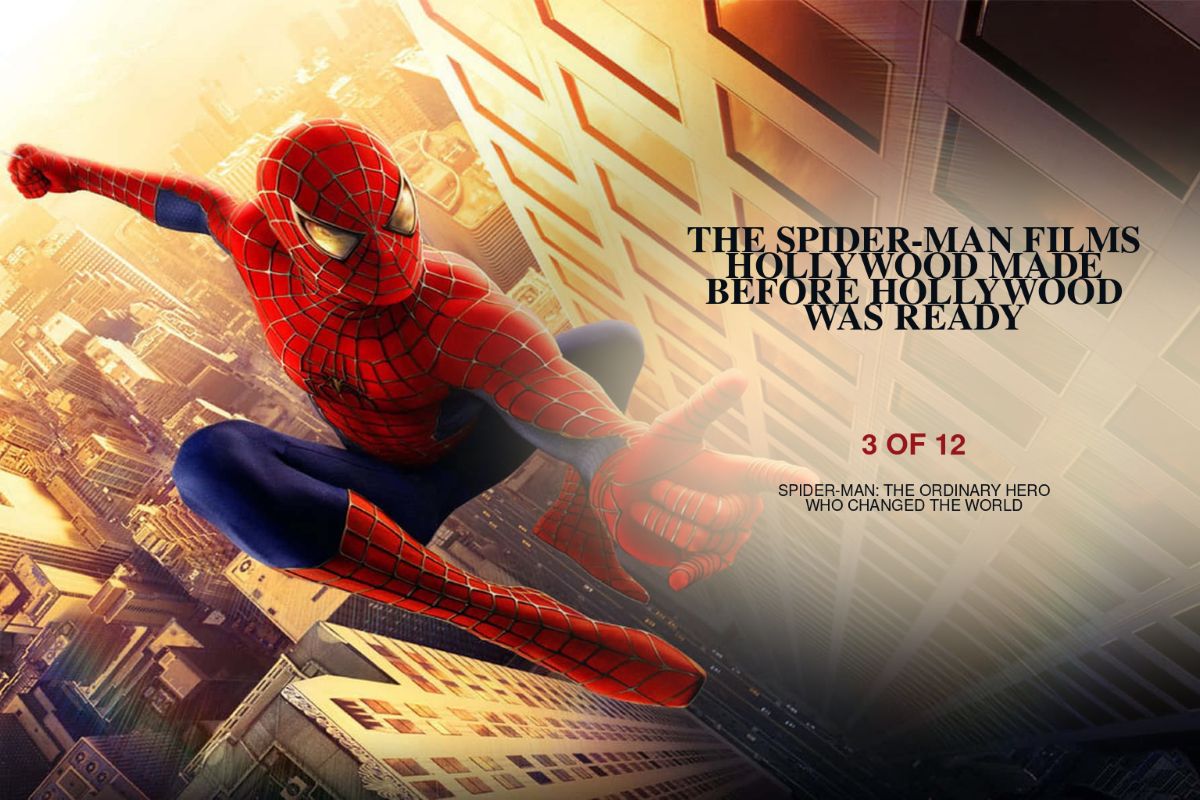
Long before Tobey Maguire appeared upside down in the rain, long before Andrew Garfield gave Peter Parker a sharper emotional volatility and long before Tom Holland carried Spider-Man into the Marvel Cinematic Universe, filmmakers were already struggling to translate Marvel’s wall-crawling superhero from the comic-book page to the screen. Spider-Man’s screen history began not with Sam Raimi’s 2002 blockbuster but with the 1967 animated television series, followed by Nicholas Hammond’s live-action The Amazing Spider-Man in 1977, Toei’s radically reinvented Japanese Spider-Man in 1978 and a succession of proposed feature films that collapsed before reaching production. These forgotten Spider-Man adaptations and abandoned movie projects reveal that Hollywood recognized the character’s commercial potential decades before it possessed the technology, financing structure or creative confidence required to realize him convincingly.
The difficulty was never simply reproducing Spider-Man’s costume or finding an actor capable of portraying Peter Parker. The deeper challenge was translating a superhero whose identity depended upon movement, interior conflict and a uniquely vertical relationship with New York City. Spider-Man could not merely stand in a studio set and deliver heroic dialogue; he had to climb walls, swing between buildings, bend his body into Steve Ditko’s improbable configurations and transform from an insecure young man into a masked figure whose physical freedom expressed everything Peter Parker could not say. Early television budgets could suggest those abilities but rarely sustain their illusion, while proposed Hollywood films repeatedly became trapped between competing rights holders, uncertain budgets and executives who did not always understand whether Spider-Man was a teenager, a monster, a children’s character or the foundation of a serious cinematic mythology.
The long road to the first major Spider-Man movie is therefore a hidden history of experimentation, compromise and failure, stretching from limited television animation to Nicholas Hammond’s practical stunts, from Japan’s giant robot Leopardon to Cannon Films’ extraordinary misunderstanding of the character and James Cameron’s darker, unrealized vision. What follows examines how each attempt solved one part of the Spider-Man problem while exposing another, why some of the strangest adaptations were also among the most creatively influential, and how decades of unsuccessful development quietly taught Hollywood what Sam Raimi’s eventual film would need in order to make audiences believe that a lonely young man could leave the pavement, take hold of a web and finally swing.


Unlock the Entire Empowering Entertainment Library
This article is only the beginning.
Become a member and enjoy unlimited access to every premium magazine article, expert interviews, in-depth features, practical guides, and a growing digital library of hundreds of books covering business, entrepreneurship, film production, personal growth, health, relationships, AI, ADHD, and much more.
One membership. Hundreds of resources. New content added every week.