





Or the Beginning of a More Strategic, Hybrid Cinema
A Radical Shift Is No Longer Theoretical
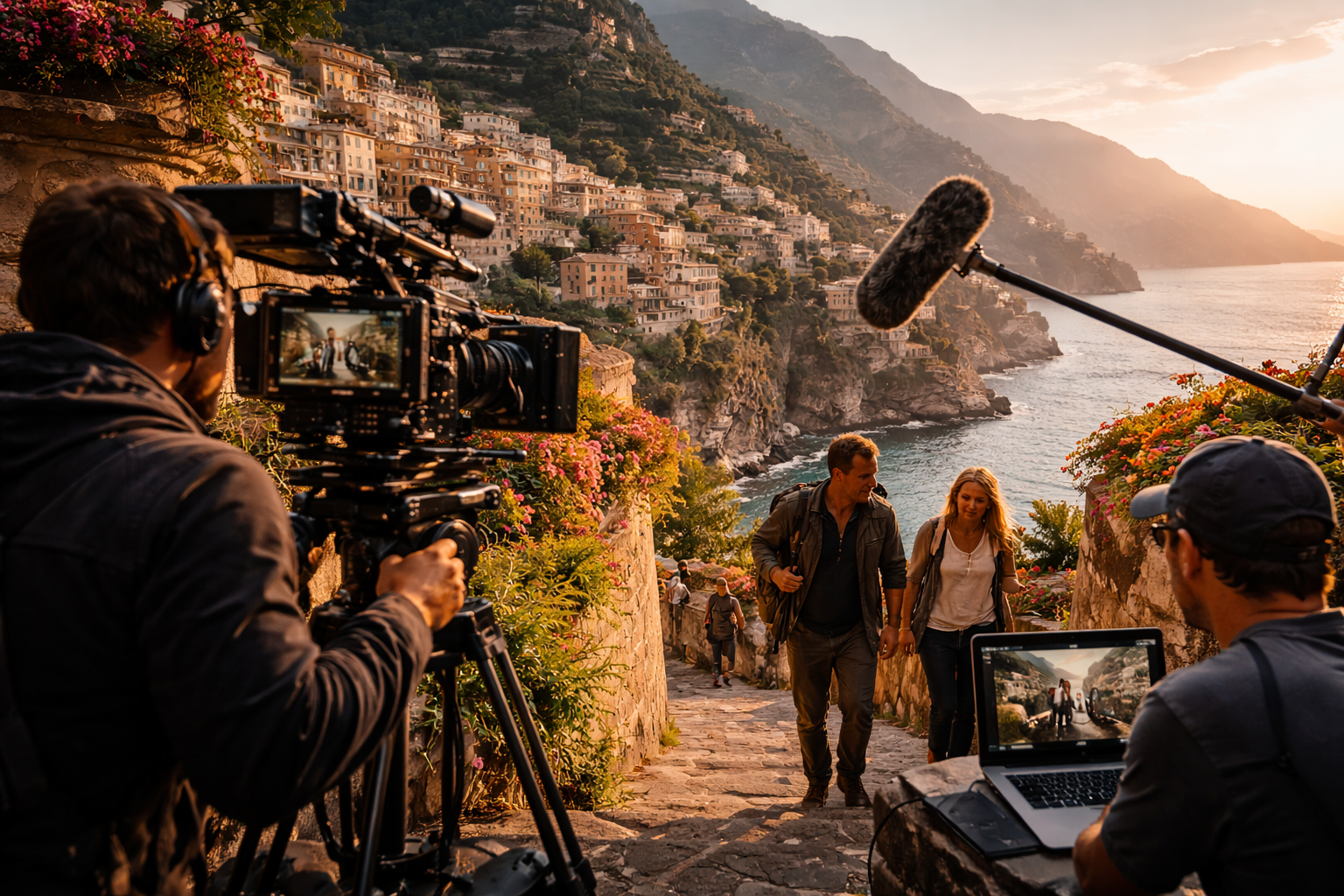
For decades, shooting on location has been one of the defining pillars of cinematic storytelling. Entire productions have been built around geography—cities chosen for their texture, landscapes selected for their emotional weight, and budgets structured around the logistical reality of moving cast, crew, and equipment across the world.
That foundation is now being challenged in a way the industry has never experienced before.
This is no longer about green screens or visual effects enhancements layered onto real environments. What is emerging is something far more disruptive: films being produced with no physical locations at all. Not as an experiment, not as a low-budget workaround, but as a fully financed, high-level production model backed by established directors, recognized actors, and institutional capital.
When a director known for large-scale, location-driven films makes the decision to eliminate physical environments entirely, it signals something critical. This is not a fringe movement. It is a strategic exploration of a new production architecture.


Unlock the Entire Empowering Entertainment Library
This article is only the beginning.
Become a member and enjoy unlimited access to every premium magazine article, expert interviews, in-depth features, practical guides, and a growing digital library of hundreds of books covering business, entrepreneurship, film production, personal growth, health, relationships, AI, ADHD, and much more.
One membership. Hundreds of resources. New content added every week.