





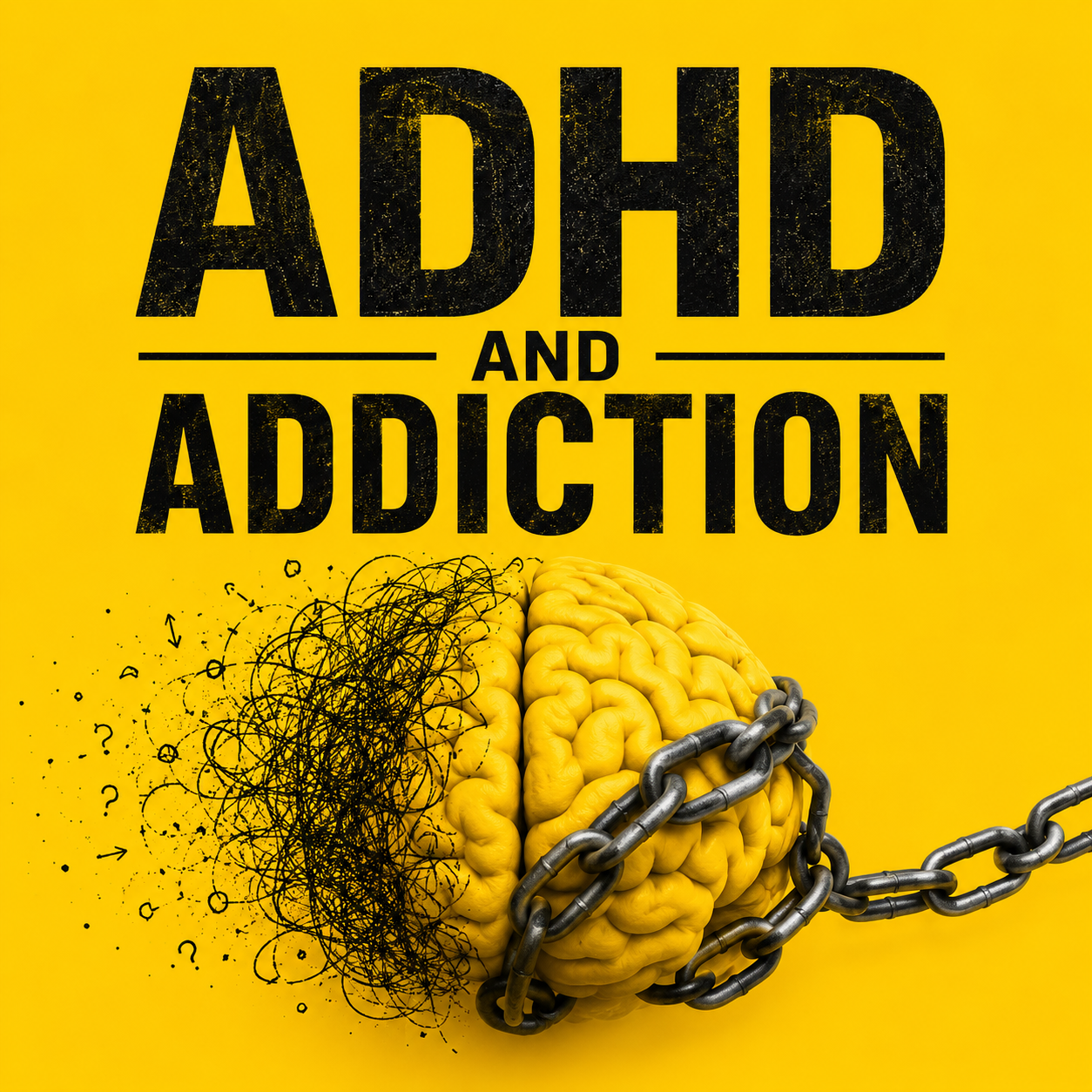
vADHD AND ADDICTIONWhy So Many Brilliant, Capable People Quietly Struggle With Compulsive Behaviors They Cannot Seem to Control
There is a conversation happening quietly behind closed doors in millions of homes, offices, cars, and exhausted late-night Google searches that almost nobody is talking about honestly enough. It is not simply about addiction. It is about the strange, relentless internal restlessness that so many people with ADHD carry through life without understanding what they are actually experiencing. It is the feeling of needing something constantly — stimulation, urgency, intensity, escape, novelty, relief, emotional comfort, dopamine, distraction, movement, validation, noise, chaos, sugar, alcohol, shopping, scrolling, gambling, sex, binge-watching, emotional drama, work obsession, over-exercising, emotional attachment, or endless productivity cycles that eventually collapse into exhaustion. For many adults with ADHD, addiction does not always look like a stereotypical rock-bottom crisis. Sometimes it looks like a high-functioning woman drinking wine every night to quiet her racing brain. Sometimes it looks like a successful entrepreneur who cannot stop doom-scrolling until three in the morning despite being completely exhausted. Sometimes it looks like emotional dependency in relationships, compulsive online spending, binge eating, chronic overworking, or the inability to tolerate silence for even a few minutes. What makes ADHD-related addiction uniquely painful is that many people do not recognize they are self-medicating at all. They simply believe they are weak, lazy, impulsive, undisciplined, emotionally unstable, or “bad at life,” when in reality their nervous system has been searching for regulation and stimulation for decades.
What many people do not realize is that ADHD is not merely an attention problem. It is fundamentally a regulation disorder involving dopamine, impulse control, emotional intensity, reward anticipation, executive functioning, and nervous system stimulation. This changes everything about how addictive behaviors develop. The ADHD brain is often chronically under-stimulated in ordinary life, which means it unconsciously searches for experiences that create emotional activation, novelty, urgency, or immediate reward. This is one of the reasons people with ADHD are statistically far more vulnerable to substance abuse, binge behaviors, compulsive habits, risky decision-making, emotional dependency, and behavioral addictions that can quietly take over entire lives before anyone notices what is truly happening underneath the surface. The tragedy is that many intelligent, capable adults spend years trying to “fix” their willpower while never understanding the neurological hunger driving the behavior in the first place. They punish themselves endlessly for lacking consistency while living inside a brain wired to crave stimulation with extraordinary intensity. This creates a devastating cycle of shame. The person engages in compulsive behavior to regulate discomfort, briefly experiences relief or pleasure, then crashes emotionally afterward and begins criticizing themselves harshly for not having more control. That shame then creates more emotional pain, which increases the need for escape or stimulation again. Over time, the addiction itself becomes less about pleasure and more about survival, regulation, emotional anesthesia, and temporary relief from an overwhelmed nervous system that never truly feels at rest.
The most dangerous part of ADHD-related addiction is that it often hides behind socially acceptable behaviors long enough to avoid detection for years. Some people become addicted to achievement and external validation because accomplishment temporarily floods the brain with dopamine. Others become trapped in toxic relationships because emotional intensity feels neurologically stimulating in ways calm stability does not. Some cycle through hyperfixations, overspending, crash dieting, compulsive productivity, pornography, shopping, gaming, social media, or binge eating without ever connecting the pattern back to ADHD itself. Many women in particular are profoundly misdiagnosed because their addiction patterns appear emotional rather than externally destructive. Instead of visible recklessness, they internalize the chaos. They become overwhelmed perfectionists. Chronic people pleasers. Emotional caretakers. Secret emotional eaters. Burned-out overachievers. Women who appear successful on the outside while privately feeling incapable of controlling their own minds. What makes this conversation so important right now is that more experts are beginning to understand that addiction in ADHD is often less about morality and more about nervous system desperation. Beneath many compulsive behaviors lies an exhausted brain trying to create regulation the only way it knows how. And once you begin to understand that connection, an entirely different path toward healing becomes possible — one rooted not in shame, punishment, or self-hatred, but in understanding how the ADHD brain actually works, why traditional advice often fails, and what truly helps people finally break free from cycles they once believed would control them forever.


Unlock the Entire Empowering Entertainment Library
This article is only the beginning.
Become a member and enjoy unlimited access to every premium magazine article, expert interviews, in-depth features, practical guides, and a growing digital library of hundreds of books covering business, entrepreneurship, film production, personal growth, health, relationships, AI, ADHD, and much more.
One membership. Hundreds of resources. New content added every week.