

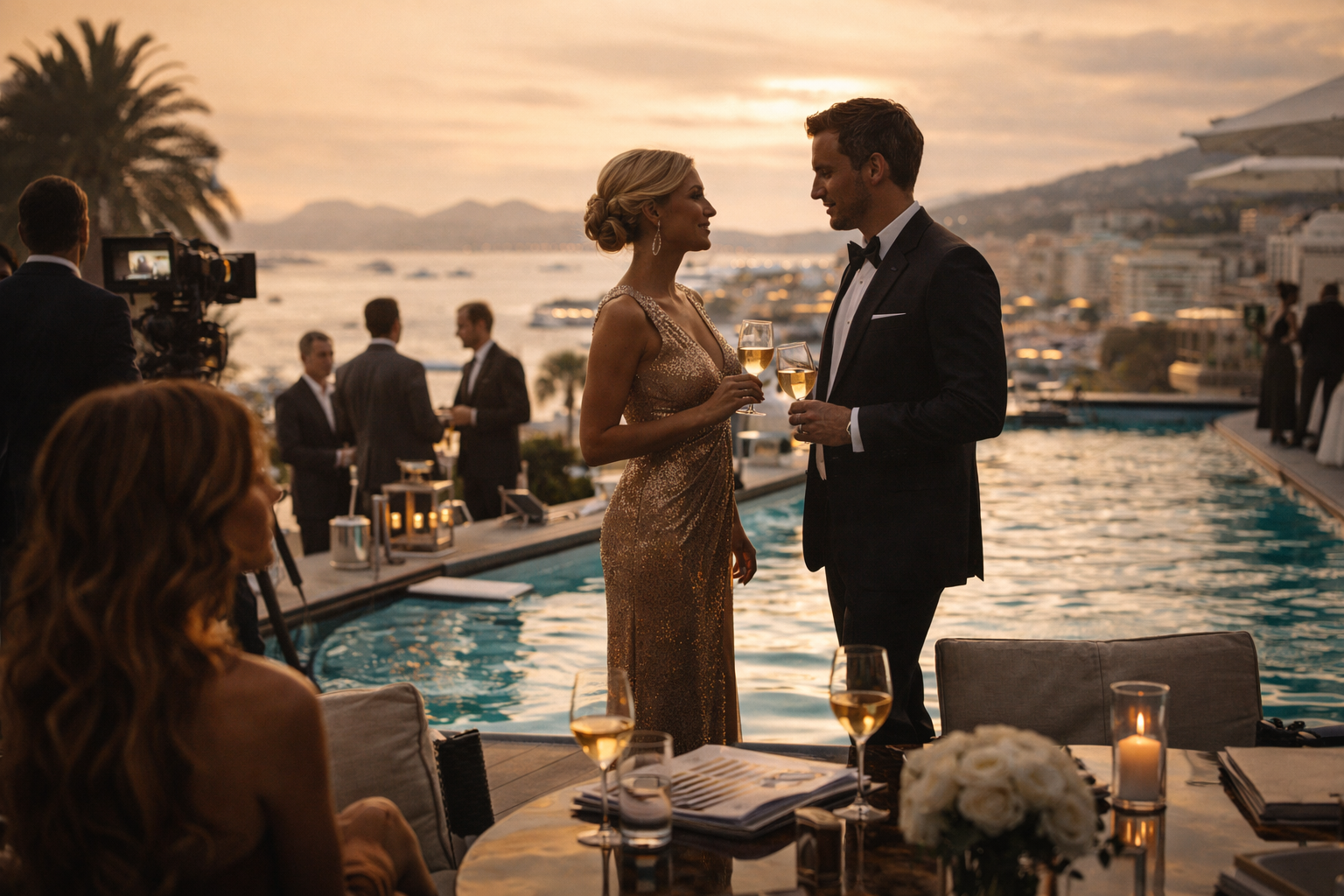
The film industry is often perceived through the lens of premieres, red carpets, and global recognition, yet what remains less visible is the lifestyle that surrounds and sustains it. Beyond the public moments lies a world defined by access, relationships, and environments that shape both creative decisions and business outcomes.
This lifestyle is not merely about luxury in the conventional sense; it is about proximity to opportunity. The spaces where industry professionals meet—private events, exclusive gatherings, high-end hotels, and international festivals—are not incidental. They are carefully curated environments where conversations lead to collaborations, and where projects begin to take form long before they are officially announced.
Travel plays a central role in this dynamic. From Cannes to Venice, from Los Angeles to emerging European hubs, the movement between locations reflects the global nature of the industry. Each destination brings its own network, its own opportunities, and its own influence on the types of projects that emerge. In this sense, lifestyle becomes intertwined with strategy, as being present in the right place at the right time can significantly impact a project’s trajectory.
At the same time, the aesthetic dimension of the industry cannot be ignored. Fashion, design, and visual identity contribute to how individuals and projects are perceived. They signal positioning, taste, and alignment with certain segments of the market. In a field where perception often precedes evaluation, these elements become part of the broader narrative that surrounds both people and projects.
Understanding this lifestyle is not about imitation, but about awareness. It reveals that the film industry operates within a larger ecosystem where influence, environment, and access are as important as talent. Those who recognize this are better positioned to navigate it, not only creatively, but strategically.
