





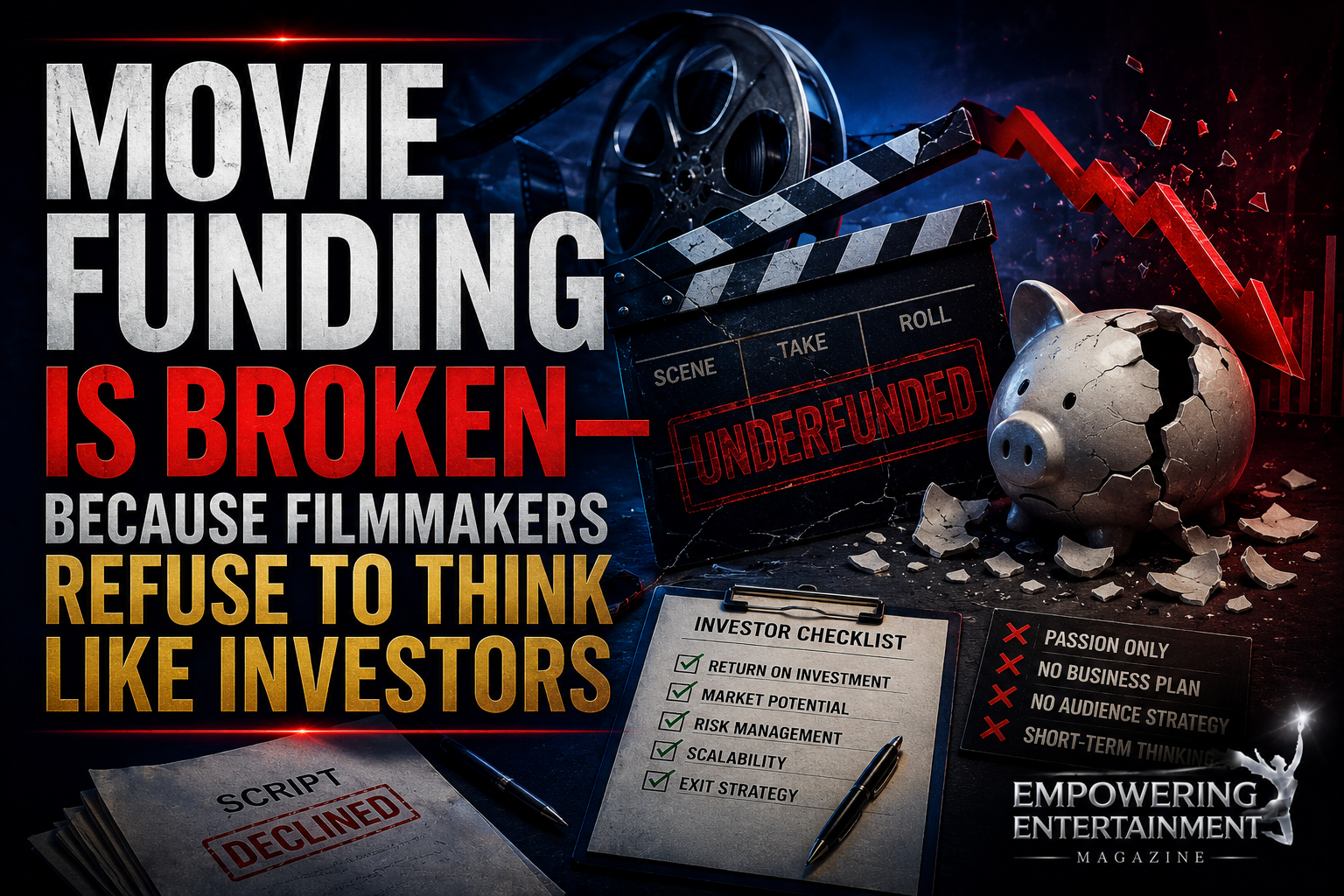
There is a persistent narrative within the film industry that financing has become increasingly difficult because capital is scarce. It is a convenient explanation, often repeated, and rarely questioned. Yet it is fundamentally inaccurate. Capital has not disappeared. On the contrary, there is a significant amount of capital actively searching for opportunities that offer a combination of yield, controlled risk, and long-term value creation. What has changed is not the availability of money, but the tolerance of those who control it.
Investors today operate with a level of discipline that has evolved considerably over the past decade. They are no longer evaluating opportunities based on enthusiasm or cultural significance alone. They are assessing how risk is structured, how capital is protected, and how value behaves beyond the initial deployment. In contrast, much of the film industry continues to operate within a framework that has not adapted to this shift. It relies on assumptions that were once acceptable but are increasingly misaligned with how capital is now allocated. This divergence is where the true disconnect begins.
A Model Still Designed Around Passion Rather Than Performance
Independent film projects are still frequently presented in a manner that prioritizes creative ambition while leaving financial logic underdeveloped. From a creative standpoint, this approach is understandable, even admirable. From a capital perspective, it introduces a level of uncertainty that is difficult to justify.
What investors are often shown is a structure with no meaningful asset backing, minimal downside protection, and a reliance on box office performance or distribution success as the primary mechanism for return. There is rarely a clearly defined bridge that supports the project financially if performance underdelivers, and even less consideration is given to how the intellectual property might continue to generate value once the initial release cycle has ended. The project may be compelling, even exceptional, but the framework in which it is presented does not meet the threshold required for disciplined capital allocation.
This is not a failure of creativity. It is a failure of structure.
The Real Obstacle Is Not Risk—It Is the Absence of Risk Management
It is often assumed that investors hesitate because film is inherently risky. This assumption simplifies the issue to the point of inaccuracy. Capital does not inherently reject risk. In many cases, it actively seeks it, provided that the risk is intentional, measurable, and accompanied by mechanisms that limit exposure where possible.
What capital avoids is ambiguity.


Unlock the Entire Empowering Entertainment Library
This article is only the beginning.
Become a member and enjoy unlimited access to every premium magazine article, expert interviews, in-depth features, practical guides, and a growing digital library of hundreds of books covering business, entrepreneurship, film production, personal growth, health, relationships, AI, ADHD, and much more.
One membership. Hundreds of resources. New content added every week.