






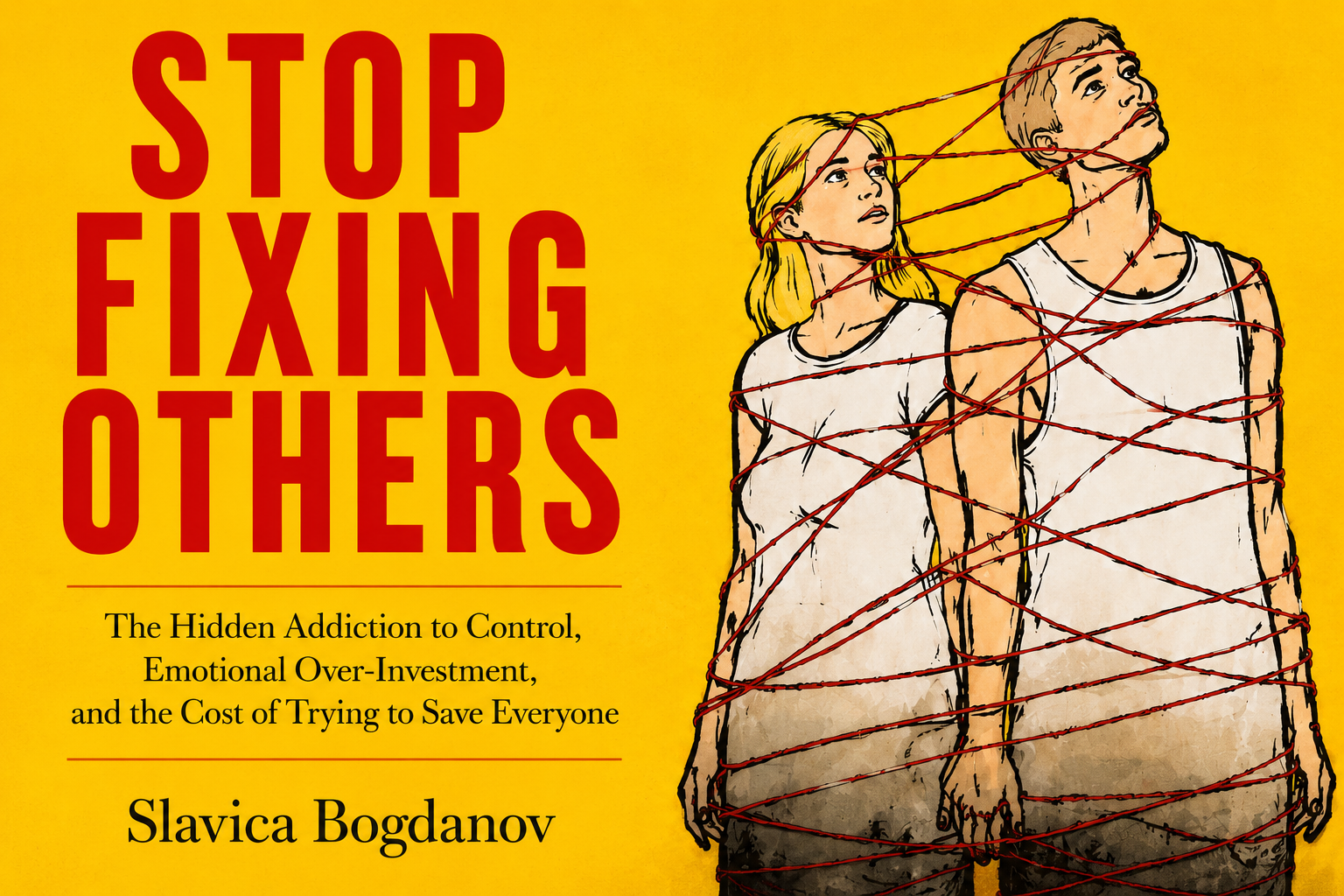
The Hidden Psychological Burden of Over-Responsibility, Chronic Helping, Emotional Carrying, and the Need to Fix Other People’s Lives
There is a particular form of emotional exhaustion that develops slowly over time in the lives of many women, not because they lack strength, resilience, generosity, or emotional intelligence, but precisely because they possess these qualities so deeply that they gradually become psychologically overextended by the needs, emotions, struggles, and dysfunction of everyone around them. It often begins innocently, even admirably, through caregiving, emotional support, reliability, empathy, and the desire to help people suffer less. Over time, however, what initially appears as compassion frequently evolves into chronic over-responsibility, emotional enmeshment, and an exhausting pattern in which a woman no longer simply cares about the people she loves, but unconsciously begins carrying them psychologically as though their stability, happiness, choices, emotions, and outcomes are somehow her responsibility to manage.
For many individuals trapped inside this dynamic, the pattern becomes so normalized that it is rarely recognized as unhealthy. They become the person everyone depends on, the emotional stabilizer inside relationships, the one who anticipates problems before they happen, the one who offers solutions nobody follows, the one who absorbs emotional tension in order to keep peace, and the one who continuously sacrifices personal energy, time, emotional bandwidth, and even identity in an attempt to prevent others from struggling, failing, suffering, or making destructive choices. What begins as support gradually becomes emotional ownership. What begins as helping quietly transforms into psychological over-functioning. And eventually, caring itself becomes indistinguishable from carrying.
One of the reasons this pattern becomes so psychologically consuming is because many women are conditioned from an early age to associate their worth with usefulness, emotional labor, caretaking, harmony preservation, and relational responsibility. Being needed often becomes intertwined with identity itself. Approval, love, connection, and even safety may unconsciously become linked to being reliable, accommodating, emotionally available, self-sacrificing, and perpetually supportive regardless of personal cost. Over time, this conditioning creates a nervous system that feels more comfortable managing other people’s lives than fully inhabiting its own.
What makes this particularly dangerous is that chronic helping frequently disguises itself as virtue while quietly producing resentment, depletion, anxiety, emotional burnout, and loss of self underneath the surface. Many women become so consumed by monitoring the needs, emotions, crises, and decisions of others that they gradually disconnect from their own desires, boundaries, goals, health, peace, and long-term emotional well-being. Entire lives begin revolving around emotional management rather than authentic living.
The psychological mechanisms behind this pattern are far more complex than simple kindness alone. In many cases, chronic rescuing behaviors are deeply connected to fear: fear of rejection, fear of abandonment, fear of conflict, fear of disapproval, fear of watching people struggle, fear of being perceived as selfish, and sometimes even fear of no longer knowing who one is if not needed constantly by others. Helping can therefore become emotionally addictive because it creates temporary feelings of control, relevance, purpose, security, or relational stability, even while simultaneously exhausting the person providing the help.
This is why many individuals who over-function inside relationships experience profound discomfort when they attempt to step back emotionally. Boundaries often feel unnatural, guilty, selfish, or even dangerous because the nervous system has been conditioned to associate over-involvement with love itself. Allowing adults to experience the natural consequences of their own choices can therefore trigger enormous anxiety, not because the individual consciously wants control, but because emotional responsibility has become psychologically fused with attachment and care.
Yet one of the most important distinctions this dynamic requires is understanding the profound difference between supporting someone and psychologically rescuing them. Support respects another adult’s autonomy, responsibility, and ability to navigate their own life. Rescuing, even when well-intentioned, often interferes with that process by unconsciously assuming responsibility for outcomes that ultimately do not belong to us. In many cases, over-helping prevents growth rather than creating it, because individuals are denied the opportunity to fully experience accountability, discomfort, self-awareness, decision-making, or emotional consequence independently.
This is also why chronic fixing behaviors so often destroy personal peace. The nervous system becomes permanently externally focused, hypervigilant, emotionally entangled, and psychologically overstimulated by variables it cannot actually control. Mental energy becomes consumed by analyzing other people’s choices, predicting potential crises, rehearsing conversations, offering solutions, managing emotions, preventing discomfort, and carrying invisible emotional weight that was never meant to belong to one person in the first place.
Over time, this creates profound internal depletion because emotional energy is continuously exported outward while very little is retained internally for personal restoration, identity development, creativity, fulfillment, joy, or long-term self-preservation. Many women eventually arrive at a painful realization that despite spending years taking care of everyone else emotionally, they no longer recognize their own needs, desires, or sense of self separate from the role of helper, fixer, caretaker, or emotional manager.
Learning to stop fixing others is therefore not about becoming cold, detached, selfish, indifferent, or emotionally unavailable. It is about restoring healthy psychological separation between compassion and responsibility. It is about learning how to care deeply without absorbing ownership over another adult’s life, choices, emotions, or consequences. It is about recognizing that love does not require self-erasure, that support does not require emotional collapse, and that healthy relationships cannot be built upon chronic over-functioning disguised as devotion.
Most importantly, it is about reclaiming the emotional space required to finally begin living a life that is not organized entirely around preventing discomfort for everyone else.
Because eventually, many women discover that the greatest exhaustion in their life did not come from caring too much.
It came from carrying what was never theirs to carry in the first place.


