





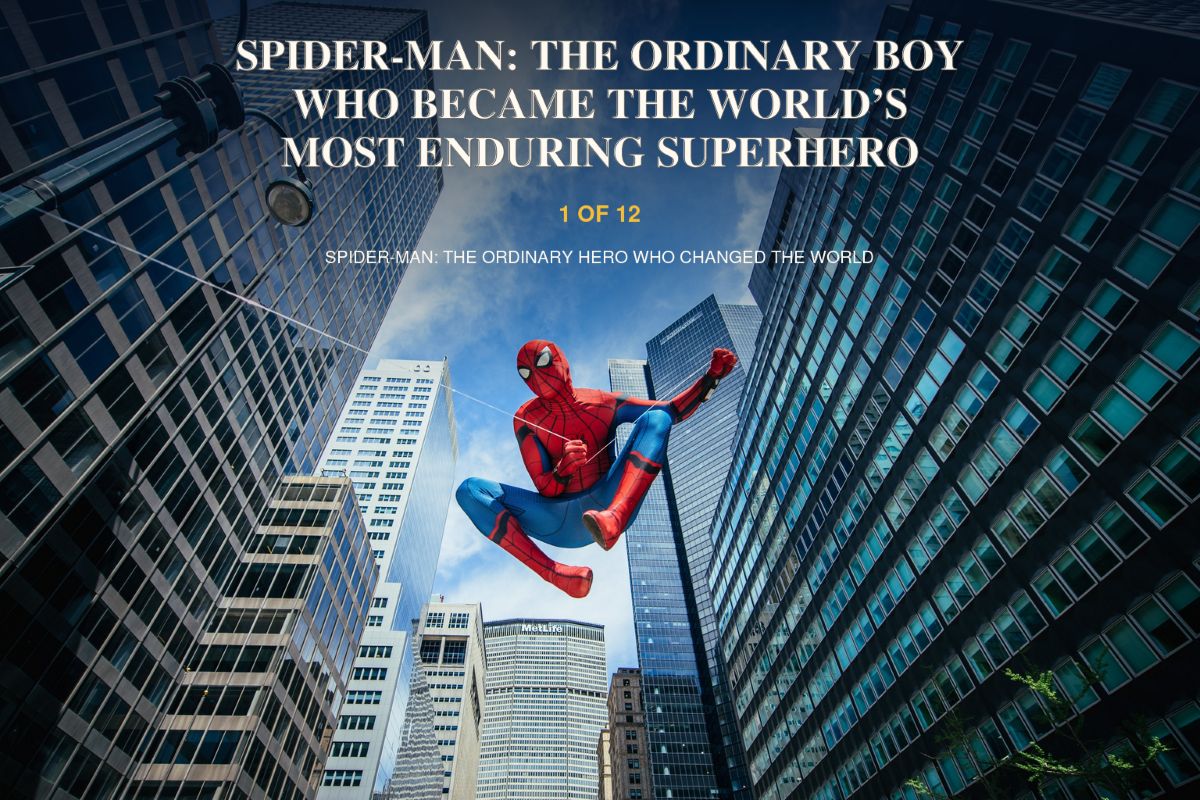
When Spider-Man first appeared in Marvel Comics’ Amazing Fantasy No. 15 in August 1962, he entered a superhero landscape largely populated by powerful adults who seemed to have arrived in the world already equipped for greatness. Superman possessed the confidence and physical authority of a mythic savior; Batman transformed inherited wealth and personal discipline into an almost sovereign form of control; and the established heroes of the period generally inhabited identities toward which young readers could aspire but within which they could not yet recognize themselves. Peter Parker represented something radically different. Created by writer Stan Lee and artist Steve Ditko, he was not introduced as a commanding figure temporarily disguised as an ordinary person, but as an ordinary person upon whom extraordinary power had been unexpectedly imposed. He was shy, intellectually gifted, socially excluded, financially insecure and painfully conscious of everything he appeared to lack. Spider-Man did not invite readers simply to imagine possessing superhuman abilities; he invited them to wonder whether power could compensate for the private conviction that they were not enough.
More than six decades later, Spider-Man has become one of the most recognizable and commercially successful superheroes in popular culture, moving from Marvel comic books into animated television, video games, merchandise and a succession of blockbuster Spider-Man movies starring Tobey Maguire, Andrew Garfield and Tom Holland. Yet the durability of the character cannot be explained by costume, spectacle or franchise engineering alone. Beneath the radioactive spider bite, the web-swinging and the mythology of villains such as the Green Goblin, Doctor Octopus and Venom lies a profoundly human drama about guilt, responsibility, loneliness, ambition and the unstable passage from adolescence into adulthood. Peter Parker’s defining struggle has never been whether he can defeat someone stronger than himself; it is whether he can carry obligations that continually exceed his emotional, financial and psychological resources without losing the humane qualities that made the power worth possessing in the first place.
The history of Spider-Man is therefore also the history of a major cultural reversal: the transformation of vulnerability from a disqualification for heroism into its deepest source. To understand why Peter Parker has survived changing generations, competing film studios, multiple cinematic reboots and radically different visions of masculinity, we must look beyond the familiar origin story and examine the psychological architecture Stan Lee and Steve Ditko constructed inside it. The rest of this article explores how social rejection shaped Peter’s earliest choices, why Uncle Ben’s death created a moral identity founded upon guilt, how economic precarity distinguishes Spider-Man from almost every other major superhero, and why audiences continue returning to a character whose greatest fantasy is not that he can climb walls, but that an imperfect person might still become worthy of the power placed in his hands.


Unlock the Entire Empowering Entertainment Library
This article is only the beginning.
Become a member and enjoy unlimited access to every premium magazine article, expert interviews, in-depth features, practical guides, and a growing digital library of hundreds of books covering business, entrepreneurship, film production, personal growth, health, relationships, AI, ADHD, and much more.
One membership. Hundreds of resources. New content added every week.