

The Quiet Physical Changes Many Women Notice Long Before They Speak About Them
There is a particular kind of physical exhaustion many women begin noticing after the age of 60 that often goes unspoken because it develops gradually rather than dramatically. It does not usually arrive through a single health crisis or medical emergency. Instead, it reveals itself quietly through ordinary moments that begin feeling unexpectedly difficult. Standing up from a low chair suddenly requires effort. Carrying grocery bags feels heavier than it once did. Walking upstairs creates fatigue faster than before. Balance feels less stable in crowded spaces, uneven parking lots, or unfamiliar environments. Even posture begins changing subtly over time, often without immediate awareness.
Many women initially assume these changes are simply an unavoidable part of aging. They adapt silently. They move more cautiously. They stop doing certain activities without consciously acknowledging why. Over time, confidence in the body slowly begins to erode, not because the body has failed completely, but because strength, coordination, stability, and muscular endurance have gradually declined beneath the surface for years.
What many people do not realize is that one of the primary causes behind this decline is not aging itself, but progressive muscle loss, a condition known medically as sarcopenia. After the age of 60, the body naturally begins losing muscle mass more rapidly, especially in women after menopause. This loss affects far more than appearance or athletic ability. Muscle is directly connected to balance, mobility, joint protection, bone support, posture, energy production, and the ability to perform everyday movements safely and independently.
The consequences of this decline can become significant over time. Reduced muscular strength often contributes to instability, slower reaction time, fatigue, increased fall risk, joint discomfort, and growing hesitation around movement itself. Many women begin limiting activities not because they want to, but because the body no longer feels as reliable as it once did. What begins as subtle caution can eventually transform into a much smaller lifestyle physically, socially, and emotionally.
Yet one of the most encouraging discoveries in modern healthy aging research is that the body remains remarkably adaptable later in life. Strength can still be rebuilt after 60. Stability can improve. Balance can be restored. Mobility can increase significantly when the body is trained safely and consistently through properly designed resistance and strength exercises.
This is precisely why strength training has become one of the most important subjects in healthy aging for women today.
For decades, fitness culture largely focused on younger bodies, aesthetic goals, aggressive workouts, and unrealistic physical expectations that left many older women feeling disconnected from exercise entirely. Traditional gym culture often failed to address what women over 60 actually need most: functional strength, joint protection, improved balance, safer movement patterns, sustainable energy, and the preservation of long-term independence.
What makes strength training so powerful later in life is that its benefits extend far beyond exercise itself. Proper strength training supports nearly every system associated with healthy aging. It helps improve posture by strengthening the muscles that stabilize the spine and shoulders. It supports bone density, which becomes increasingly important after menopause. It improves walking stability and coordination, reducing fall risk significantly. It helps protect joints by strengthening the surrounding musculature that supports movement mechanics. It also contributes to circulation, metabolic health, confidence, mobility, and overall vitality.
Perhaps even more importantly, strength training changes the psychological relationship many women have with aging itself.
There is a profound emotional difference between feeling physically fragile and feeling physically capable. Women who begin rebuilding strength often describe not only physical improvements, but a growing sense of confidence in their own body again. Everyday movements become less intimidating. Fatigue decreases. Walking feels steadier. Carrying, lifting, bending, and moving through daily life begins requiring less fear and hesitation.
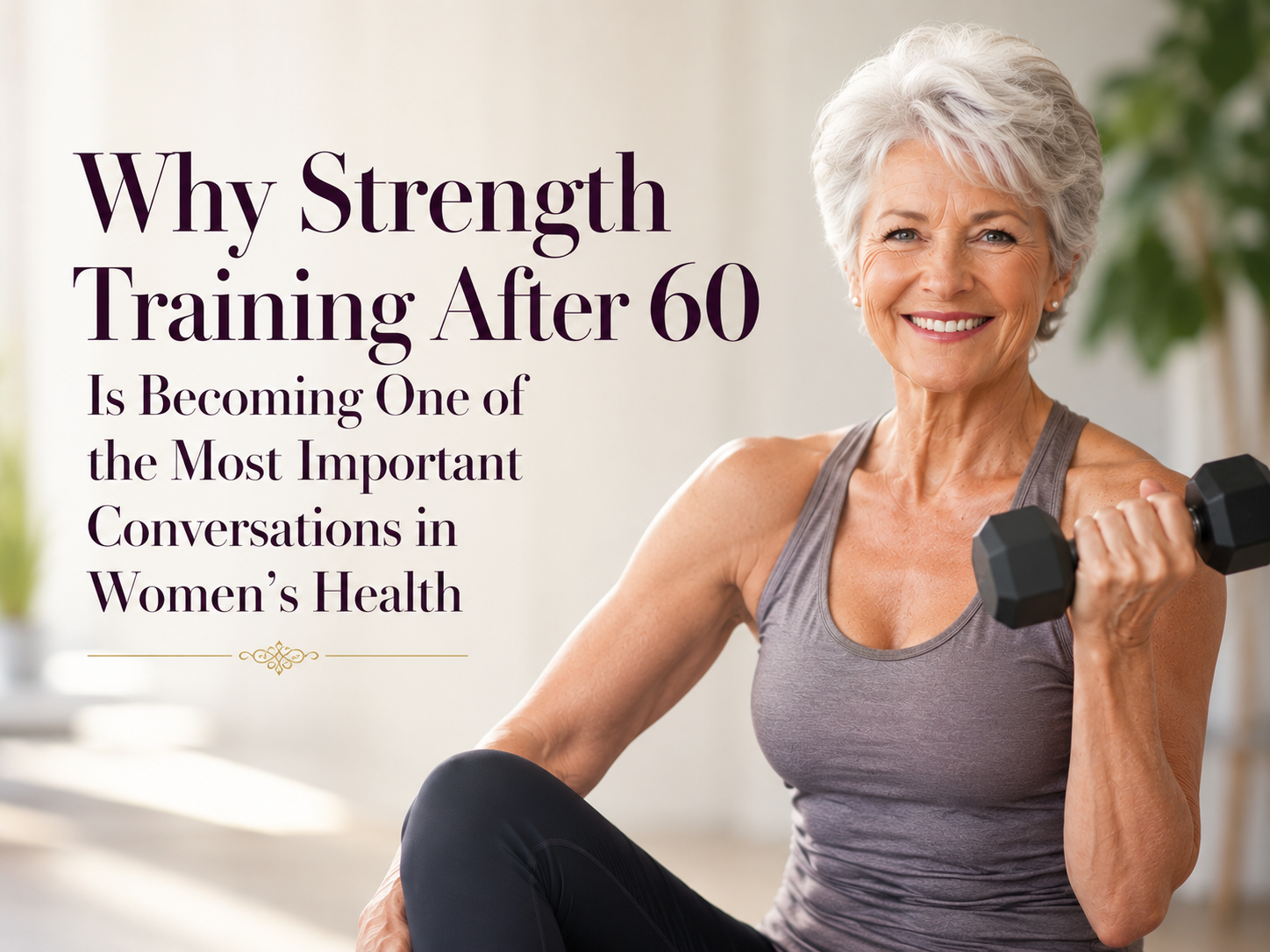
Contrary to common misconceptions, rebuilding strength after 60 does not require punishing workouts, heavy athletic lifting, or intimidating gym environments. Some of the most effective exercises for older adults are intentionally simple, controlled, and low impact. Light dumbbells, resistance bands, chairs, or body-weight exercises performed consistently and correctly can create substantial improvements in muscular endurance, coordination, and balance over time.
What matters most is not intensity, but consistency and intelligent progression.
The body responds remarkably well to gradual resistance training even later in life because muscle tissue remains responsive to stimulation regardless of age. Women who have never exercised before can still experience meaningful changes in posture, stability, mobility, and physical confidence when exercises are adapted appropriately to their starting point and physical condition.
A properly structured strength program for women over 60 is therefore not about chasing unrealistic fitness ideals. It is about preserving freedom of movement and quality of life for the decades ahead. It is about maintaining the ability to travel comfortably, move independently, enjoy grandchildren, navigate daily routines confidently, and continue participating fully in life without unnecessary physical limitation.
Healthy aging is not simply about adding more years to life. For many women, it is equally about protecting the ability to continue living well within those years.
That is why strength training after 60 is no longer viewed merely as exercise. Increasingly, it is being recognized as one of the most important long-term investments a woman can make in her future independence, mobility, confidence, and overall well-being.
READ MORE HERE
