




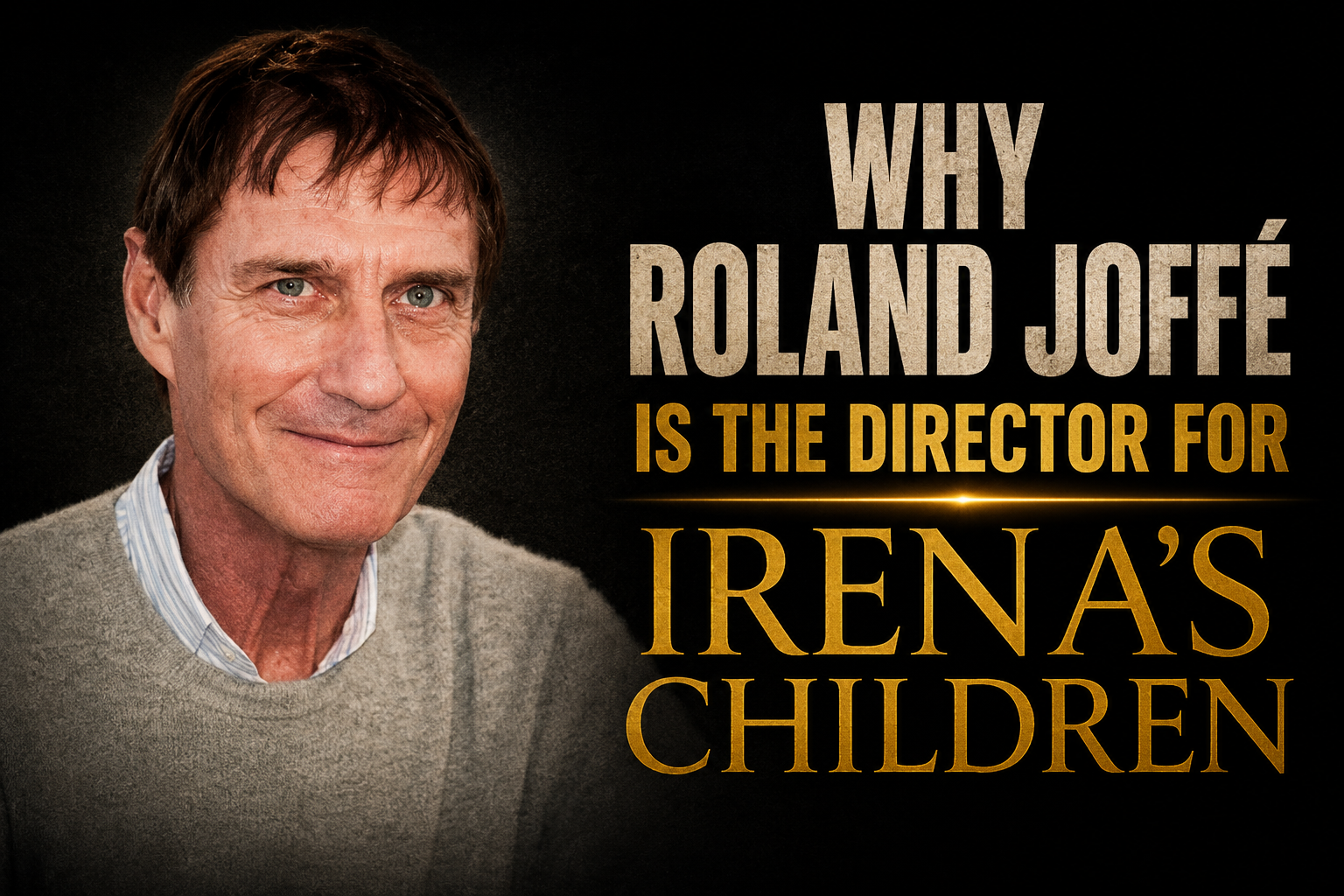
Some filmmakers approach history through spectacle; Roland Joffé has built his most important work around something considerably more difficult: the moral experience of individuals caught inside history when political systems become violent, institutions abandon conscience and ordinary human beings are forced to decide what they are willing to protect. From The Killing Fields to The Mission, his most celebrated films have demonstrated that historical cinema becomes truly powerful not when audiences are simply shown the magnitude of an event, but when they are brought close enough to understand what that event demanded from the people who lived through it. That sensibility makes his attachment to Irena’s Children, the historical drama centered on Irena Sendler and the rescue of Jewish children in Nazi-occupied Warsaw, an unusually compelling meeting of filmmaker and material.
The connection extends far beyond Joffé’s prestige as a filmmaker. His career includes two Academy Award nominations for Best Director, while The Mission received the Palme d’Or at Cannes, but awards alone cannot explain why this particular project feels so closely aligned with the strongest themes of his work. Irena’s Children is ultimately a story about conscience under pressure, the preservation of humanity inside a system organized around dehumanization, and the extraordinary consequences of individual choices made when no safe choice remains. Those are precisely the questions that Joffé has explored at his best, and they provide the foundation for a historical drama capable of being both sweeping in significance and profoundly intimate in execution.
JOIN FOR FREE
Sign up to Hundreds of resources. New content added every week.
PLUS access to our MOVIE CHANNEL
One free account. Unlimited articles and movies. No credit card required.

Already a member? LOGIN HERE
