




The U.S. Through the Movies: 13 Iconic Filming Locations You Can Actually Visit
Week 4 of 12
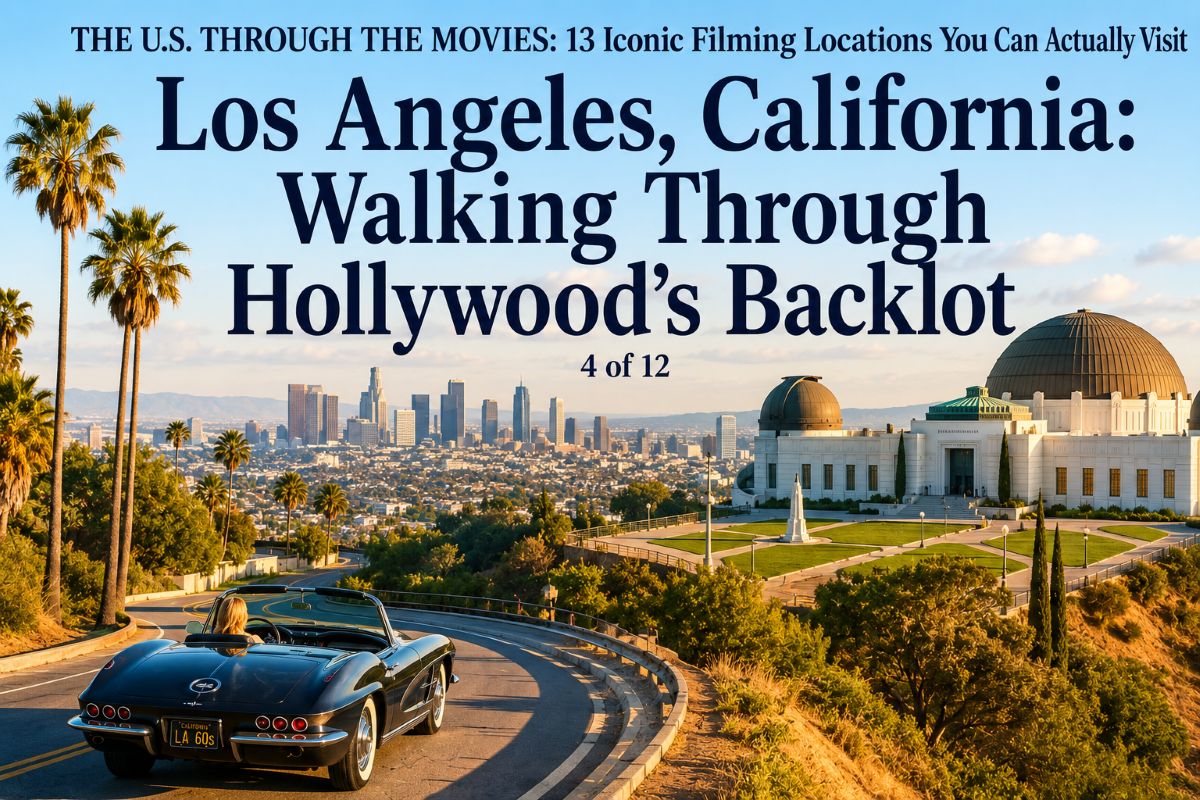
Los Angeles — Walking Through Hollywood’s Backlot
Los Angeles occupies a singular place in movie history because it is both the factory that manufactured much of twentieth-century cinema and one of the most persistent subjects that cinema has attempted to understand. Hollywood Boulevard, Griffith Observatory, the Beverly Wilshire, Mulholland Drive, Sunset Boulevard, the Hollywood Hills and the residential streets stretching from Beverly Hills to the San Fernando Valley have appeared in so many productions that Los Angeles no longer functions merely as a collection of filming locations; it has become an immense cinematic archive in which layers of fictional memory coexist with the physical city. La La Land turns its hills and freeways into a romantic meditation on ambition and sacrifice, Pretty Woman converts Beverly Hills luxury into the architecture of personal transformation, Rebel Without a Cause uses Griffith Observatory as a stage for adolescent alienation, and Once Upon a Time in Hollywood reconstructs a city haunted by the moment when one version of Hollywood was disappearing and another was about to replace it. To visit iconic Los Angeles movie locations is therefore to walk through a place that has spent more than a century filming not only its streets and buildings, but its own mythology.
That mythology has always been built around contradiction, because Los Angeles simultaneously represents arrival and disappointment, reinvention and erasure, glamour and loneliness, fantasy and industrial calculation. Millions have come to the city believing that proximity to Hollywood might transform possibility into destiny, yet the movies produced there have repeatedly acknowledged the cost of that dream, from the fading stardom and decaying grandeur of earlier Hollywood stories to the compromises demanded of Mia and Sebastian in La La Land. Even the city's physical form reinforces this tension: vast boulevards create the impression of openness while separating people by enormous distances; beautiful hills promise escape while overlooking a metropolis structured around competition; luxury hotels and studio gates suggest access while reminding outsiders how carefully access is controlled. Los Angeles cinema is therefore rarely interesting when it merely displays sunshine and palm trees; it becomes powerful when filmmakers understand that the city sells dreams professionally while leaving individuals to negotiate what those dreams require from them.
Following Los Angeles through its movies reveals a city whose most famous filming locations are meaningful precisely because each carries a different version of the Hollywood promise. Griffith Observatory allows Rebel Without a Cause and La La Land to speak across generations about young people searching for identity beneath the same immense sky, Beverly Hills and the Beverly Wilshire expose the relationship between wealth, desire and belonging in Pretty Woman, Hollywood Boulevard and the surviving fragments of old Los Angeles allow Once Upon a Time in Hollywood to reconstruct an industry on the edge of cultural transformation, while Mulholland Drive and the hills above the city reveal why filmmakers have so often used elevation to place dreamers physically above the metropolis they hope to conquer. The journey ahead explores not merely where these movies were filmed, but how Los Angeles learned to turn its own geography into an argument about ambition, why cinema has repeatedly returned to the distance between the Hollywood dream and the reality required to sustain it, and what visitors can still encounter when they move beyond the tourist image and begin reading the city as one enormous, unfinished movie set.
JOIN FOR FREE
Sign up to Hundreds of resources. New content added every week.
PLUS access to our MOVIE CHANNEL
One free account. Unlimited articles and movies. No credit card required.

Already a member? LOGIN HERE
