

By Slavica Bogdanov
The film industry has spent decades operating under a model that no longer reflects how audiences discover content, how investors evaluate opportunities, or how attention is created in a world flooded with information. Thousands of films are produced every year, many featuring talented casts, capable directors, and compelling stories, yet an overwhelming percentage struggle to secure financing, attract meaningful audiences, or generate sustainable returns. The problem often has very little to do with creative quality. In many cases, the challenge emerges long before cameras begin rolling because filmmakers continue to approach marketing as a final phase rather than as a foundational component of the project itself.
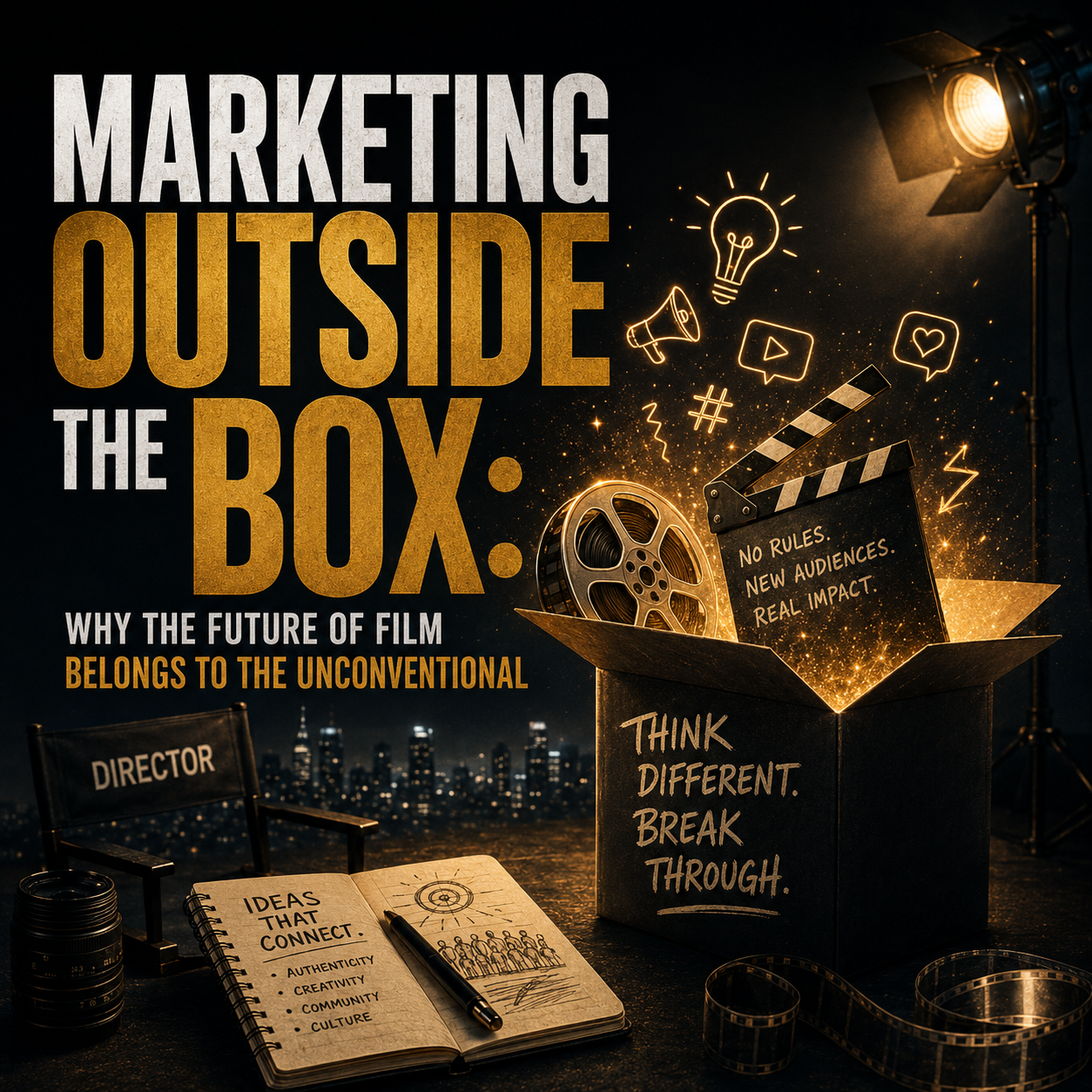
This reality became the driving force behind my book, Marketing Outside the Box: How Unconventional Thinking Creates Attention, Audience, Funding, and Massive Visibility for Films. The book was written for filmmakers, producers, investors, distributors, and entertainment entrepreneurs who recognize that the traditional playbook is producing increasingly unpredictable results. It explores how visibility can be engineered long before production begins and how strategic marketing can become one of the most valuable assets a project possesses. Rather than treating marketing as an expense attached to a finished film, the book demonstrates how marketing can become a tool for attracting financing, building leverage, reducing investor risk, and increasing the overall value of a project.
One of the central ideas explored throughout the book is that attention has become one of the most valuable currencies in the entertainment industry. Investors are increasingly evaluating more than scripts, budgets, and cast attachments. They are looking at audience potential, community engagement, market positioning, and evidence that a project can rise above the noise. A film that already possesses an engaged audience often represents a significantly stronger investment opportunity than a project that plans to begin marketing after completion. This shift fundamentally changes how filmmakers should think about development, financing, and production.
The book examines numerous unconventional strategies that producers can implement to create momentum before principal photography begins. These include building strategic partnerships, leveraging media exposure, developing educational content around a project’s themes, creating investor-focused visibility campaigns, cultivating niche communities, utilizing thought leadership, and transforming filmmakers into industry authorities. Each of these approaches contributes to a larger objective: creating market awareness before the product is available. While this concept has become standard practice in technology startups and consumer brands, it remains dramatically underutilized within independent film production.
Another major theme of Marketing Outside the Box involves the relationship between marketing and financing. Many filmmakers approach investor conversations with the assumption that a compelling story is enough to secure capital. In reality, investors are evaluating probability, risk, and market viability. A project supported by a sophisticated marketing strategy immediately changes that conversation because it demonstrates an understanding of how audiences will be reached and how revenue opportunities can be expanded. Marketing therefore becomes more than promotion; it becomes part of the financial structure of the film itself. The strongest projects are often those that can clearly communicate not only what story they intend to tell, but also how they intend to generate awareness, attract viewers, and compete in a crowded marketplace.
The book also challenges one of the most damaging assumptions in filmmaking: the belief that bigger budgets automatically create bigger visibility. Some of the most successful campaigns in modern entertainment history emerged from creativity rather than spending power. Independent producers frequently possess advantages that larger studios lack, including agility, authenticity, direct audience relationships, and the ability to execute highly targeted campaigns. When these advantages are combined with unconventional thinking, filmmakers can often generate attention levels that dramatically exceed what their budgets would traditionally allow.
Ultimately, Marketing Outside the Box is not simply a book about promotion. It is a book about changing the way filmmakers think about the business of filmmaking. It argues that audience development should begin during development, that visibility should be treated as an asset, that marketing can help attract funding, and that strategic attention creation can influence every stage of a project’s lifecycle. In an industry where thousands of worthy projects compete for limited resources, unconventional thinking is no longer an advantage reserved for a select few. It is rapidly becoming a necessity for anyone who wants to finance films, build audiences, and create long-term success in the modern entertainment landscape.
For filmmakers seeking funding, producers looking for leverage, and entertainment entrepreneurs determined to stand out in an increasingly competitive industry, the future may belong to those willing to market differently. The question is no longer whether marketing matters. The question is whether filmmakers are prepared to think outside the box before everyone else does.
Read the book here: https://www.filmfunding101.com/books
