




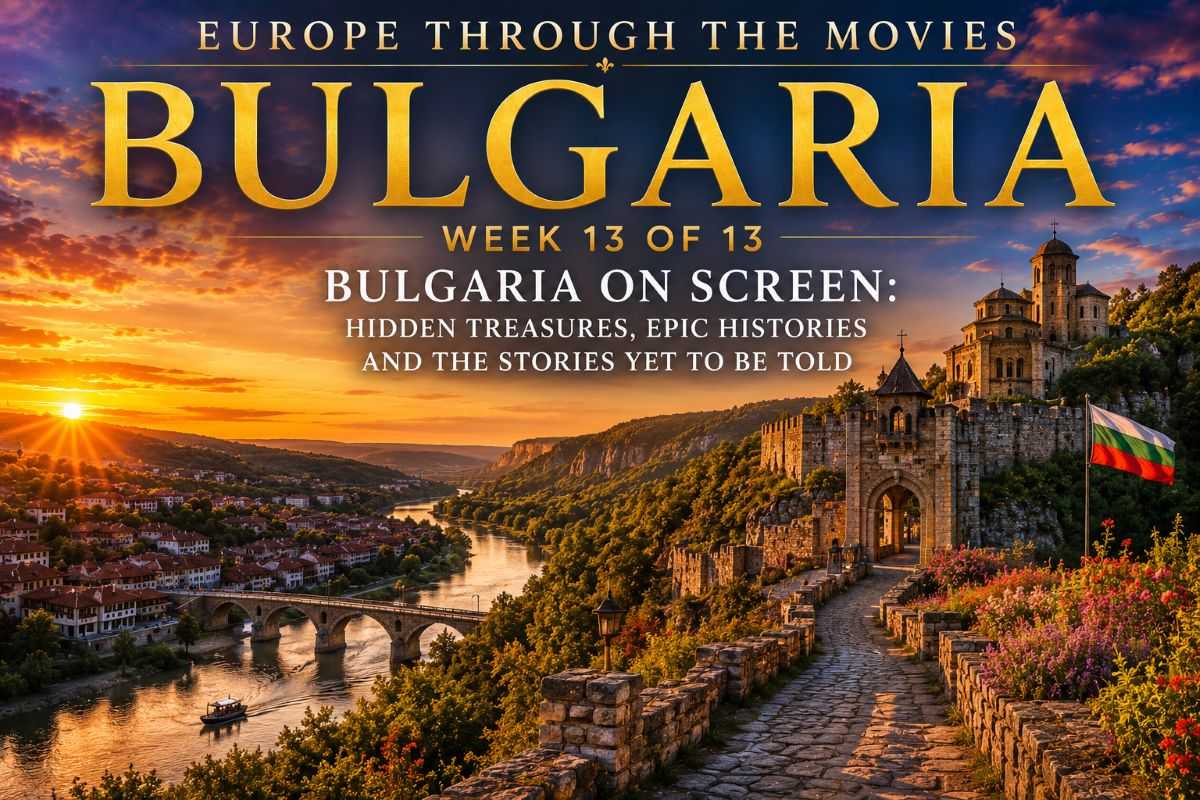
Bulgaria is the perfect country with which to conclude a journey through Europe’s most iconic filming locations because it exposes one of cinema’s greatest paradoxes: some places become famous because audiences recognize them instantly, while others become indispensable precisely because audiences never realize they are looking at them. The most important filming locations in Bulgaria extend from Sofia and its layered urban architecture to Nu Boyana Film Studios, from the Balkan and Rila mountain landscapes to historic fortresses, monasteries, villages and stretches of Black Sea coastline, yet the country’s cinematic identity is rarely reducible to a single postcard image. International productions such as The Expendables, London Has Fallen and numerous action, historical and fantasy projects have used Bulgaria not because it offers one definitive visual world, but because it offers many: socialist monumentalism can become institutional power, older city streets can support historical reconstruction, industrial districts can carry the visual language of political instability or military conflict, mountain terrain can create isolation and scale, while vast studio environments can manufacture streets, palaces, battlefields and entire cities that never existed beyond the logic of the production. Bulgaria’s contribution to international cinema is therefore larger than its popular screen identity, because the country has repeatedly supplied the physical foundations of places audiences believed were somewhere else.
The deeper significance of Bulgaria film tourism lies in understanding why this invisibility should be interpreted not as cinematic absence but as evidence of extraordinary adaptability. Sofia contains centuries of historical overlap rather than a single architectural vocabulary: Roman remains, Orthodox churches, Ottoman traces, nineteenth- and early twentieth-century civic buildings, monumental socialist planning and contemporary development exist within the same metropolitan geography, giving filmmakers access to radically different emotional registers without leaving one city. Nu Boyana extends that flexibility into controlled production space, where real architecture can be replicated, expanded or abandoned entirely in favour of worlds designed around narrative rather than geography, while the landscapes beyond the capital offer the natural scale that large-scale filmmaking still struggles to reproduce convincingly without physical terrain. Bulgaria consequently sits at the intersection of two traditions explored throughout this series: the older art of discovering places whose history already gives them meaning and the modern art of manufacturing environments whose meaning exists only because cinema created them.
Following the most compelling movie locations in Bulgaria you can actually visit therefore becomes a fitting final investigation into what a filming location really is, because by this point in our journey the answer can no longer be limited to a street, castle or beach where actors once stood. A location may be a historic city whose architecture supplies a century the production no longer has to build; it may be a mountain whose scale forces actors and cameras to negotiate real geography; it may be a studio street designed to survive only until the last shot has been captured; or it may be a composite environment assembled from Sofia, a Nu Boyana set and digital extension until no single physical place corresponds to what audiences remember. Bulgaria brings all of these possibilities together, revealing that the deepest magic of screen geography lies not in whether a place is real or artificial, but in whether filmmakers can give it enough internal coherence, historical weight and physical consequence that the audience believes a world continues beyond the edge of the frame.
JOIN FOR FREE
Sign up to Hundreds of resources. New content added every week.
PLUS access to our MOVIE CHANNEL
One free account. Unlimited articles and movies. No credit card required.

Already a member? LOGIN HERE
