




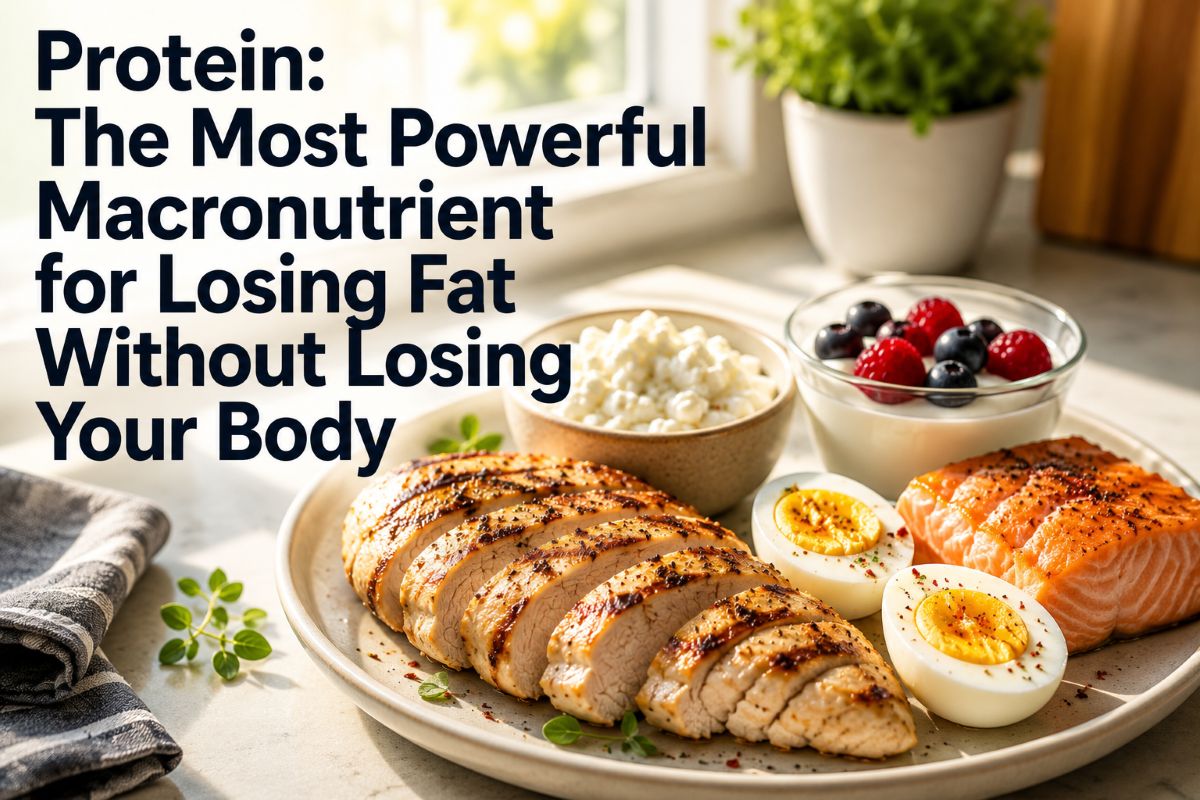
Protein occupies a peculiar position in the conversation about belly fat because it does something that neither carbohydrate nor dietary fat can reproduce in quite the same way: it helps make fat loss possible without treating every disappearing pound as equally desirable. When body weight falls, the body does not automatically remove only the abdominal fat we would most like to lose; depending on diet, activity, age and the size of the energy deficit, weight loss can include water, glycogen, fat and precious lean tissue, including muscle. A high-protein diet cannot command the body to burn belly fat specifically, but adequate protein can improve satiety, increase the thermic cost of digestion and help preserve muscle during an energy deficit, particularly when paired with resistance exercise. That distinction matters enormously because successful weight loss should not simply produce a lighter body; ideally, it should produce a body carrying less excess fat while retaining as much metabolically and functionally valuable lean tissue as possible.
Readers who want to translate these principles into everyday meals can explore the Vault at eevault.com, where hundreds of recipes for weight loss, reducing belly fat, anti-inflammatory eating and longevity sit alongside books exploring belly-fat reduction, nutrition and healthier living. Protein becomes considerably easier to use strategically once it stops being imagined as an endless succession of plain chicken breasts and protein shakes, because eggs, Greek yogurt, cottage cheese, fish, seafood, poultry, lean meats, tofu, tempeh, beans, lentils and intelligently constructed mixed meals can all contribute to a protein-rich diet. The purpose is not to turn eating into a bodybuilding program, but to create meals that satisfy hunger, protect lean tissue and make an appropriate energy intake easier to maintain without feeling permanently deprived.
The deeper story, however, begins when we ask why protein behaves differently inside the body and why that difference becomes increasingly valuable when the objective is abdominal-fat loss rather than merely rapid weight loss. The rest of this article examines the relationship between protein and belly fat, protein and metabolism, protein for weight loss, muscle preservation, appetite control, thermic effect of food and protein intake with age, including why the body cannot store protein in the same convenient way it stores fat, why meal distribution may matter, how protein interacts with exercise, and why simply adding protein to an already excessive diet misses the point entirely. Understanding those mechanisms changes protein from another fashionable nutritional recommendation into a strategic tool for losing fat while protecting the body underneath it.
JOIN FOR FREE
Sign up to Hundreds of resources. New content added every week.
PLUS access to our MOVIE CHANNEL
One free account. Unlimited articles and movies. No credit card required.

Already a member? LOGIN HERE
