


When the Actor Disappears, the Character Emerges
In an industry often driven by visibility, repetition, and recognizability, there exists a far more demanding path—one chosen by actors who refuse to be defined by presence alone, and instead by the depth of their transformation. Paul Anderson stands firmly within that rare category. His work does not rely on familiarity, charm, or the reassurance of a consistent persona. Rather, it is built on a disciplined and often invisible process: a complete immersion into the psychological structure of a character, to the point where the distinction between actor and role begins to dissolve. What ultimately appears on screen does not feel performed—it feels uncovered, as though the character existed long before the camera arrived.
The Breakthrough That Redefined a Supporting Role

It was through Peaky Blinders that this approach first reached a global audience, where his portrayal of Arthur Shelby redefined what a supporting role could achieve. In lesser hands, the character might have been reduced to volatility, to noise, to brute emotional force. Instead, Anderson constructed something far more intricate. Arthur became a study in contradiction, a man suspended between fragility and violence, loyalty and instability, control and collapse. Every outburst carried weight because it was anchored in something deeper, something built with precision rather than impulse. The intensity that audiences remember is not chaotic—it is structured, sustained, and deliberately shaped over time.
Precision Over Amplification
This level of commitment extends far beyond a single role. In Legend, within a cinematic world already defined by strong and stylized performances, Anderson resisted the instinct to compete through exaggeration. Instead, he carved out a presence that felt internal, grounded, and authentic, demonstrating a clear understanding that impact is not always achieved through amplification, but often through restraint. In The Revenant, where physical endurance and environmental brutality dominate the screen, his contribution reinforces the film’s immersive realism, blending seamlessly into a narrative that demands absolute believability. And in In the Heart of the Sea, he navigates a large-scale production without ever sacrificing the specificity and nuance that define his craft.
Building Characters from the Inside Out
Across these performances, a clear pattern emerges—one that separates Anderson from more conventional approaches to acting. He does not construct characters from the outside in. He does not begin with gestures, accents, or visible traits. Instead, his process suggests an internal excavation, a deep exploration of emotional history, psychological tension, and unspoken motivation. Only once that internal structure is firmly established does the external expression take shape. This is what gives his performances their unsettling authenticity. They are not designed to be observed; they are built to be believed, experienced, and, in many cases, felt.
The Courage to Disappear Inside his Characters

What further distinguishes his work is a rare willingness to relinquish recognizability altogether. Many accomplished actors maintain a thread of continuity across roles—a familiar cadence, a recurring presence that reassures the audience of identity. Anderson moves in the opposite direction. With each performance, he appears intent on removing traces of the familiar, allowing the character to fully occupy the space. The result is not simply variation, but transformation in its purest form. His body of work becomes a collection of distinct identities rather than a sequence of performances tied to a single persona.
Transformation Beyond the Physical
This transformation operates on multiple levels. It is not limited to physical change, though that often plays a role. It is psychological, reflected in the way emotional states are carried and released. It is tonal, expressed through shifts in rhythm, pacing, and energy. Even in roles with limited screen time, the effect remains consistent: the audience does not watch Paul Anderson performing—they encounter a character that feels fully realized, fully inhabited, and entirely separate from the actor himself.
Consistency Across Every Role
More recently, his involvement in The Grey House, alongside Daisy Head under the direction of Roland Joffé, further reinforces this consistency. What becomes immediately apparent is that the scale of the role does not alter the depth of his approach. Whether positioned at the center of a narrative or operating within its periphery, Paul Anderson applies the same level of internal rigor, the same attention to emotional continuity, and the same commitment to inhabiting the character rather than simply representing it. There is no visible adjustment in effort, no sense of hierarchy in preparation—only a disciplined adherence to craft.

This is where many actors diverge. Supporting roles are often treated as functional, as structural components of a story rather than fully realized human experiences. Anderson resists this entirely. Even within limited screen time, his characters carry weight, history, and presence, suggesting a fully developed internal life that extends far beyond what is explicitly shown. It is this unseen work—the preparation the audience never witnesses—that creates the impression of authenticity. Each appearance, no matter how brief, feels intentional and complete, as though the character exists independently of the narrative frame.
What ultimately emerges from this approach is a rare kind of reliability—not in repetition, but in depth. Directors and collaborators understand that regardless of the role’s size, the performance will arrive fully formed, grounded, and aligned with the emotional truth of the story. This consistency does not lead to sameness; it leads to trust. It allows filmmakers like Roland Joffé to build around performances that require no compromise, reinforcing a standard where every role, regardless of scale, contributes meaningfully to the integrity of the film as a whole.
A Career Defined by Impact
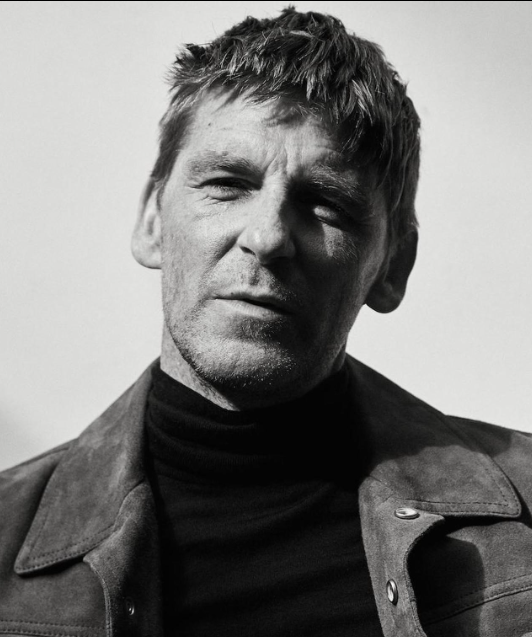
In a landscape where many careers are built on repetition and constant exposure, Anderson’s trajectory offers a compelling alternative. It is defined not by ubiquity, but by selectivity. Not by frequency, but by impact. His work serves as a reminder that the most powerful performances are not necessarily the most visible, but the ones that linger, that unsettle, and that resist easy categorization long after the screen fades to black.
The Next Chapter
As the industry continues to evolve, this level of craftsmanship becomes increasingly significant. It reflects not only artistic discipline, but a deeper understanding of storytelling itself—one where characters are not portrayed, but inhabited with complete and uncompromising conviction. In that sense, Paul Anderson does not simply act within stories; he becomes an integral force within them, shaping their emotional core from the inside out.
Empowering Entertainment Movies is currently developing a slate of projects in which Paul Anderson is expected to take part, alongside a selection of internationally recognized actors, reinforcing a trajectory built not on exposure, but on enduring, transformative work.
