
A Strategic Reinvention or a Risky Power Move?
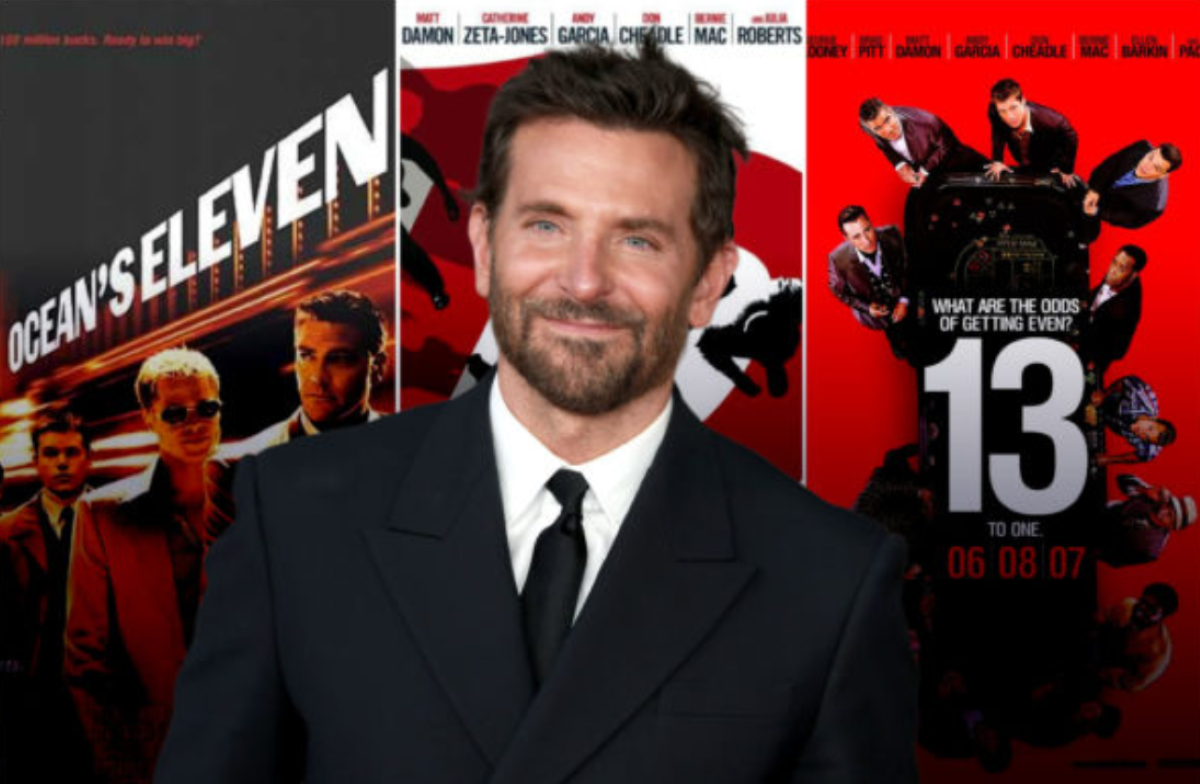
The announcement that Bradley Cooper will write, direct, produce, and star in the upcoming Ocean’s prequel alongside Margot Robbie is not simply another development update in a long-running franchise; it is, in many respects, a revealing case study in how Hollywood is restructuring the relationship between intellectual property, creative authority, and long-term franchise viability. What appears, on the surface, to be a stylish return to a beloved cinematic universe is, beneath it, a far more calculated repositioning—one that shifts the Ocean’s brand away from ensemble-driven entertainment and toward a singular, controlled creative vision anchored by one of the industry’s most ambitious multi-hyphenate figures.

The Strategic Shift from Ensemble Chemistry to Centralized Vision

The original Ocean’s trilogy, shaped under the direction of Steven Soderbergh and led by figures such as George Clooney and Brad Pitt, functioned on a very specific balance: it was a franchise defined not by narrative complexity or auteur-driven storytelling, but by rhythm, charisma, and the seamless interplay of personalities. The films succeeded because no single element dominated; instead, they operated as a carefully calibrated system in which tone, pacing, and character dynamics created a distinctive cinematic identity that audiences could immediately recognize.

By contrast, Cooper’s involvement signals a decisive departure from that model. His previous directorial work has consistently demonstrated a preference for immersive, character-driven storytelling, where emotional intensity and psychological depth take precedence over structural simplicity or stylistic detachment. This raises a critical question that sits at the heart of the project: whether a franchise that was originally built on collective energy can sustain a transition toward a more introspective, auteur-led approach without losing the very qualities that made it commercially and culturally effective.
Reframing the Narrative — From Heist Mechanics to Generational Mythology
The decision to set the prequel in 1962, against the backdrop of the Monaco Grand Prix, and to focus on the parents of Danny Ocean introduces a narrative framework that extends far beyond conventional prequel territory. Rather than merely filling in chronological gaps, the film is positioning itself as a foundational chapter that redefines the mythology of the Ocean’s universe, transforming it from a series of interconnected heist stories into a lineage-driven narrative about legacy, influence, and the transmission of strategic thinking across generations.

This shift is not accidental; it reflects a broader industry trend in which audiences are increasingly drawn to origin stories that provide psychological and thematic depth to established characters. However, this approach also introduces a layer of complexity that the original films deliberately avoided. By attempting to elevate the material into a more narrative-driven and emotionally grounded space, the project risks creating a tonal dissonance between what audiences expect from the Ocean’s brand and what the film ultimately delivers.
Behind the Scenes — Instability as a Signal, Not a Setback
Equally significant is the project’s development trajectory, which has already seen multiple creative transitions, including the departure of Lee Isaac Chung due to reported creative differences. In the context of major studio productions, such changes are rarely incidental; they often indicate deeper uncertainty regarding the film’s tone, structure, or overall strategic direction.
Cooper’s decision to step into the director’s role can therefore be interpreted not merely as a creative ambition, but as a stabilizing intervention designed to consolidate vision and streamline execution. This type of consolidation, while potentially beneficial in aligning all elements of the production under a unified direction, also concentrates risk. When a project becomes heavily dependent on a single creative perspective, its success or failure becomes inseparable from that individual’s ability to balance artistic intent with audience expectation.
Margot Robbie’s Role — The Commercial Counterweight
While much of the attention has been directed toward Cooper’s expanded role, the presence of Margot Robbie introduces a crucial counterbalance that should not be underestimated. Through her work as both an actress and a producer, Robbie has demonstrated a consistent ability to identify and repackage existing intellectual property in ways that resonate with contemporary audiences while maintaining strong commercial appeal.

Her involvement ensures that the project does not drift entirely into auteur-driven territory at the expense of accessibility. Instead, it creates a dual-layered dynamic in which creative ambition is tempered by a clear understanding of market positioning, audience segmentation, and brand evolution. This balance may ultimately prove to be the defining factor in whether the film succeeds in bridging the gap between legacy expectations and modern storytelling sensibilities.
The Broader Implication — A New Model for Franchise Reinvention
What this project ultimately represents is a broader transformation in how studios approach established franchises. The traditional model, which relied on incremental expansion and formulaic repetition, is increasingly being replaced by a strategy that emphasizes reinvention through authorship. By placing creative control in the hands of filmmaker-actors who possess both industry credibility and a distinct artistic voice, studios are attempting to elevate franchise filmmaking into a space that feels more curated, more intentional, and, importantly, more differentiated in an increasingly saturated market.
However, this approach is not without its challenges. It requires a delicate balance between innovation and familiarity, between depth and entertainment, and between artistic integrity and commercial viability. When executed effectively, it can redefine a franchise and extend its cultural relevance; when misaligned, it can alienate core audiences while failing to attract new ones.
Conclusion — The Real Gamble Behind the Film
The upcoming Ocean’s prequel is not merely a film about a heist; it is, in many ways, a reflection of the industry’s own high-stakes gamble on the future of franchise storytelling. By entrusting Bradley Cooper with near-total creative control while anchoring the project with Margot Robbie’s strategic oversight, the studio is attempting to navigate a complex intersection of artistry and commerce.

Whether this approach results in a revitalized, elevated version of the Ocean’s universe or an overextended reinterpretation that loses its original identity will depend on how effectively these competing forces are reconciled. What is certain, however, is that the outcome will not simply influence the trajectory of a single franchise—it will contribute to defining how Hollywood approaches the reinvention of its most valuable intellectual properties in the years to come.