




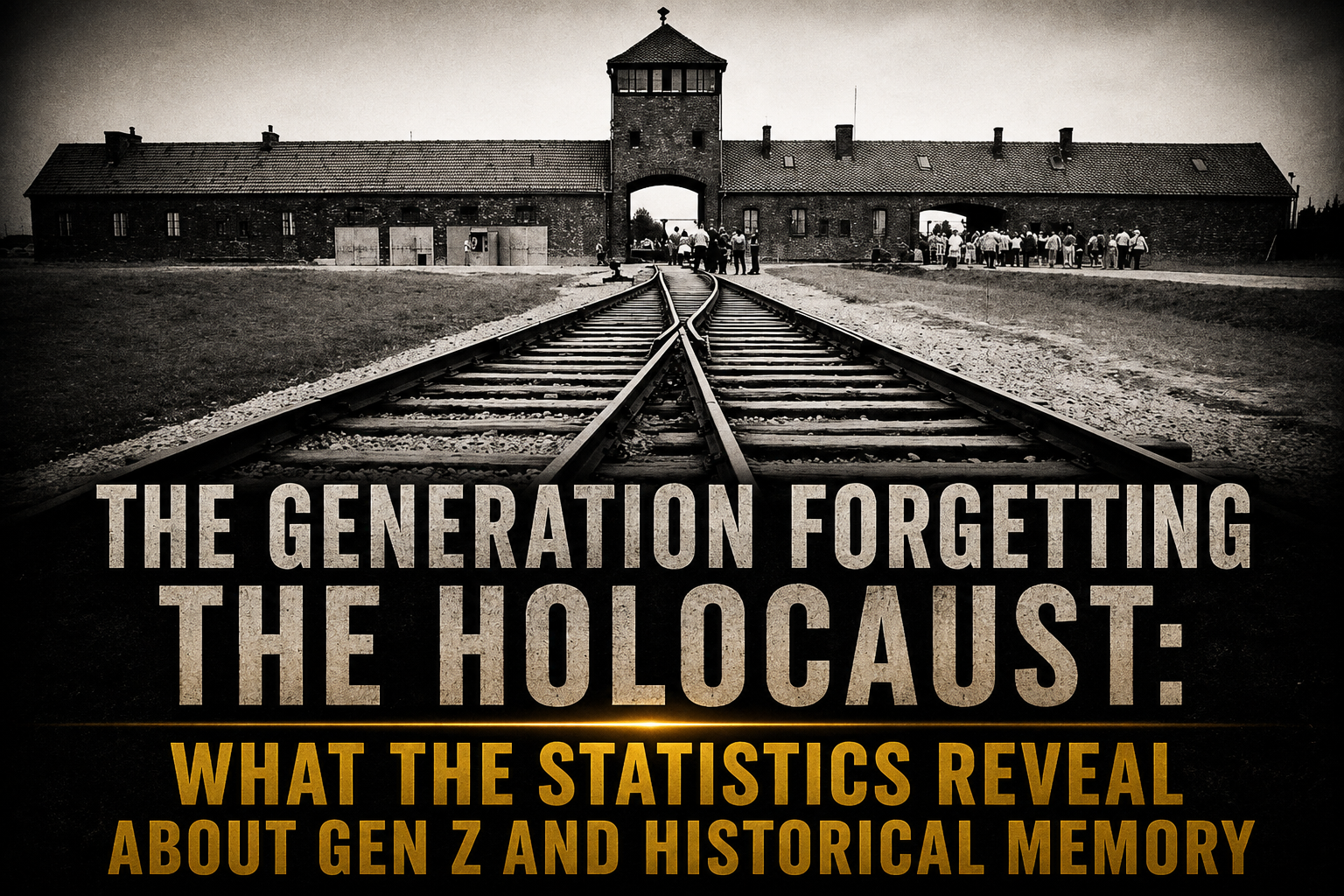
More than eighty years after the liberation of Auschwitz, the Holocaust occupies an extraordinary position in global culture: it is one of the most documented crimes in human history, yet substantial numbers of younger adults cannot identify some of its most elementary facts. In the United States, a major 50-state study of Millennials and Generation Z found that 63 percent did not know that six million Jews were murdered during the Holocaust, 48 percent could not name a single concentration camp or ghetto, and 56 percent could not identify Auschwitz-Birkenau. More recent international research suggests that this is not merely an American problem. Across several European countries, significant numbers of people aged eighteen to twenty-nine report either not having heard of the Holocaust or being unsure whether they have, while younger respondents are consistently among the groups most vulnerable to distortion of its scale.
These numbers matter profoundly to the story of Irena Sendler because historical dramas such as Irena’s Children are increasingly being created for audiences who do not necessarily arrive with the historical framework earlier generations could more safely assume. The Warsaw Ghetto, Żegota, the systematic deportation and murder of European Jews, the extraordinary danger faced by people who attempted rescue and even the meaning of Auschwitz can no longer be treated as universally understood cultural knowledge. That changes the responsibility of historical cinema. A film about Irena Sendler is not simply preserving the memory of an extraordinary woman; it may also become an introduction to an entire historical world for viewers who have never meaningfully encountered it.
JOIN FOR FREE
Sign up to Hundreds of resources. New content added every week.
PLUS access to our MOVIE CHANNEL
One free account. Unlimited articles and movies. No credit card required.

Already a member? LOGIN HERE
