




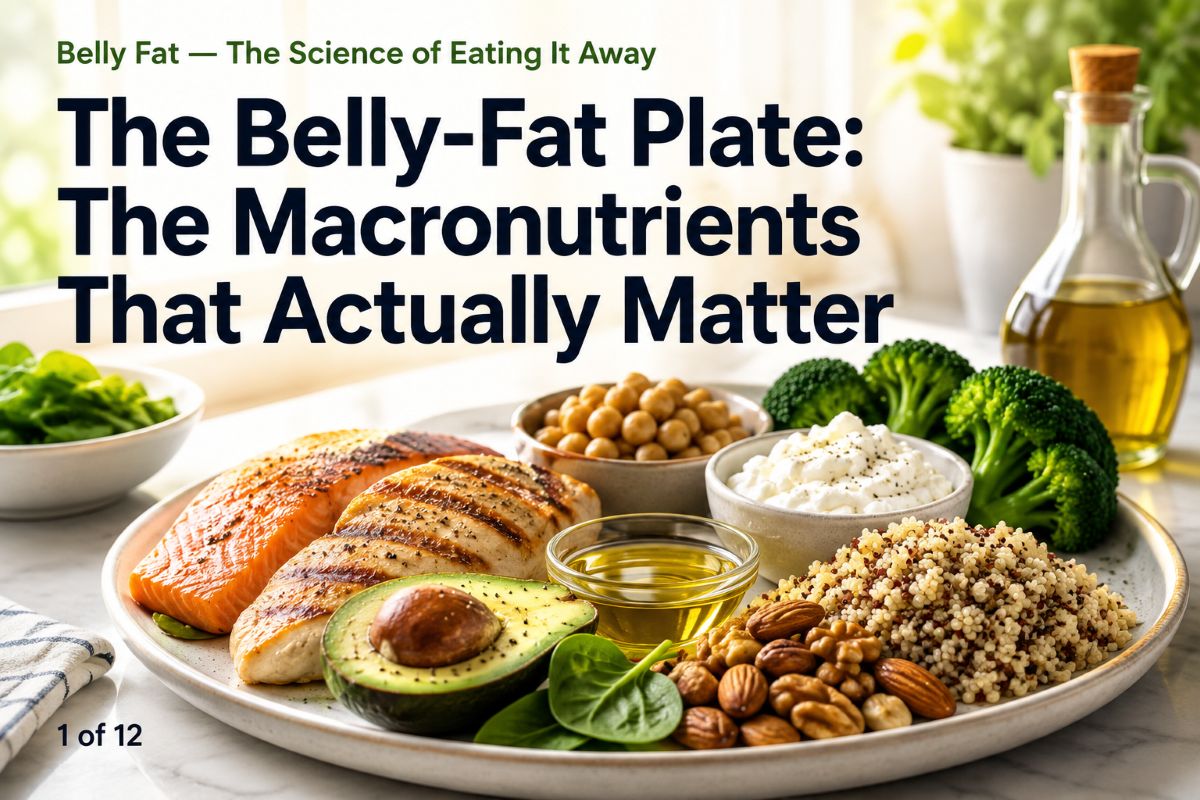
Belly fat is often discussed as though it were a stubborn substance requiring a special food, supplement or exercise to attack it, yet the biology of abdominal fat loss begins somewhere far less glamorous and considerably more powerful: with the composition of the food arriving on your plate every day. Protein, carbohydrates and dietary fat are the three macronutrients supplying most of the energy and structural material the body uses, but they do not behave identically once eaten; they differ in their effects on satiety, digestion, blood glucose, muscle preservation, food reward and total energy intake, which means that two meals containing similar calories can produce very different experiences of hunger and fullness afterward. There is no macronutrient capable of locating abdominal fat and selectively burning it away, because the human body does not lose stored fat according to the geographical wishes of the person dieting, but there absolutely are ways of constructing meals that make losing overall body fat—and eventually reducing visceral and subcutaneous abdominal fat—far easier to sustain.
This is why understanding the best macronutrients for belly fat loss, high-protein foods, healthy carbohydrates, healthy fats, blood sugar control, visceral fat reduction and anti-inflammatory nutrition matters far more than memorizing another restrictive diet. Readers who want to put these principles into practice can explore the Vault at eevault.com, where hundreds of recipes and books explore weight loss, anti-inflammatory eating, reducing belly fat, healthy nutrition and longevity, allowing the science discussed throughout this series to move from theory into an actual kitchen. The goal is not to create a temporary collection of “diet foods,” but to understand how ordinary ingredients can be assembled differently so that meals provide adequate protein, fiber-rich carbohydrates, beneficial fats and micronutrients while making hunger, energy and portion control progressively easier to manage.
The important question, therefore, is not simply whether protein is “good,” carbohydrates are “bad,” or fat makes us fat, because each of those statements collapses a complicated metabolic system into a slogan and obscures the decisions that actually matter. To understand how to build a plate for abdominal-fat loss, we need to examine what happens after protein, carbohydrate and fat enter the body; why protein can help preserve metabolically valuable lean tissue during weight loss; why the quality and context of carbohydrates can dramatically alter their effect on appetite and blood glucose; why dietary fat can simultaneously support health and make accidental overeating remarkably easy; and why the proportion of these three macronutrients may matter less than finding a combination that allows a person to maintain an appropriate energy intake without spending every waking hour fighting hunger. Once those mechanisms are understood, the belly-fat plate stops being a diet prescription and becomes something much more useful: a way of engineering meals around human physiology.
JOIN FOR FREE
Sign up to Hundreds of resources. New content added every week.
PLUS access to our MOVIE CHANNEL
One free account. Unlimited articles and movies. No credit card required.

Already a member? LOGIN HERE
