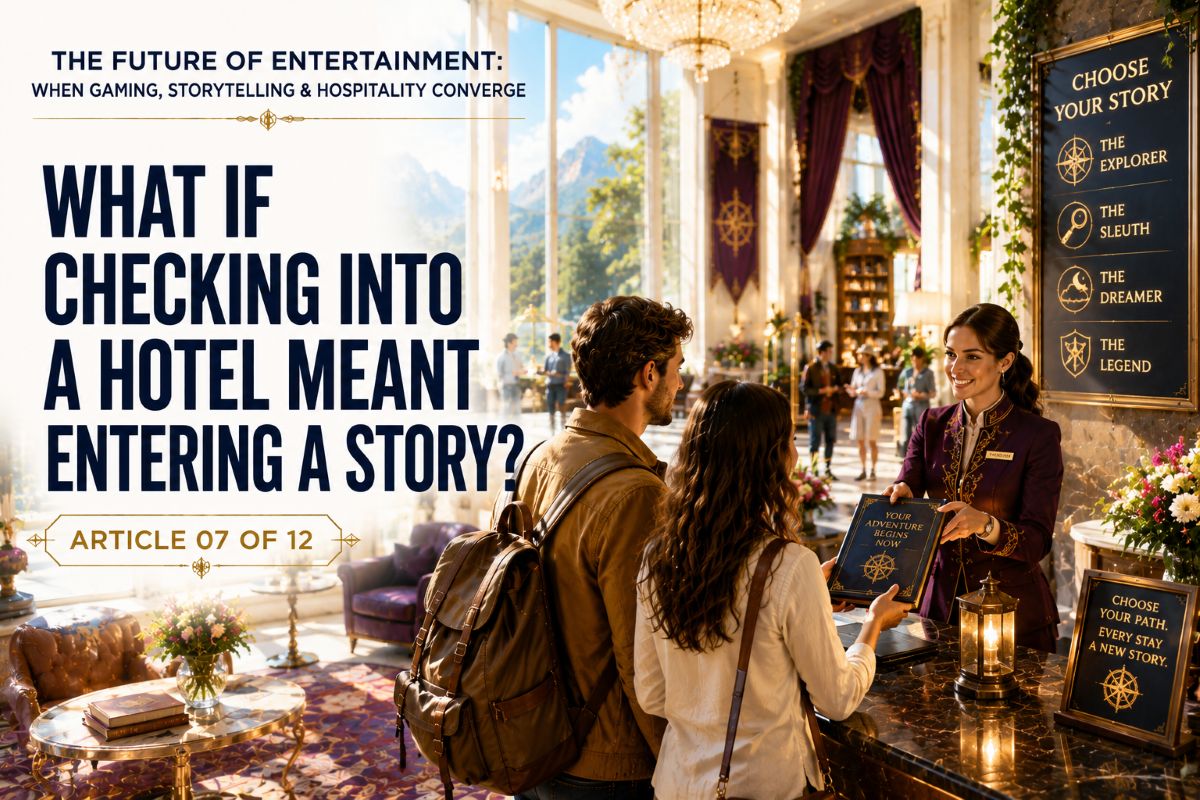
For generations, hotel check-in has been treated as an operational threshold rather than an entertainment opportunity: the guest arrives, confirms a reservation, receives practical information, gains access to a room and proceeds into a stay whose emotional meaning is expected to come from everything that happens afterward. Yet if immersive hospitality, gaming, role-play, interactive storytelling, movie IP and experiential travel are truly beginning to converge, arrival becomes far more significant because it represents the precise moment at which ordinary reality can be replaced by narrative possibility. A guest entering a conventional hotel is told where breakfast is served and when checkout occurs, whereas a guest entering an entertainment hotel could gradually discover who they are within the world, what relationships already surround them, which information belongs specifically to them and why their presence matters, transforming check-in from administrative processing into the carefully designed psychological crossing through which a traveller ceases merely to occupy accommodation and begins participating in a story.
The most sophisticated version of this idea would bear little resemblance to a theatrical reception desk where employees simply remain in character, because successful narrative hospitality cannot depend upon forcing guests to perform or converting basic service into an exhausting piece of theatre. Its power would come from integrating story into the existing logic of hospitality so elegantly that practical and fictional functions reinforce one another: pre-arrival communication can establish anticipation while still conveying useful information, room assignment can establish narrative identity while still reflecting accommodation category, the key can become an object with fictional significance while still opening the door, restaurants can become social locations within the story while still delivering excellent food, and selected interactions can respond to choices without compromising privacy, comfort or freedom. This distinction separates a hotel that merely stages entertainment from one that operates as an interactive story world, because the latter does not ask guests to stop being travellers in order to become participants; it designs the act of travelling itself as part of the narrative.
The implications extend far beyond novelty, particularly when movie and television intellectual property, game design, artificial intelligence, immersive experiences and hospitality technology are considered as components of one persistent system rather than separate attractions. A story could begin before arrival, deepen through identity and discovery during check-in, evolve through decisions made across the property, preserve memory overnight and respond differently to returning guests months later, creating something closer to a living entertainment world than a themed resort. The challenge is therefore not simply how to make hotels more interactive, but how to construct a narrative operating system sophisticated enough to preserve service, autonomy and luxury while making the environment feel attentive to the individual participant, and understanding that system requires examining what happens when reservation, arrival, identity, choice, consequence and memory become parts of the same designed experience.

Unlock the Entire Empowering Entertainment Library
This article is only the beginning.
Become a member and enjoy unlimited access to every premium magazine article, expert interviews, in-depth features, practical guides, and a growing digital library of hundreds of books covering business, entrepreneurship, film production, personal growth, health, relationships, AI, ADHD, and much more.
One membership. Hundreds of resources. New content added every week.