




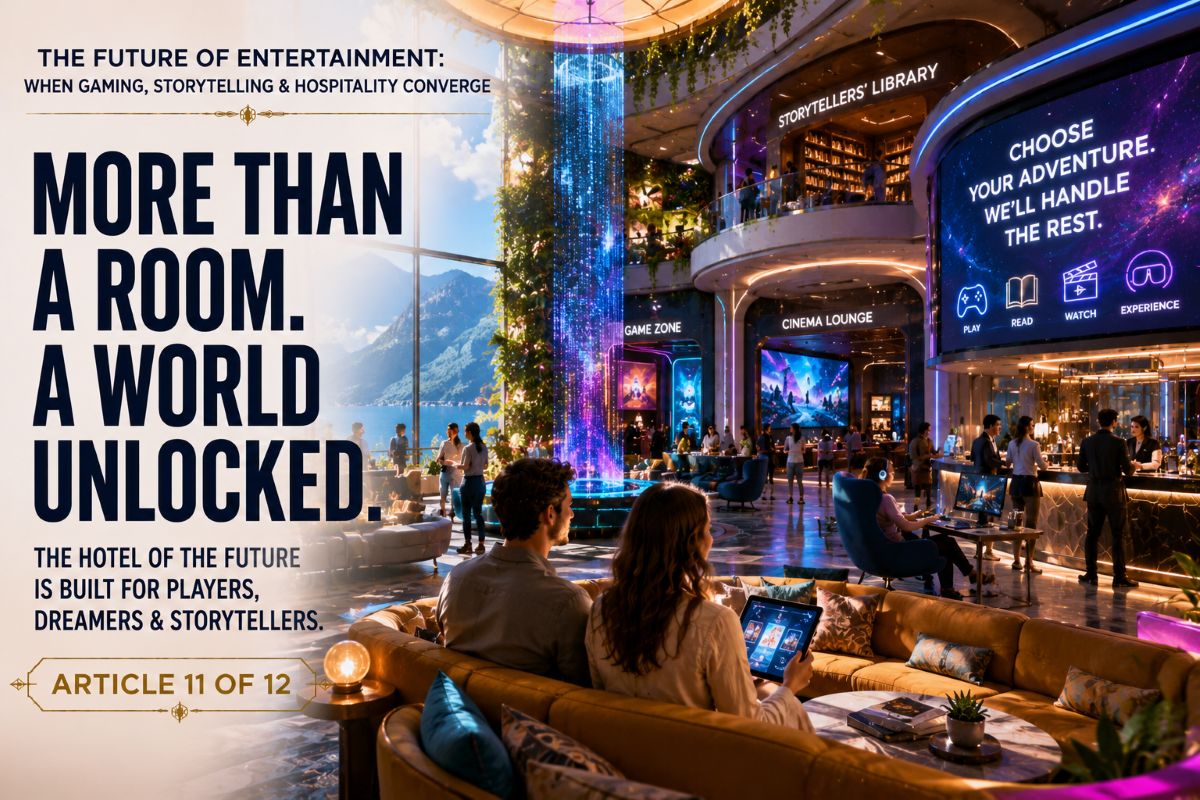
Hospitality has spent decades becoming extraordinarily sophisticated at loyalty while remaining surprisingly constrained in its ability to manufacture genuine reasons for return. Global hotel groups have constructed elaborate ecosystems of points, status tiers, upgrades, personalized preferences, exclusive benefits and increasingly intelligent customer relationship systems, all designed to make the next booking economically or practically more attractive than choosing a competitor, yet beneath these mechanisms lies a structural problem that even exceptional hospitality cannot entirely eliminate: once a guest has experienced a property, the fundamental experience is largely known. A magnificent suite may remain magnificent, a celebrated restaurant may remain excellent and exceptional service may create profound affection, but none of these qualities necessarily produces the psychological tension associated with something unfinished. This is where the convergence of immersive hospitality, gaming, movie IP, role-play, interactive storytelling and experiential travel begins to suggest something far more consequential than another category of themed hotel, because entertainment can introduce into hospitality what conventional loyalty systems struggle to create on their own: a reason to return that originates not in discount, convenience or status, but in the guest's desire to continue a relationship with a world whose possibilities were deliberately larger than a single stay.
Gaming has spent decades mastering precisely this psychology, not by continuously replacing the worlds players already know, but by making familiarity itself increasingly valuable. A player can return to the same landscape hundreds of times because knowledge accumulates, abilities evolve, relationships deepen, inaccessible territories gradually open, unfinished objectives remain psychologically active and previous decisions alter what becomes possible next; the environment may be familiar, yet the player's position within it is continually changing. Entertainment hotels and immersive resorts could translate this principle into physical hospitality by allowing a guest's history to persist beyond checkout, so that a second visit is not simply another stay in a property they enjoyed but the continuation of an experiential trajectory established during the first. A character might remember an earlier decision, a previously inaccessible part of the property might now become meaningful, an unresolved relationship might have evolved during the guest's absence, or information discovered months earlier might suddenly acquire significance, transforming repeat visitation from repetition into progression and giving the physical destination something remarkably similar to the persistent identity that makes long-running games so difficult for committed players to abandon.
The commercial implications extend considerably beyond entertainment novelty because repeat visitation sits at the center of hospitality economics: acquiring a new customer requires attention, marketing and persuasion, while an emotionally invested returning guest arrives carrying familiarity, trust and an existing relationship with the property. Traditional loyalty attempts to strengthen that relationship through external incentives, whereas narrative hospitality could make the relationship itself increasingly valuable by allowing guests to accumulate history inside a fictional world that recognizes their previous participation. The distinction is fundamental, because a hotel that remembers a preferred pillow demonstrates service intelligence, while a world that remembers what someone did demonstrates continuity; one tells the guest that the business knows them, while the other creates the sensation that their presence has left a trace. Understanding why this could fundamentally reshape hotel loyalty, customer lifetime value, repeat destination travel and immersive entertainment economics requires examining a deeper psychological proposition: people do not necessarily return because they want to experience the same thing again, but because something they experienced previously has made the future matter.
JOIN FOR FREE
Sign up to Hundreds of resources. New content added every week.
PLUS access to our MOVIE CHANNEL
One free account. Unlimited articles and movies. No credit card required.

Already a member? LOGIN HERE
