

From Legacy Craftsmanship to a New Vision of Modern Luxury
A Heritage Reimagined for a New Generation
In the world of fine jewelry, heritage has long been positioned as the ultimate marker of credibility. Established maisons often rely on decades—if not centuries—of history to define their authority, reinforcing a narrative where tradition is both foundation and identity. Yet within this landscape, a new kind of leadership is emerging—one that respects legacy without being confined by it.
Bruno Scarselli represents precisely that evolution.
As a second-generation figure in the diamond industry, he inherits not only technical knowledge and craftsmanship, but also an understanding of how the market has shifted. Today’s luxury consumer is no longer guided solely by prestige or familiarity. They are seeking authenticity, transparency, and a sense of connection to the pieces they acquire. In this context, the role of the jeweler is no longer simply to produce exceptional stones—it is to interpret them.
Scarselli’s approach reflects this shift, positioning diamonds not as static symbols of wealth, but as dynamic expressions of identity.
Beyond the Stone: Craft as a Signature
What sets Bruno Scarselli apart from more traditional diamond houses is not only the quality of the stones he works with, but the philosophy that governs their transformation. In many established brands, the emphasis remains on scale—on maintaining consistency across collections, on producing pieces that align with a recognizable signature.
Scarselli operates with a different focus: precision over repetition, individuality over uniformity.
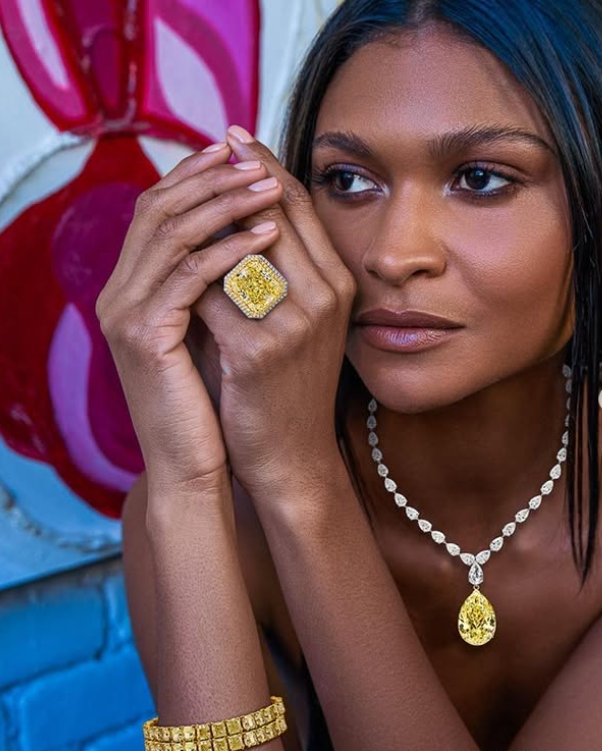
Each piece is approached as a singular creation, where the characteristics of the diamond—its cut, clarity, and light—are considered in relation to the final design. The objective is not to impose a predetermined aesthetic, but to reveal the full potential of the stone through craftsmanship.
This approach reintroduces a sense of intimacy into the process. The client is not purchasing an item from a collection; they are engaging with a piece that carries intention, attention, and narrative.
The Second-Generation Advantage
Being part of a second generation in any luxury field presents a unique opportunity—and a distinct challenge. There is a responsibility to preserve the integrity of what has been built, while also recognizing that relevance requires evolution.
For Bruno Scarselli, this dual perspective becomes an advantage.
He carries forward the discipline, standards, and technical rigor that define traditional diamond craftsmanship, while simultaneously adapting to a market that values personalization and story. This balance allows him to operate between two worlds: the precision of heritage and the fluidity of contemporary luxury.
In practical terms, it means understanding not only how diamonds are created and set, but how they are perceived. The emotional dimension of luxury—how a piece resonates with its owner—becomes as important as its physical attributes.
A Shift Toward Personal Luxury
The traditional diamond industry has long been structured around milestones—engagements, anniversaries, and ceremonial moments. While these associations remain significant, the contemporary market is expanding beyond them.
Luxury is becoming more personal, less prescriptive.
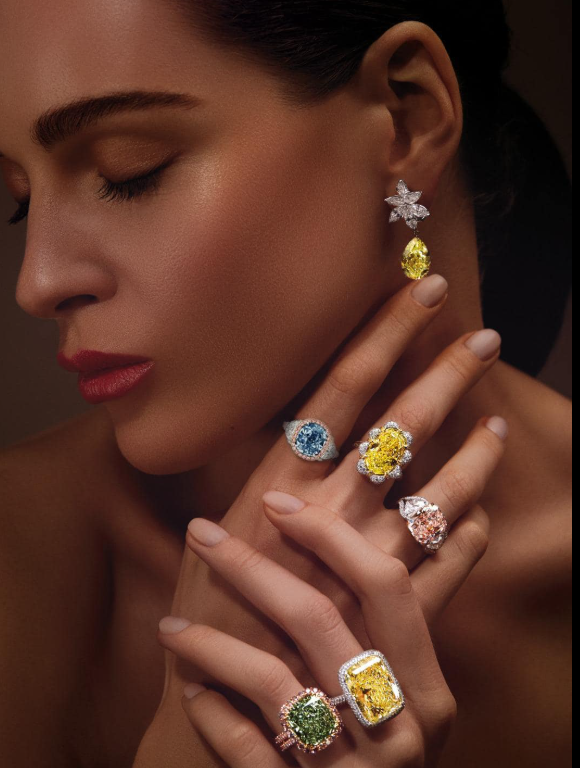
Scarselli’s work aligns with this transformation. His creations are not limited to specific occasions; they are designed to integrate into the daily expression of identity. A diamond is no longer reserved for a singular moment—it becomes part of an ongoing narrative.
This shift requires a different design language. Pieces must be versatile, refined, and capable of existing within multiple contexts. They must carry presence without excess, allowing the wearer to define their meaning.
Transparency, Trust, and the Modern Consumer

Another dimension that distinguishes emerging leaders in the diamond industry is their approach to transparency. Today’s clients are more informed than ever. They seek clarity not only on the quality of a stone, but on its origin, its journey, and the ethics surrounding its production.
Scarselli’s positioning reflects an understanding that trust is no longer assumed—it is built.
By engaging directly with clients, explaining the nuances of each piece, and maintaining a clear standard of quality, he establishes a relationship that extends beyond transaction. The diamond becomes not just an object of value, but a reflection of informed choice.
A New Standard in a Traditional Industry

The diamond industry is not disappearing—it is evolving. As new expectations reshape the definition of luxury, those who succeed will be those who can bridge the gap between tradition and innovation.
Bruno Scarselli’s work exemplifies this transition.
He does not reject the foundations of the industry. He refines them. He adapts them to a context where individuality, transparency, and emotional connection carry as much weight as technical excellence.
Final Perspective
In a market where many brands rely on legacy as their primary narrative, Bruno Scarselli offers something more nuanced: continuity with intention.
His work reflects an understanding that luxury is no longer defined solely by what is rare, but by what is meaningful. By combining second-generation expertise with a forward-looking perspective, he positions himself not as a continuation of the past, but as an interpreter of its future.
And in doing so, he reminds us that the true value of a diamond is not only in how it reflects light but in how it reflects the person who chooses to wear it.
