
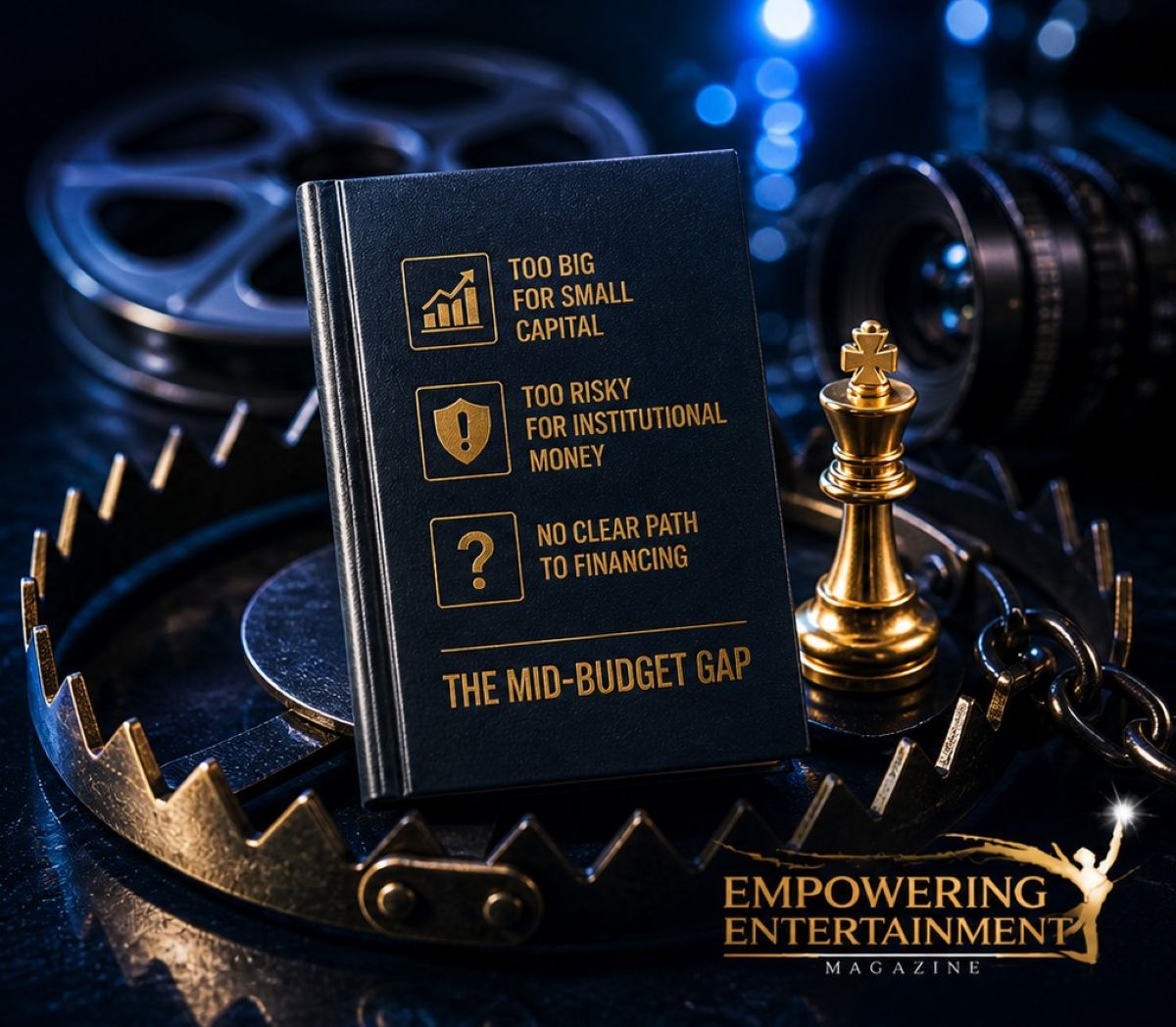
The $3M to $20M range is where many film projects stop moving.
On paper, this range appears viable. It is large enough to support recognizable talent, meaningful production value, and a level of ambition that extends beyond entry-level filmmaking. At the same time, it remains far below the scale associated with studio-backed productions. It sits in a space that feels accessible, which is precisely why so many projects are developed within it. What is less visible is that this range does not align cleanly with how capital operates.
At this level, financing is not constrained by the absence of money. It is constrained by the absence of alignment. The project exists in a segment where the typical sources of capital do not naturally engage. Informal capital, which often supports lower-budget projects, encounters limitations as the scale increases. The amounts required exceed what is typically deployed without structured safeguards. At the same time, institutional capital, which operates at higher budget levels, does not automatically engage with projects in this range due to the way risk, return, and scale are perceived.
This creates a structural gap. The project is no longer small enough to be financed through informal channels, yet it does not present the characteristics that institutional capital expects. The result is not immediate rejection, but a form of inertia. The project circulates, conversations take place, and interest is expressed, yet the transition into committed financing does not occur.
From the inside, this is often interpreted as a timing issue or a matter of access. The assumption is that the right investor has not yet been reached, or that additional exposure will eventually lead to funding. In practice, the issue is structural. The project is not aligned with the expectations of the capital it is attempting to attract.
At this level, investors are not evaluating projects based solely on creative potential. They are assessing how the project functions as a financial construct. The relationship between cost and positioning must be immediately coherent. The risk profile must be defined in a way that is visible and measurable. The financing approach must reflect a system, not an intention. These elements are not optional refinements. They are the conditions under which capital engages.
When they are absent, the project does not fail in a visible way. It simply does not progress. The absence of alignment prevents the project from moving forward, even if its individual components are strong. A compelling script, a recognizable cast, or a well-designed presentation cannot compensate for a structure that does not fit within the framework investors use to allocate capital.
This is why the $3M to $20M range functions as a trap. It attracts projects because it appears achievable, yet it requires a level of precision that is often underestimated. The project must be constructed with an awareness of how it will be financed at this specific scale. It cannot rely on the assumptions that apply to lower budgets, nor can it replicate the structures used at higher levels. It must operate within its own set of constraints, where alignment is critical.
The difficulty is not in reaching this range. It is in sustaining it. A project can be developed creatively without addressing the structural requirements that define its viability. When financing is introduced, the gap between development and structure becomes visible. What seemed like a complete project is revealed as something that has not yet been built to function within the realities of capital.
The implication is direct. Movement at this level does not come from increased activity or broader outreach. It comes from structural clarity. The project must be positioned in a way that aligns with the type of capital it seeks to attract, and that alignment must be evident without explanation. When it is, the process changes. Conversations become focused, decisions become clearer, and the project transitions from circulation to progression.
Without that alignment, the project remains in place, regardless of how much effort is applied.
Why the $3M–$20M Range Is So Difficult to Finance
The $3M to $20M range is where many film projects stop moving.
At this level, projects often appear viable. The scale supports recognizable talent, meaningful production value, and a level of ambition that moves beyond entry-level filmmaking. From the inside, the project feels ready. From the perspective of capital, it sits in a range that does not naturally align with how financing operates.
This is where the difficulty begins. The project is no longer small enough to be supported by informal capital, where decisions are often driven by proximity, interest, or limited exposure. At the same time, it does not present the characteristics that typically attract institutional capital, where scale, structure, and defined pathways of return are expected. The project exists between these two environments without fitting cleanly into either.
That position creates a structural gap. It is not a lack of funding that prevents progress, but the absence of alignment between the project and the capital it seeks. Investors are not responding to the concept in isolation. They are evaluating how the project functions as a financial construct, and whether it meets the conditions required for engagement at this level.
When that alignment is missing, the outcome is not always explicit rejection. More often, it is stagnation. Conversations continue, interest may be expressed, but the project does not transition into committed financing. The process appears active, yet nothing advances. The gap between development and financing remains unaddressed.
This is why so many projects in this range circulate without converting. They are built with the logic of smaller films or the ambition of larger ones, but without the structural precision required for this specific level. The number itself is not the issue. It is how that number interacts with capital expectations that determines whether the project moves forward.
Continue Reading
The difficulty is not in the budget.
It is in how that budget aligns—or fails to align—with the way capital actually engages at this level.
👉 In the full article, I break down why the $3M to $20M range creates this gap, and what must exist for a project to function within it.
Continue to the full analysis →
Or buy the book: https://www.amazon.com/dp/B0GZBM452V

Unlock the Entire Empowering Entertainment Library
This article is only the beginning.
Become a member and enjoy unlimited access to every premium magazine article, expert interviews, in-depth features, practical guides, and a growing digital library of hundreds of books covering business, entrepreneurship, film production, personal growth, health, relationships, AI, ADHD, and much more.
One membership. Hundreds of resources. New content added every week.