
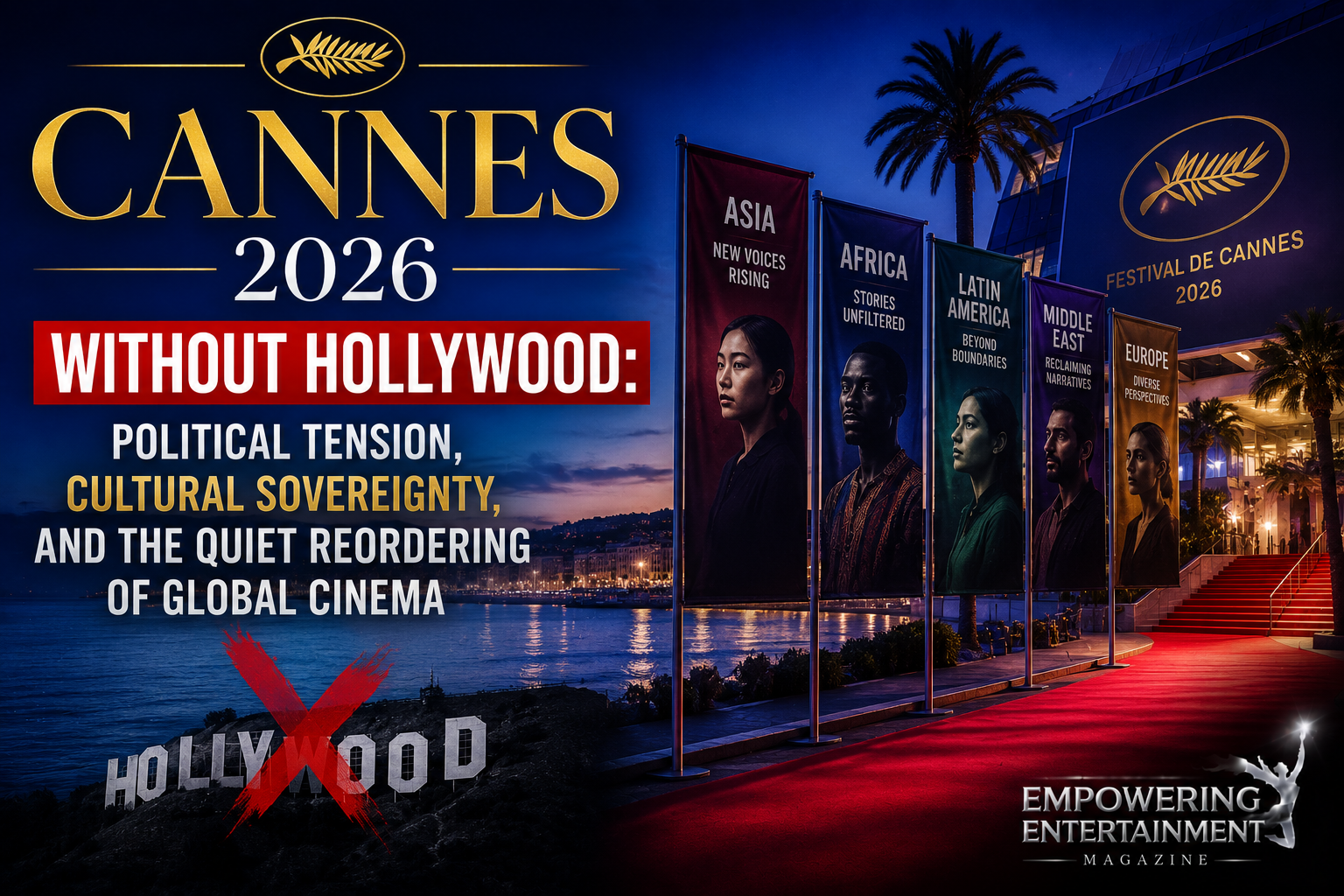
For the first time in recent memory, the Cannes Film Festival main competition lineup reportedly contains no films produced or co-produced by a major Hollywood studio. On the surface, the explanation appears procedural and almost technical: release calendar conflicts, the declining studio appetite for prestige theatrical dramas, the rise of streaming-first economics, and Cannes’ increasing preference for films not pre-acquired by platforms before competition. Yet beneath those explanations lies a far more consequential possibility—one that reaches beyond scheduling and into geopolitics, cultural identity, and the future balance of power within global cinema itself.
The absence of Hollywood from Cannes 2026 does not necessarily signal a formal boycott. That interpretation would likely be too simplistic for an industry built on complex financial interdependence and decades of intertwined relationships between American studios, international distributors, festivals, and global talent ecosystems. Cannes still benefits enormously from Hollywood visibility, celebrity presence, and international media attention. Likewise, Hollywood still benefits from the prestige and cultural legitimacy Cannes can confer upon certain films and filmmakers.
But something undeniably feels different this year. The atmosphere surrounding international cinema has shifted. The lineup no longer feels like a festival orbiting Hollywood prestige campaigns. Instead, it feels increasingly like a declaration that global cinema has matured enough to exist independently of American studio dominance.
That distinction changes the conversation entirely.
Cannes Has Always Been More Than a Film Festival
To understand why this moment matters, it is necessary to understand what Cannes truly represents. The festival is not simply an entertainment marketplace or awards-launching platform. Cannes functions as a cultural institution with symbolic power extending far beyond cinema itself. Every lineup sends a message about artistic legitimacy, cultural influence, geopolitical relevance, and the kinds of stories the international establishment believes deserve elevation.
For decades, Hollywood occupied a central position within that ecosystem because American cinema represented both artistic ambition and industrial power simultaneously. Studios financed prestige films not merely for profit, but for cultural capital. A Palme d’Or contender could strengthen a studio’s reputation globally, attract awards momentum, elevate talent relationships, and reinforce the perception that Hollywood remained the center of serious filmmaking as well as commercial spectacle.
Yet over the past decade, the foundations supporting that relationship have slowly eroded.

Unlock the Entire Empowering Entertainment Library
This article is only the beginning.
Become a member and enjoy unlimited access to every premium magazine article, expert interviews, in-depth features, practical guides, and a growing digital library of hundreds of books covering business, entrepreneurship, film production, personal growth, health, relationships, AI, ADHD, and much more.
One membership. Hundreds of resources. New content added every week.