
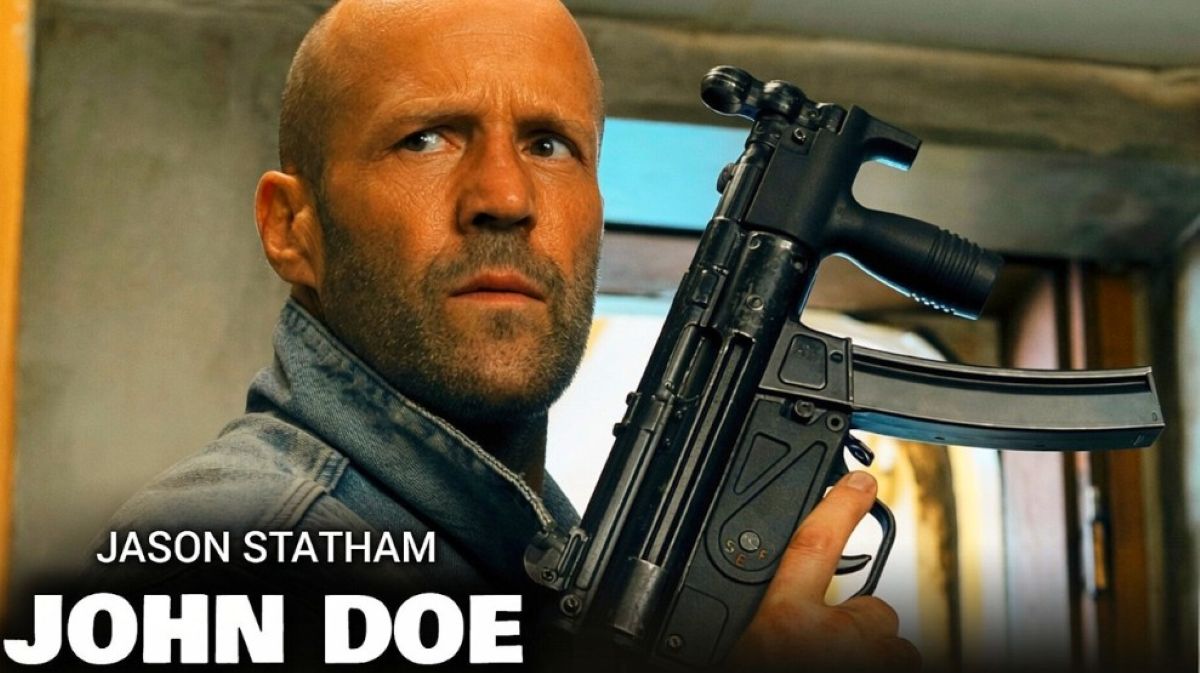
A Familiar Story, Positioned With Unfamiliar Discipline
The announcement of John Doe, reuniting Jason Statham and David Ayer under the umbrella of Miramax, could easily be mistaken for another entry in the well-worn catalog of action thrillers. On the surface, it carries the recognizable architecture of the genre: a man without memory, pursued by forces he cannot fully identify, driven forward by fragments of a past that refuses to stay buried. It is the kind of premise that audiences understand instinctively, requiring no intellectual negotiation, no cultural translation, no narrative onboarding. And yet, reducing John Doe to its premise would be to overlook the far more deliberate move being made beneath it.
What is being assembled here is not simply a film, but a calibrated piece of industry engineering. The choice of concept is not an act of creative repetition, but of strategic clarity. In a market increasingly fractured between bloated spectacle and algorithm-driven content, the amnesia thriller offers something deceptively powerful: a universal entry point that travels cleanly across territories while allowing for emotional density without narrative weight. It is not originality that is being prioritized—it is precision.
The Return of the Controlled Action Economy
The continued collaboration between Statham and Ayer signals something that extends well beyond creative alignment. It reflects the emergence of a controlled action economy, one that operates in direct contrast to the volatility of large-scale studio filmmaking. Their previous projects have already demonstrated that when a film is built around a clearly defined tone, a bankable lead, and a disciplined budget, the result is not just profitability, but predictability.

This is where John Doe becomes particularly revealing. The addition of Zak Penn introduces a structural layer that bridges grounded action with broader narrative architecture, suggesting a film designed to operate with both immediacy and scale. But the real sophistication lies in what is not being attempted. There is no visible effort to expand into franchise mythology, no indication of overextended world-building, no inflation of scope for the sake of perceived importance. Instead, the film appears to be anchored in something far more valuable in the current environment: containment.
Containment, in this context, is not limitation. It is control. It is the ability to define the boundaries of cost, narrative, and expectation before the project ever enters production. And in an industry where excess has become synonymous with risk, that level of control is increasingly rare—and increasingly attractive.
Cannes Is Not the Destination—It Is the Mechanism

The decision to bring John Doe to the Cannes Film Festival is often interpreted as a visibility play, a moment of exposure within one of the industry’s most prestigious environments. In reality, Cannes operates on a far more transactional level. It is not where films are discovered; it is where they are validated, priced, and distributed across a global network that functions largely outside the public eye.

Unlock the Entire Empowering Entertainment Library
This article is only the beginning.
Become a member and enjoy unlimited access to every premium magazine article, expert interviews, in-depth features, practical guides, and a growing digital library of hundreds of books covering business, entrepreneurship, film production, personal growth, health, relationships, AI, ADHD, and much more.
One membership. Hundreds of resources. New content added every week.