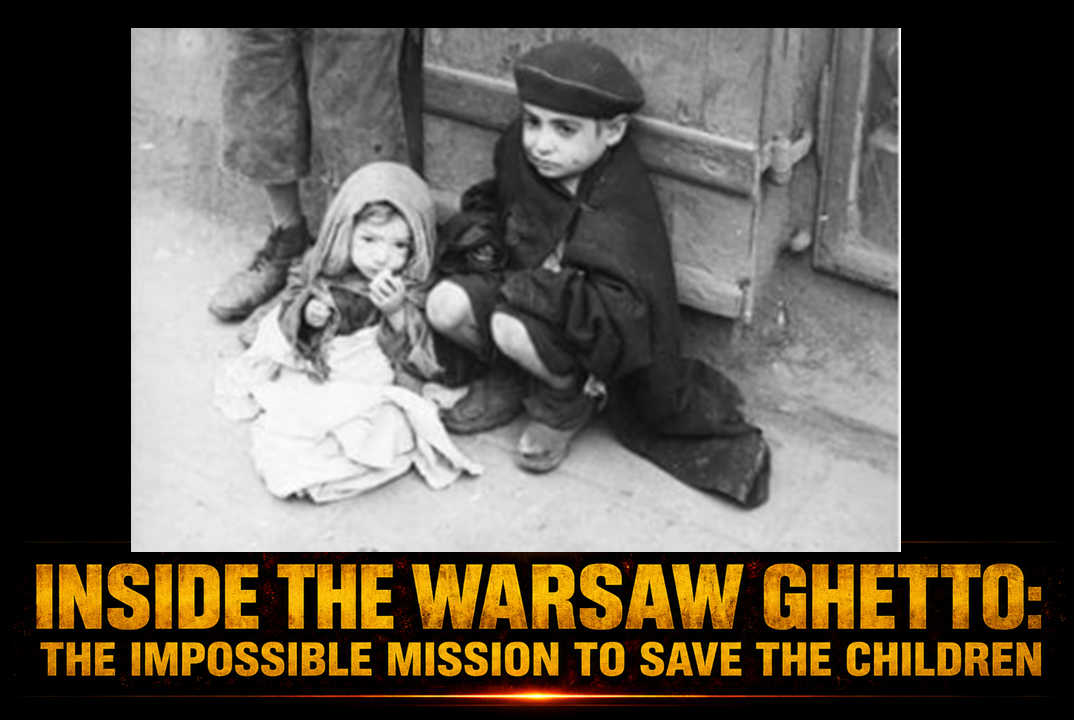
The rescue of Jewish children from the Warsaw Ghetto was one of the most dangerous humanitarian operations of the Holocaust. Behind the extraordinary story of Irena Sendler and the Polish Council for Aid to Jews, known as Żegota, were parents forced to make unbearable decisions, children taught to live under false identities, couriers moving through Nazi-occupied Warsaw, and families, convents and orphanages willing to risk devastating consequences by hiding them. This clandestine world lies at the heart of Irena’s Children, the forthcoming historical drama with two-time Academy Award-nominated and Palme d’Or-winning filmmaker Roland Joffé attached to direct.
To understand the courage of Irena Sendler and those who worked alongside her, it is necessary to understand the environment in which they operated. Rescue did not simply mean finding a secret doorway through a wall and carrying a child to safety. Beyond the Warsaw Ghetto lay another occupied world in which identity papers could be inspected, neighbors could become informants, a child's accent or frightened answer could expose a false identity, and every person offering shelter assumed a potentially fatal risk. Saving a child required an extraordinary chain of trust, preparation and courage, beginning with perhaps the most devastating decision of all: convincing parents that the greatest act of love they could offer their child might be to let that child go.

Unlock the Entire Empowering Entertainment Library
This article is only the beginning.
Become a member and enjoy unlimited access to every premium magazine article, expert interviews, in-depth features, practical guides, and a growing digital library of hundreds of books covering business, entrepreneurship, film production, personal growth, health, relationships, AI, ADHD, and much more.
One membership. Hundreds of resources. New content added every week.