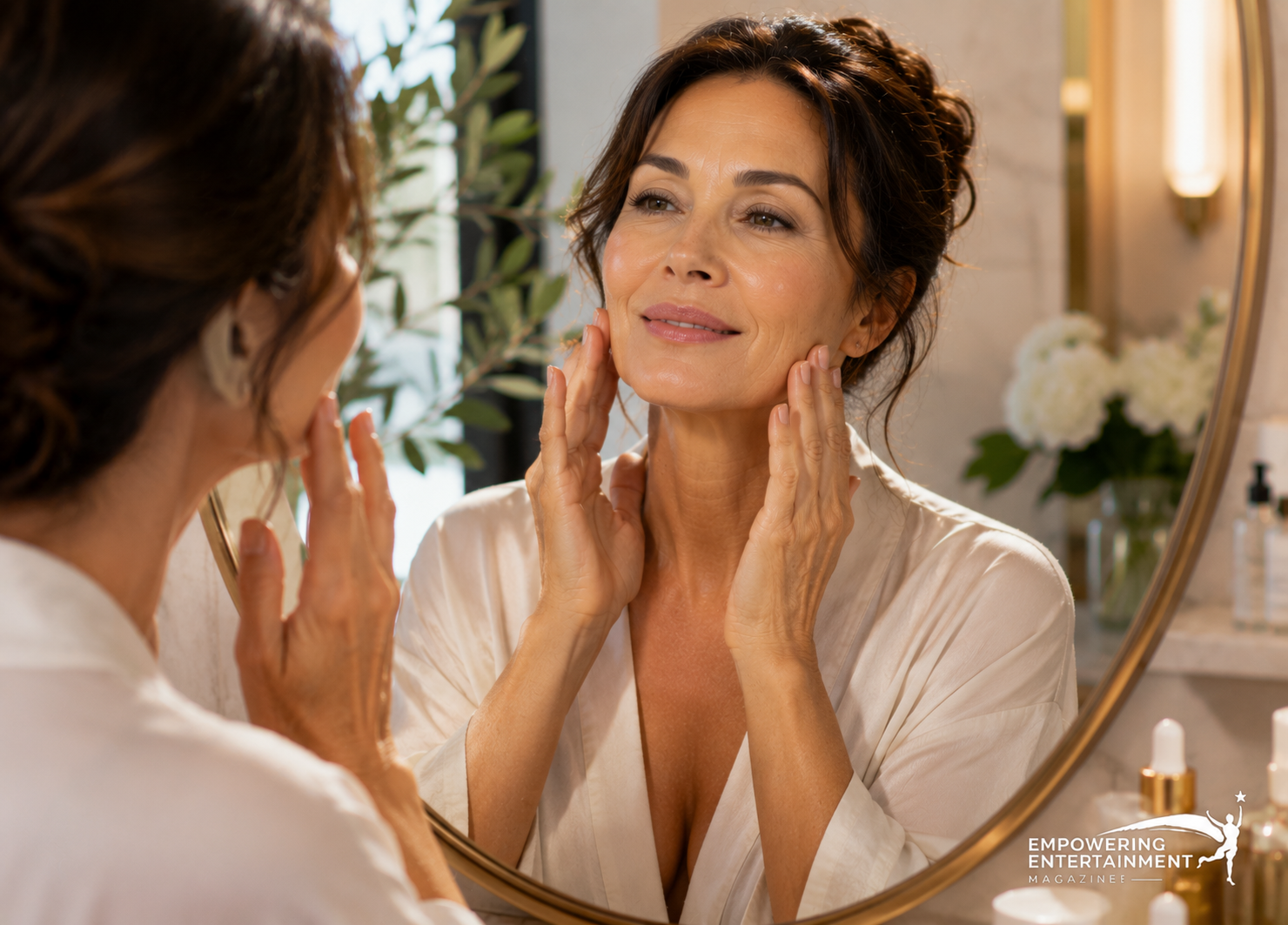
The Best Anti-Aging Skincare Ingredients That Actually Work
Retinol vs Retinal, Peptides, Vitamin C, Hyaluronic Acid, and the Science Behind Naturally Firmer, Younger-Looking Skin Without Botox
If you have ever searched for the best anti-aging skincare ingredients, best skincare for mature skin, retinol vs retinal, best serum for wrinkles, how to tighten skin naturally, best skincare routine for women over 50, how to reduce wrinkles without Botox, or best products for aging skin, you have probably discovered that the skincare industry has become one of the most confusing markets in modern health and beauty. Every year introduces dozens of new miracle ingredients, celebrity-endorsed formulas, luxury creams, and scientific buzzwords that promise to erase years from your face. Yet despite spending billions of dollars globally on skincare, many women remain frustrated because their skin never seems to improve as dramatically as advertising suggests.
The reason is surprisingly simple. Most skincare advice focuses on selling products rather than teaching skin biology. Consumers are encouraged to chase individual ingredients without understanding what those ingredients actually do, how they interact with one another, when they should be used, or whether they even address the primary reason their skin is aging. As a result, medicine cabinets become crowded with expensive bottles while the underlying causes of collagen loss, inflammation, dehydration, oxidative stress, and hormonal skin changes remain largely unaddressed.
This does not mean skincare is ineffective. On the contrary, certain ingredients have accumulated decades of scientific evidence demonstrating their ability to improve collagen production, reduce fine lines, brighten pigmentation, strengthen the skin barrier, improve hydration, and support healthier aging. The challenge is separating genuinely evidence-based ingredients from marketing claims designed primarily to attract attention.
Throughout the previous weeks of this series, we have focused on rebuilding your skin from within through nutrition, collagen support, lymphatic drainage, facial exercises, stress reduction, and restorative sleep. Those biological foundations remain the most important drivers of natural facial rejuvenation. High-quality skincare should be viewed as an amplifier of these internal improvements rather than a substitute for them. When healthy skin is supported both internally and externally, visible improvements become far more substantial than either strategy could achieve independently.
This eighth week of our 12 Weeks to Naturally Lift, Tighten & Rejuvenate Your Face Without Botox explores the skincare ingredients supported by the strongest scientific evidence, explains how each contributes to healthier aging, and helps you avoid spending money on products that sound impressive but contribute very little to genuine skin renewal.
Why Most Anti-Aging Products Disappoint
One of the most searched beauty questions online is why isn't my skincare working? The answer often has little to do with the products themselves and far more to do with unrealistic expectations. Many consumers purchase a single serum hoping it will reverse decades of ultraviolet damage, collagen loss, hormonal changes, inflammation, poor sleep, nutritional deficiencies, and repetitive facial tension within a few weeks. No topical ingredient possesses that level of biological power.
Skin responds gradually because collagen remodeling, cellular turnover, barrier repair, and pigment regulation require time. Healthy skin develops through cumulative adaptation rather than instant transformation. Women who understand this process are far more likely to remain consistent with evidence-based skincare instead of abandoning effective ingredients before they have sufficient time to produce measurable change.
Patience therefore becomes one of the most underrated skincare ingredients available. Biological systems rarely respond according to marketing timelines.
Retinol vs Retinal: Which Is Better for Mature Skin?
Among the most popular beauty searches today are retinol vs retinal, best retinol for wrinkles, and retinal for mature skin. Both ingredients belong to the vitamin A family and work by encouraging healthier cellular turnover while stimulating collagen production over time. They remain among the most extensively researched anti-aging ingredients available.
Retinol must undergo several conversion steps within the skin before becoming biologically active, making it effective but sometimes slower to produce visible results. Retinal, also called retinaldehyde, requires fewer conversion steps and may produce comparable improvements at lower concentrations while remaining better tolerated by some individuals. Both ingredients have demonstrated the ability to reduce fine lines, improve skin texture, support collagen synthesis, and enhance overall skin quality when introduced gradually and used consistently.
The most important decision is not necessarily choosing between retinol and retinal but selecting a formulation appropriate for your skin's sensitivity while using it patiently over many months rather than expecting dramatic overnight changes.
Why Vitamin C Remains One of the Best Anti-Aging Ingredients
Women searching for best vitamin C serum for mature skin, vitamin C for wrinkles, or how vitamin C helps collagen are exploring one of the most valuable ingredients in modern skincare. Vitamin C functions as both a powerful antioxidant and an essential participant in collagen synthesis. Applied topically, it helps defend the skin against oxidative stress generated by ultraviolet radiation and environmental pollution while supporting a brighter, more even complexion.
Its greatest strength lies in prevention as much as correction. Daily antioxidant protection helps reduce ongoing collagen damage, meaning vitamin C not only supports healthier skin today but also protects the skin you hope to maintain in the future.
For women committed to natural anti-aging, vitamin C complements the dietary vitamin C discussed in Week Five, creating support for collagen production from both inside and outside the body.
Peptides: Teaching the Skin to Repair Itself
Searches for peptides for wrinkles, best peptide serum, and peptides for mature skin continue increasing because peptides represent one of the most promising areas of cosmetic science. Peptides are short chains of amino acids capable of acting as biological messengers. Certain peptides communicate with skin cells in ways that encourage collagen production, improve barrier function, or support tissue repair.
While peptides should not be viewed as magical collagen replacements, they may help reinforce the skin's own regenerative processes when combined with healthy nutrition, adequate protein intake, restorative sleep, and intelligent skincare.
This illustrates an important principle repeated throughout this series: effective anti-aging strategies rarely rely on one intervention. Instead, multiple modest biological advantages accumulate until visible improvement becomes increasingly apparent.
Hyaluronic Acid Does Not Build Collagen—But It Still Matters
Perhaps no skincare ingredient has received more attention in recent years than hyaluronic acid. Searches for hyaluronic acid for mature skin, best hyaluronic acid serum, and does hyaluronic acid reduce wrinkles continue growing because this remarkable molecule can attract and retain substantial amounts of water within the skin.
It is important, however, to understand its role accurately. Hyaluronic acid does not directly stimulate collagen production or permanently tighten loose skin. Instead, it improves hydration, temporarily plumps superficial fine lines, strengthens the skin barrier, and creates a healthier environment in which other anti-aging ingredients perform more effectively.
Well-hydrated skin consistently appears smoother, brighter, healthier, and more resilient than dehydrated skin, making hydration one of the simplest yet most effective contributors to youthful appearance.
Sunscreen Remains the Most Powerful Anti-Aging Product
Among all evidence-based skincare recommendations, none carries stronger scientific support than daily ultraviolet protection. Women searching for best anti-aging skincare routine often overlook sunscreen because it lacks the excitement associated with newer ingredients. Yet ultraviolet radiation remains one of the leading causes of premature collagen breakdown, pigmentation, rough texture, and visible facial aging.
Every day the skin is protected from unnecessary ultraviolet damage becomes another day in which collagen preservation exceeds collagen destruction. No anti-aging ingredient can fully compensate for continuous sun-induced collagen loss. Protection must therefore accompany repair.
Rather than viewing sunscreen as a seasonal cosmetic product, consider it one of the most effective long-term investments in maintaining healthy, younger-looking skin.

Unlock the Entire Empowering Entertainment Library
This article is only the beginning.
Become a member and enjoy unlimited access to every premium magazine article, expert interviews, in-depth features, practical guides, and a growing digital library of hundreds of books covering business, entrepreneurship, film production, personal growth, health, relationships, AI, ADHD, and much more.
One membership. Hundreds of resources. New content added every week.