

A Film Noir Stripped to Its Bleakest Essentials
When Detour was released in 1945, it possessed none of the resources ordinarily associated with major Hollywood crime dramas. There were no lavish city sets, celebrated stars, elaborate action sequences, or expensive visual effects capable of disguising narrative weakness. Produced by the low-budget studio Producers Releasing Corporation and directed by Edgar G. Ulmer, the film was reportedly completed in six shooting days for approximately $30,000, using a tiny cast, a handful of minimally furnished interiors, and one principal outdoor desert location. What emerged from those restrictions was not merely an efficient B-picture but one of the purest expressions of fatalism in American film noir, a work so concentrated that every road, shadow, mistake, and chance encounter appears to push its protagonist toward a destination he may have been carrying within himself from the beginning. (Turner Classic Movies)
The story follows Al Roberts, played by Tom Neal, a struggling nightclub pianist in New York whose girlfriend, Sue Harvey, leaves for Los Angeles in pursuit of a singing career. Unable to tolerate their separation, Al decides to hitchhike across the country to join her. The decision initially appears romantic, even hopeful, because he is abandoning a stagnant existence in order to pursue the woman he loves. Yet the journey quickly transforms into a nightmare when Charles Haskell Jr., a motorist who gives him a ride, dies under ambiguous circumstances, leaving Al alone with a corpse, a car, money, identification documents, and every reason to believe the police will assume he committed murder.
From that moment forward, Detour becomes more than a crime story. It becomes an examination of how fear converts possibility into certainty, how one defensive lie creates the conditions for another, and how a person can begin describing himself as fate’s helpless victim while repeatedly making decisions that deepen his imprisonment. Al insists that chance destroyed him, but the film continually invites the audience to question whether chance alone can explain what happens. The true mystery is not simply whether Al is guilty of murder. It is whether he can be trusted to understand his own life.
The Confession of an Unreliable Man
The entire story is presented through Al’s recollection as he sits inside a roadside diner, listening to a song associated with the life he lost. His voice-over guides the audience backward through the events that brought him there, creating the impression that he is offering a confession. Yet his narration is not addressed to a judge, police officer, priest, or trusted friend. It appears to be addressed partly to himself, as though he must continue repeating the story in order to preserve a version of events he can bear to inhabit.
This framing is crucial because the audience never encounters Al’s journey independently of his interpretation. Every scene is filtered through the memory of a desperate man who wants his listeners to believe that fate selected him arbitrarily for destruction. He repeatedly emphasizes coincidence, bad luck, misunderstanding, and the impossibility of making better choices under pressure. His language seeks sympathy before the audience has decided whether sympathy is deserved.
An unreliable narrator does not always lie deliberately. More often, unreliability emerges because self-knowledge is incomplete and emotional survival requires selective interpretation. Al may sincerely believe the story he tells, yet sincerity does not guarantee accuracy. His account consistently reduces his agency while magnifying the power of circumstances, enabling him to remain morally passive even when he is physically making consequential decisions.
The film’s psychological brilliance lies in refusing to announce which details should be doubted. Al may be describing events substantially as they occurred, but his tone, omissions, resentments, and instinctive defensiveness create uncertainty. The audience becomes trapped inside his consciousness while remaining unable to surrender judgment entirely to it.
Al Roberts and the Identity of the Persecuted Man
Before the journey begins, Al already interprets himself as someone overlooked by fortune. He possesses musical talent but performs in an unremarkable nightclub, receives little recognition, and watches Sue leave for California because she believes greater opportunity exists elsewhere. His resentment is not explosive, yet it shapes the emotional texture of his life. He experiences the world as a place where rewards go to others while he remains trapped in obscurity.
This sense of persecution prepares him to interpret later catastrophe through fatalism. When misfortune occurs, it confirms a story already present within him: life has always been arranged against him, and now the arrangement has merely become more obvious. Such a belief can be psychologically comforting because it converts disappointment into evidence of external injustice rather than requiring examination of personal choices, passivity, or fear.
Al’s bitterness also complicates the supposed romance motivating his trip. He claims to love Sue, but his narration often expresses injury at her departure more strongly than curiosity about her ambitions. Her decision to pursue a singing career becomes something done to him, rather than a choice belonging to a woman with aspirations independent of their relationship.
His journey west may therefore contain possessiveness alongside devotion. He does not travel only because he wants to support Sue. He travels because her movement has disrupted the life he expected and forced him to confront how little direction he possesses without her. Reaching Los Angeles becomes an attempt to recover not merely a relationship but an identity organized around being needed.
Sue Harvey and the Future Al Cannot Control
Sue appears only briefly, yet her departure creates the emotional vacuum through which the entire tragedy unfolds. She wants more than the restricted opportunities available in the New York nightclub where she and Al perform. California represents possibility, professional reinvention, and distance from a life that has already begun to feel predetermined.
Al interprets her departure through abandonment, but Sue may understand it through survival. The entertainment industry offers no certainty, yet remaining where she is appears to offer certainty of another kind: the certainty that nothing will change. Her willingness to risk failure distinguishes her from Al, whose dissatisfaction has not yet become purposeful action.
When Al finally decides to follow, he imagines the trip as a declaration of love. Yet the decision occurs only after he has remained behind long enough for loneliness to become intolerable. He does not create an independent plan for his future, save sufficient money, or arrange secure transportation. He begins hitchhiking across the country with limited resources, trusting that desire will somehow overcome practical vulnerability.
This difference between Sue and Al is psychologically significant. Sue moves toward a future she has chosen, while Al moves toward the person he believes can give his future meaning. Her ambition is self-directed; his journey is relationally dependent. Once the journey collapses, he loses both destination and identity because he has invested everything in reaching someone else’s dream.
The Highway as an Illusion of Freedom
American road stories often treat movement as liberation. The open highway promises reinvention, escape from social restriction, and access to unexplored possibility. Detour reverses that tradition by turning the road into a narrowing corridor where every mile reduces rather than expands Al’s available choices.
At first, hitchhiking seems to embody freedom from conventional limitations. Al possesses no car, little money, and no fixed timetable, yet the movement westward creates the impression that determination alone can carry him toward a new life. He depends upon strangers, weather, traffic, and chance, but he interprets these uncertainties as temporary inconveniences.
Once Haskell dies, the road changes meaning. Distance from witnesses no longer represents freedom; it represents isolation. The absence of institutional structure means Al cannot easily establish what happened, verify his intentions, or protect himself from suspicion. The same geography that allowed spontaneous movement now removes the social evidence upon which innocence might depend.
The highway becomes a moral landscape where direction is clear but destination becomes increasingly impossible. Los Angeles remains physically west, yet every decision carries Al farther from the life he intended to recover. The straight road produces a psychological detour, demonstrating that movement does not guarantee progress when the person traveling cannot distinguish escape from purpose.
Charles Haskell Jr. and the First Encounter with Fate
Charles Haskell Jr. appears to be the fortunate interruption Al has been waiting for. He is driving toward Los Angeles, offers transportation, pays for meals, and provides the possibility that Al may reach Sue much sooner than expected. The encounter initially seems like evidence that luck has finally changed direction.
Yet Haskell also introduces signs of danger before his death. Scratches on his hand reveal an earlier violent encounter with a female hitchhiker, while his manner suggests a man accustomed to impulsive behavior and morally uncertain situations. Al notices these details but does not regard them as significant because Haskell currently serves his immediate need.
This selective perception becomes a recurring pattern. Al evaluates people according to whether they appear useful or threatening in the present moment, without considering how their histories may later become entangled with his own. Haskell is welcome because he provides transportation; Vera will initially appear manageable because she seems to need a ride. In each case, Al recognizes danger only after dependency has already developed.
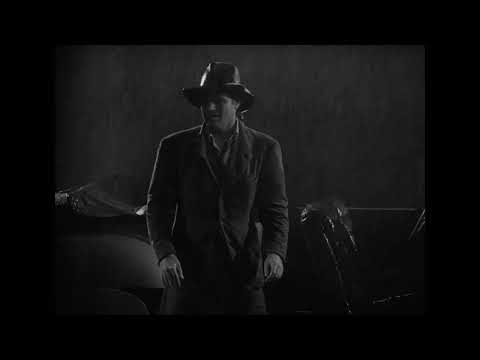
Haskell’s death occurs when Al attempts to awaken him during a rainstorm and the man falls from the car, striking his head. Whether the death is entirely accidental remains secondary to the psychological transformation it produces. Al does not imagine that authorities might believe the truth. He immediately assumes that circumstance has made innocence impossible to prove.
The speed of this conclusion reveals how deeply he distrusts both institutions and his own credibility. He does not seek help, remain with the body, or attempt to create an official record. He hides the corpse, takes Haskell’s identity, money, clothing, and vehicle, then continues westward. Fear of being mistaken for a criminal leads him to perform the actions of one.
The First Lie That Reorganizes Reality
Al’s decision to assume Haskell’s identity is the true beginning of his captivity. Before that moment, he is an innocent man facing a frightening and ambiguous situation. After it, every factual detail becomes evidence against the story he might eventually wish to tell.
The act appears practical from his perspective. He believes police will see a poor hitchhiker beside the body of a wealthier driver and assume robbery. Because he expects injustice, concealment feels like self-preservation. Yet this reasoning converts an uncertain risk into a concrete crime.
The first lie creates an alternative reality that must be maintained through further deception. Al cannot explain possession of Haskell’s car without claiming Haskell’s name, cannot use the car safely while carrying the dead man’s documents, and cannot reveal his own identity without explaining why he concealed the death. Every attempt to protect the lie generates another vulnerability.
This escalation illustrates why deception becomes structurally difficult to reverse. Confession appears increasingly dangerous because it must account not only for the original event but for all subsequent choices. The longer Al continues, the more reasonable continuation feels compared with the consequences of stopping.
His greatest error is therefore not fear itself. Fear is understandable. The error lies in treating his prediction of how others will respond as though it were established fact. He convicts the police, courts, and public of misunderstanding him before giving them the opportunity to examine the evidence, then uses that imagined injustice to justify behavior that makes misunderstanding almost inevitable.
Vera and the Return of the Suppressed Past
When Al later picks up Vera, he believes he is simply offering a ride to another hitchhiker. He does not know that she is the woman whose scratches marked Haskell’s hand, nor that she possesses enough knowledge about the dead man to recognize immediately that Al is an impostor.
Vera’s entrance transforms the film because the hidden past suddenly acquires a voice. Al believed he had removed Haskell’s body from the story, but Vera carries evidence that cannot be buried beside the road. She understands the car, the driver, the destination, and the circumstances surrounding her previous encounter. Her knowledge gives her immediate power.
Ann Savage’s performance is central to the film’s enduring reputation. Vera is abrasive, suspicious, intelligent, cruel, frightened, and relentless, rejecting the seductive elegance associated with many classic noir femmes fatales. She does not manipulate Al through glamour or romantic promise. She dominates him through contempt, psychological pressure, and her ability to see precisely where his story is weakest.
Vera’s arrival demonstrates that suppressed consequence rarely returns in the form anticipated. Al fears the police, yet the person who traps him is another marginal traveler operating beyond institutional protection. He prepared himself to avoid official judgment but remains defenseless against private blackmail.
Vera as the Anti-Romantic Femme Fatale
The classic femme fatale often uses beauty, sexuality, and apparent vulnerability to draw a man toward destruction. Vera differs because she offers almost no romantic fantasy. Her hostility is immediate, her judgment is sharp, and her physical presence appears worn by difficult experience rather than protected by glamour.
This makes her relationship with Al unusually brutal. Neither person idealizes the other. There is no convincing seduction, no dream of shared escape, and no emotional intimacy capable of disguising exploitation. They recognize one another as trapped people and immediately begin competing over who will control the trap.
Vera understands that Al wants to see himself as an innocent victim. She attacks that self-image relentlessly, calling attention to the implausibility of his story and the evidence that could send him to prison. Her cruelty is effective because it speaks directly to fears he already carries.
Yet Vera’s power is not complete. She is also socially vulnerable, financially desperate, and dependent upon Al’s cooperation to transform Haskell’s identity into profit. Her blackmail gives her temporary authority, but that authority exists within a system neither of them can safely expose.
Their relationship therefore becomes a closed economy of mutual threat. Al cannot abandon Vera because she can report him; Vera cannot destroy Al immediately because she needs him to impersonate Haskell. Each person requires the other while resenting the dependency, creating a partnership in which cooperation and hostility become inseparable.
Two People Trapped Inside the Same Lie
Once Vera forces Al to continue pretending to be Haskell, the deception becomes shared. This does not reduce Al’s burden. It changes its structure. He is no longer hiding alone but participating in a relationship where the other person understands the lie better than he does.
Vera’s plan involves exploiting the fact that Haskell’s wealthy father is dying and may leave an inheritance. She imagines that Al can present himself as the absent son and claim the estate. The scheme dramatically expands the original deception, transforming identity theft committed through panic into deliberate financial fraud.
Al resists, but his resistance remains compromised because he cannot leave safely. He presents himself as morally superior to Vera, yet he continues benefiting from Haskell’s car, money, and identity. The difference between them is real, but it is narrower than Al wishes to admit.
Vera understands that complicity weakens moral protest. Every time Al condemns her, she can point toward the actions already connecting him to the same criminal world. He cannot claim complete innocence while continuing the impersonation, and she uses that contradiction to neutralize his judgment.
Their shared lie becomes a room without an exit. Telling the truth would destroy them, continuing the deception requires deeper crime, and separating from one another risks exposure. The psychological claustrophobia is remarkable because much of the film concerns travel, yet the characters become less free with every mile.
The Apartment as a Prison Without Bars
After reaching Los Angeles, Al and Vera rent an apartment while attempting to decide how to use Haskell’s identity. The physical space is ordinary, inexpensive, and minimally furnished, but Ulmer transforms it into one of noir cinema’s most oppressive environments.
The room contains no visible guards, locked cell doors, or official restraints. Al could theoretically walk outside, yet Vera’s knowledge follows him beyond every wall. His imprisonment is informational rather than architectural.
This form of captivity is especially powerful because it depends upon imagination. Al remains trapped by what he believes Vera might do if he leaves. Her threat does not need to be repeated continuously because it has entered his decision-making process.
The apartment also forces prolonged proximity between two people who can no longer tolerate one another. Their conversations become increasingly hostile as boredom, fear, financial frustration, and mutual contempt erode restraint. Without an external routine to organize time, they remain trapped inside the emotional consequences of the lie.
The cheap room gradually resembles an extension of Al’s mind: confined, airless, repetitive, and dominated by the same unresolved problem. The limited production design strengthens the film because emptiness removes distraction. There is nowhere for either character to hide from the other’s presence or from the decisions that brought them there.
The Question of Whether Al Is Telling the Truth
The film’s most provocative interpretation begins with the possibility that Al’s account may conceal greater responsibility than he acknowledges. His narration repeatedly presents deaths as accidents, emphasizes circumstances that make him appear helpless, and omits any independent perspective capable of confirming his version.
Haskell dies when Al attempts to pull him from the car during a storm. Vera later dies during a struggle involving a telephone cord stretched beneath a closed door. In both instances, Al insists that death occurred unintentionally, and in both instances he immediately responds through concealment rather than seeking assistance.
The repetition is difficult to ignore. One accidental death may represent terrible luck, but two deaths accompanied by self-protective narration raise questions about whether Al’s memory has reshaped violence into misfortune. The film never proves that he murdered either person deliberately, yet it leaves enough ambiguity to prevent complete exoneration.
Al’s own language strengthens the doubt because he appears almost preoccupied with persuading the listener that fate is responsible. The greater his insistence, the more the audience may wonder what emotional need the insistence serves.
This ambiguity elevates Detour beyond a simple story of an unlucky man. It becomes a study of narrative as moral defense. The person telling the story controls sequence, emphasis, motive, and explanation, but control of narration cannot guarantee control of judgment.
Fate as an Excuse and an Authentic Force
Al repeatedly describes fate as though it were an intelligent enemy placing traps along his path. He believes some people are destined for prosperity while others are selected for punishment, regardless of intention or effort.
The film partly validates this worldview. Coincidence plays an enormous role in his downfall. Haskell happens to pick him up, happens to die while Al is present, and happens previously to have transported Vera, who later enters the same car. The probability of these events feels so extreme that fate appears to operate as a narrative force.
Yet coincidence alone does not determine Al’s response. Haskell’s death creates danger, but Al chooses concealment. Vera’s recognition creates pressure, but Al repeatedly agrees to continue the deception. Fate presents circumstances; character governs action within them.
The tension between fate and choice gives the film its intellectual weight. Al is neither completely responsible for what happens nor entirely innocent of what follows. He encounters extraordinary misfortune, but his fear, resentment, passivity, and instinct for self-preservation transform misfortune into catastrophe.
The film therefore rejects both comforting extremes. Human beings do not control every event, yet lack of control over events does not eliminate responsibility for responses. Fate may build the roadblock, but the detour remains a path traveled through choices.
The Rope, the Door, and Vera’s Death
Vera’s death is one of the film’s most disturbing sequences because it combines absurd accident, physical separation, and irreversible consequence. During an argument, she locks herself inside the bedroom and threatens to call the police. Al attempts to pull the telephone cord from beneath the door, not realizing that the cord has become wrapped around her neck.
When he finally enters the room, Vera is dead. The scene appears designed to support Al’s claim of accidental killing, yet its mechanical improbability also intensifies the dreamlike quality of his narration. The event is so perfectly aligned with his fatalistic worldview that it can appear less like objective reality than the story a guilty man has constructed.
Whether accepted literally or skeptically, the death completes the pattern through which Al’s defensive actions produce the outcome he fears. He pulls the cord because he wants to prevent exposure, and the attempt to silence communication becomes fatal.
The telephone symbolizes access to the outside world, law, witnesses, and an alternative narrative. Vera’s decision to call the police threatens Al because it would end his control over the story. By pulling the cord, he attempts to keep the situation sealed within their private conflict.
The resulting death therefore carries symbolic precision. The instrument that might have connected them to public truth becomes the weapon through which the last witness is eliminated.
The Woman Who Sees Through Him
Vera’s hostility toward Al may contain more than greed. She appears to recognize something within him that Sue, Haskell, and perhaps Al himself do not fully perceive. She sees his weakness, resentment, self-pity, and dependence upon stories that protect him from responsibility.
Her cruelty strips away his preferred image of himself. Al wants to be understood as a decent man persecuted by extraordinary circumstances, while Vera treats decency as irrelevant once behavior has entered criminal territory. She refuses to grant him the moral distinction he continually grants himself.
This may explain the intensity of his resentment toward her. Vera does not merely threaten his freedom. She threatens the identity he needs in order to survive psychologically. Her presence makes self-deception more difficult because she constantly names the gap between his narration and his actions.
At the same time, Vera may recognize him because she shares aspects of the same condition. She also lives defensively, assumes exploitation before trust, and interprets every relationship through leverage. Both characters have learned to anticipate betrayal, though they express that expectation differently.
Their conflict therefore contains distorted recognition. Each sees the other’s corruption more clearly than his or her own, making their hostility partly an attempt to destroy an unwanted reflection.
Masculinity Without Control
Al’s crisis also exposes the fragility of a masculine identity built around the appearance of competence. He wants to see himself as protector, lover, provider, and rational decision-maker, yet the journey repeatedly places him in situations where he lacks control.
Sue leaves according to her own ambition, Haskell’s death forces an impossible decision, Vera dominates him psychologically, and institutional fear prevents him from seeking help. His self-image depends upon agency, but his narration depends upon claiming agency was unavailable.
This contradiction produces shame. Al cannot admit helplessness without feeling diminished, yet he cannot accept responsibility without feeling condemned. Fatalism offers a solution by allowing him to remain both powerless and morally intact.
Vera attacks this solution by treating him as weak rather than tragic. Her contempt is emasculating because she refuses to admire the suffering through which he defines himself. She sees a man who made cowardly choices and now wants sympathy for their consequences.
The film therefore presents masculinity not through heroic action but through the collapse of heroic self-understanding. Al’s journey west was meant to restore romantic and personal purpose. Instead, it reveals how little internal stability exists beneath his image of the decent ordinary man.
Love as the Road Not Taken
Sue remains the emotional destination of the journey, yet the film gradually makes reunion impossible. The closer Al travels geographically, the farther he moves morally from the person he intended to reach.
After Haskell’s death, he could still theoretically tell the truth and accept uncertain consequences. After assuming the dead man’s identity, concealing the body, submitting to Vera’s blackmail, and becoming connected to a second death, the life he hoped to resume with Sue becomes inaccessible.
This creates the title’s deepest meaning. The detour is not a temporary road around an obstacle before returning to the original route. It becomes the route itself. Al’s decisions do not delay the future he wanted; they destroy the person capable of entering it.
Sue consequently becomes less a character than a symbol of an unrealized life. She represents love, artistic aspiration, California possibility, and the belief that arrival might repair dissatisfaction. Al never reaches that future because he continues choosing immediate concealment over long-term truth.
The tragedy is not simply that fate keeps him from Sue. It is that fear transforms him into someone who can no longer approach her honestly.
Edgar G. Ulmer and Art Created Through Restriction
Edgar G. Ulmer worked for much of his American career within low-budget production systems, often directing films with extremely limited schedules and resources. Detour demonstrates how those limitations could become aesthetic advantages when aligned with the story’s psychological needs.
The production reportedly used only seven principal actors, six sparsely furnished interior sets, and one significant outdoor desert location. New York is suggested through fog, music, and a streetlamp rather than recreated expansively, while Los Angeles is represented through a small number of commercial spaces. Instead of weakening the film, this compression makes Al’s world feel unstable, artificial, and increasingly disconnected from ordinary geography. (Turner Classic Movies)
Ulmer does not attempt to disguise every limitation through excessive visual activity. He embraces darkness, fog, rear projection, sparse décor, and abrupt transitions, allowing the film to resemble a memory deteriorating under pressure. Locations appear less as fully inhabited environments than as fragments selected by Al’s guilty consciousness.
The result gives Detour the quality of a nightmare reconstructed after waking. The viewer understands where events occur, yet the spaces never feel sufficiently stable to offer security. Every diner, road, motel, and apartment appears temporary, as though reality itself has become another vehicle Al cannot safely possess.
Poverty Row and the Freedom of Concentration
Producers Releasing Corporation belonged to the group of low-budget Hollywood companies commonly associated with “Poverty Row.” These studios generally lacked the financial power, star rosters, and distribution reach of major companies, producing films quickly for the lower half of double bills and regional exhibition. Detour emerged from that industrial environment but eventually transcended its original commercial status. (Wikipedia)
Low budgets impose obvious restrictions, yet they can also remove certain forms of institutional pressure. A small production may be forced to eliminate subplots, spectacle, decorative characters, and expensive diversions, leaving only the central mechanism of the story.
In Detour, that concentration becomes extraordinary. Nearly everything serves Al’s descent: Sue’s departure, Haskell’s death, Vera’s recognition, the apartment conflict, and the second fatality. The film has little room for emotional recovery, comedy, or secondary investigation because its short running time continually drives the protagonist deeper into consequence.
The production’s material poverty therefore produces thematic severity. The world feels depleted because the film itself possesses almost nothing unnecessary.
Tom Neal and the Face of Defeated Innocence
Tom Neal’s performance gives Al a combination of sincerity and weakness essential to the film’s ambiguity. He appears capable of kindness, emotional attachment, and genuine fear, yet his face often carries resentment before any major tragedy has occurred.
This mixture prevents the audience from classifying him comfortably. A more conventionally heroic performer might make Al’s innocence seem unquestionable, while a visibly sinister actor would make skepticism too easy. Neal occupies the unstable middle ground of an ordinary man whose decency may be genuine but insufficiently strong.
His physical passivity is especially important in scenes with Vera. Ann Savage dominates through vocal force and aggressive movement, while Neal often appears to retreat, hesitate, and absorb attack before responding. The imbalance makes Al look victimized, yet it also reveals his unwillingness to act decisively until circumstances have become irreversible.
The performance reflects the film’s central question: can weakness become morally dangerous even when it does not begin with malicious intent? Al may not desire anyone’s death, but his refusal to confront truth directly creates the conditions in which death repeatedly enters.
Ann Savage and Rage Without Seduction
Ann Savage’s Vera has become one of film noir’s most memorable women because she rejects nearly every expectation attached to the glamorous femme fatale. Her clothing, posture, voice, facial expressions, and emotional volatility communicate exhaustion and aggression rather than carefully controlled seduction.
She speaks as though every interaction is already a conflict because experience has taught her that vulnerability invites exploitation. Her harshness functions as armor, yet armor worn continuously eventually shapes the person beneath it.
Vera’s rage also challenges the audience’s desire for a sympathetic victim. She is endangered, economically unstable, and operating within a world offering women limited security, yet she uses her vulnerability to justify cruelty and blackmail. The film neither idealizes nor simplifies her.
Her power comes from knowledge, but knowledge cannot create safety because it depends upon Al remaining controllable. Once desperation increases, the information connecting them becomes as dangerous to her as it is to him.
Vera therefore embodies another version of fatalism. She does not believe goodness will protect her, trust will be rewarded, or opportunity will arrive without exploitation. She acts as though life is already predatory, then ensures that every relationship confirms that belief.
Noir Without Glamour
Many celebrated noir films involve wealthy criminals, elegant nightclubs, expensive apartments, polished detectives, and seductive danger. Detour strips away that glamour, leaving behind hitchhikers, cheap rooms, used cars, roadside diners, limited money, and people whose desperation has no sophisticated disguise.
This poverty makes the film’s moral world feel especially harsh. Al and Vera cannot retreat into wealth, social influence, or professional protection. Their options are narrow because their economic position is narrow.
The car appears valuable because neither person possesses stable security. Haskell’s possible inheritance appears irresistible because ordinary advancement seems unavailable. Crime grows not from extravagant appetite alone but from the belief that legitimate opportunity has already failed.
The film’s bleakness therefore arises partly from class. People with money may recover from mistakes through attorneys, transportation, privacy, and institutional credibility. Al assumes, perhaps correctly, that a poor hitchhiker found beside a dead man will not receive the benefit of interpretive generosity.
Yet class vulnerability does not erase agency. The film recognizes structural fear while continuing to examine the choices produced within it. This balance prevents the story from becoming either a simple morality tale or a complete absolution of its protagonist.
The Police Car at the End of the Road
At the conclusion, Al imagines that the police will eventually find him. He walks along the road while a patrol car approaches, and his voice-over reflects upon the impossibility of escaping fate forever.
The ending does not provide a conventional arrest scene, courtroom, confession, or final judgment. Instead, it leaves Al suspended in the expectation of capture, as though punishment has become another future event he has already accepted as completed.
This mirrors the structure of his entire story. He repeatedly acts according to predicted consequences before those consequences actually occur. He hid Haskell’s body because he expected conviction; he remained with Vera because he expected exposure; he now surrenders psychologically because he expects the police to arrive.
The patrol car may represent institutional justice, but it also represents the completion of Al’s internal narrative. From the beginning, he has believed that some force will eventually select him for destruction. The approaching authority confirms the identity he has carried throughout the film: the doomed man for whom every road leads toward punishment.
Whether this fate was imposed or constructed remains unresolved.
The National Film Registry and the Resurrection of a B-Picture
Although Detour originated as an inexpensive Poverty Row production, its critical reputation grew enormously in later decades. The Library of Congress selected it for the National Film Registry in 1992, recognizing its cultural, historical, or aesthetic importance. The Library has since described it as one of the most memorable and hard-hitting road nightmares in American cinema, while preservation efforts have restored visual detail previously obscured in poor public-domain prints. (Library of Congress Blogs)
This afterlife demonstrates that cinematic value cannot be predicted reliably through production cost or initial prestige. Many expensive studio films from the same period have faded from cultural memory, while Ulmer’s compressed nightmare continues attracting viewers, critics, filmmakers, and scholars.
Its survival results from conceptual strength. The central situation is immediately compelling, the performances remain unforgettable, and the film’s ambiguity invites reinterpretation. Each viewing can shift the balance between sympathy and suspicion, fate and responsibility, accident and confession.
The restoration of Detour also carries symbolic significance because the film itself concerns a man attempting to recover a past obscured by fear and self-deception. Preservation does for the movie what Al cannot do for his life: it returns damaged evidence to greater clarity.
Why the Film Still Feels Dangerous
Detour remains disturbing because it does not depend upon a criminal mastermind, elaborate conspiracy, or supernatural force. Its catastrophe develops from ordinary human vulnerabilities: loneliness, resentment, fear of authority, desire for love, economic insecurity, and the instinct to avoid immediate consequence.
Most viewers can imagine making at least one of Al’s mistakes. A frightened person may conceal evidence temporarily, tell a partial truth, accept an identity that offers protection, remain beside a threatening person, or postpone confession while hoping circumstances improve. The horror arises because each understandable decision narrows the path toward repair.
The film also recognizes how quickly a person can become attached to the story that excuses him. Once Al interprets himself as fate’s victim, every new event confirms the same conclusion. He no longer asks what action would be truthful or courageous; he asks what action might preserve him from the punishment he assumes is already waiting.
This mental shift is dangerous because self-pity can imitate innocence. Feeling persecuted may become so emotionally persuasive that responsibility appears like another form of unjust accusation.
The Road as a Chain of Avoided Truths
The title Detour suggests temporary deviation, but Al’s journey reveals that some detours become permanent because the traveler repeatedly refuses the difficult route back. Truth remains available at several points, yet each return would require greater courage than the previous one.
He could report Haskell’s death immediately.
He could surrender the stolen identity before meeting Vera.
He could seek police protection after Vera begins blackmailing him.
He could refuse the inheritance scheme.
He could allow Vera to make the telephone call and tell his story within an official setting.
At every point, he chooses the action that delays immediate danger while increasing long-term consequence. The pattern demonstrates that catastrophe often develops not through one enormous mistake but through a sequence of smaller avoidances.
The road to destruction is therefore built from temporary solutions.
The Difference Between Innocence and Responsibility
Al may be innocent of intentional murder, yet innocence alone does not describe his moral condition. A person can lack malicious intent while remaining responsible for concealment, theft, impersonation, cowardice, and the harm created by defensive choices.
This distinction is central to the film’s sophistication. Al wants judgment to depend entirely upon whether he deliberately killed Haskell or Vera. If both deaths were accidental, he believes the rest of his behavior should be interpreted sympathetically.
Yet moral responsibility extends beyond intention. It includes the risks one creates, truths one hides, identities one steals, and opportunities one refuses to take when repair remains possible.
The audience may pity Al without absolving him. Pity recognizes fear and vulnerability; judgment recognizes consequence. The film becomes powerful because it refuses to force a choice between them.
A Nightmare About the Story We Tell Ourselves
The greatest trap in Detour is not the highway, Vera’s blackmail, Haskell’s identity, or the approaching police car. It is the story Al tells about himself. He believes he is a decent man upon whom fate has imposed an impossible sequence of events, and this belief protects him from confronting how repeatedly he participates in the sequence.
His narration turns action into reaction, choice into necessity, and responsibility into bad luck. Every new event appears to happen to him, even when it follows directly from something he has done.
This does not mean fate is absent. Coincidence is real, institutions can be unjust, poverty limits options, and innocent people sometimes become trapped by appearances. The film’s cruelty lies in combining those realities with a protagonist whose weaknesses make the trap more effective.
Al may have been unlucky, but luck alone did not hide the body.
Luck did not assume the dead man’s identity.
Luck did not continue the fraud.
Luck did not pull the telephone cord.
The narrative he creates cannot erase those actions, even when it makes them emotionally understandable.
The Final Destination of Self-Deception
By the end of Detour, Al has lost Sue, his name, his freedom, his moral certainty, and any believable route toward the future he once imagined. He remains physically alive, yet his life has become a waiting room for judgment.
The tragedy began because he wanted to cross the country and recover love. It ends because every attempt to protect that future makes the future less accessible. He travels thousands of miles toward Sue while psychologically moving into isolation.
His story therefore becomes a devastating warning about the difference between escaping consequence and surviving it. Al avoids immediate arrest after Haskell’s death, but the avoidance creates Vera. He avoids Vera’s call to the police, but the avoidance creates another death. He escapes each moment temporarily while constructing a permanent condition from which escape becomes impossible.
Detour endures because it understands that fate is most terrifying when it collaborates with character. The world may place danger in our path, but the habits we carry into danger determine what that encounter becomes. Fear may protect us briefly, yet fear allowed to govern every decision eventually creates the future it was meant to prevent.
Al Roberts believes he was traveling west toward love when fate forced him onto another road. The film leaves us with a more unsettling possibility: the detour may not have begun when Haskell died. It may have begun much earlier, when Al decided that life was something happening against him rather than something requiring difficult, accountable choices.
That is why Detour remains one of film noir’s most concentrated and enduring nightmares. It does not merely show a man destroyed by bad luck. It shows how quickly bad luck becomes destiny when self-deception takes the wheel.
