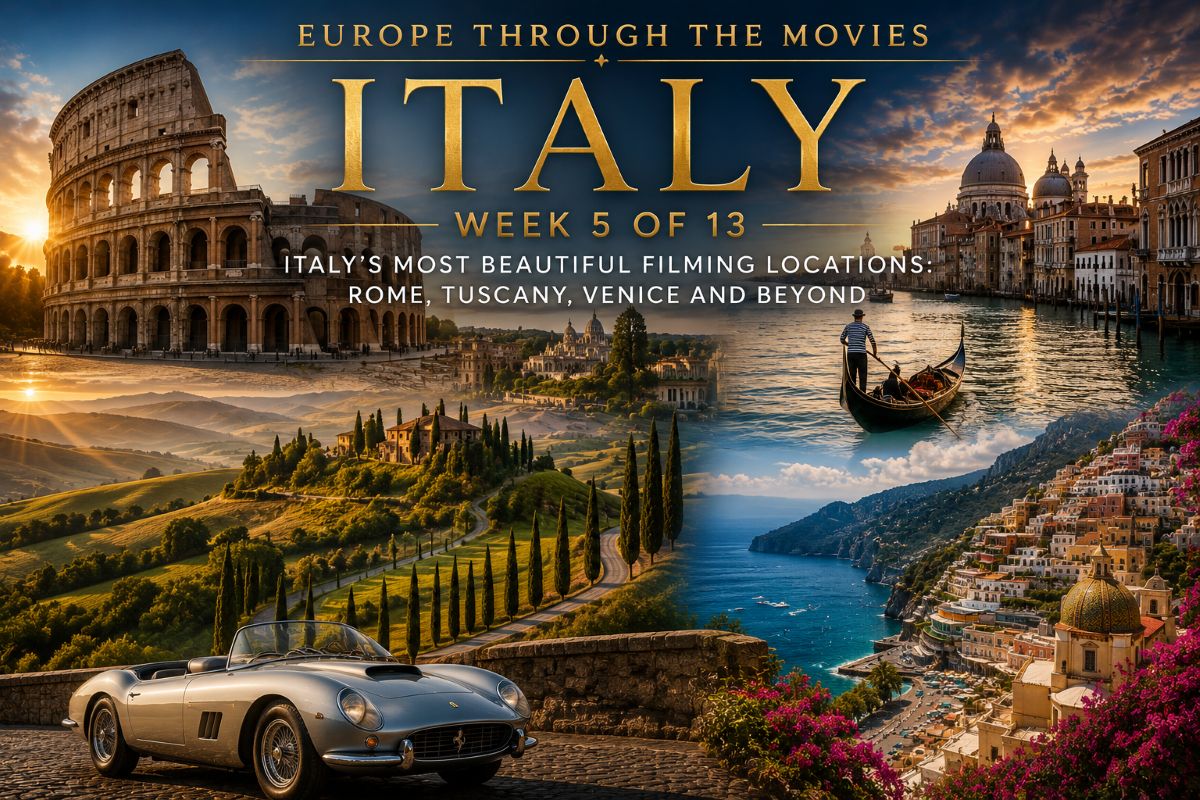
Italy presents filmmakers with a problem that few other countries in the world can create: how do you photograph a place that has already been transformed into mythology without merely repeating images audiences have seen a thousand times before? The most iconic filming locations in Italy, from the villages of Sicily associated with The Godfather and the monumental historical imagination of Rome behind films such as Gladiator, to the villas of Lake Como seen in Casino Royale, the labyrinthine waterways of Venice and the ancient stone city of Matera used spectacularly in No Time to Die, arrive before the camera carrying centuries of accumulated meaning, which means that filmmakers cannot simply use them as attractive backgrounds without confronting everything those places already represent. Italy is simultaneously ancient Rome, Renaissance magnificence, Catholic ritual, Mediterranean sensuality, aristocratic elegance, agricultural continuity, family inheritance and the visible decay of civilizations that once imagined themselves permanent, and its greatest screen appearances succeed because directors understand that these contradictions are more interesting than beauty alone. The camera may select the frame, but Italy has already filled it with history.
That historical density explains why famous movie locations in Italy so often become active forces within the stories filmed there rather than interchangeable European scenery, because the emotional meaning of Sicily in The Godfather cannot simply be transferred to another picturesque Mediterranean island, just as Venice contributes something to Casino Royale that no conventionally beautiful city could reproduce, while Matera gives the opening of No Time to Die a relationship with time, mortality and physical vulnerability that a modern location would fundamentally alter. Italy’s cinematic geography is built upon powerful oppositions: Rome makes human ambition appear temporary against monuments that have survived empires; Tuscany turns cultivated land into a fantasy of escape from modern acceleration; Sicily transforms ancestry into something almost physically present in the landscape; Lake Como makes privilege appear architectural rather than merely financial; Venice combines extraordinary beauty with the permanent possibility of disappearance; and Matera confronts contemporary characters with a city whose inhabited history reaches so far backward that even the mythology of James Bond seems momentary by comparison. These are not simply Italian filming locations you can visit, but environments whose physical histories change the psychological meaning of the stories placed inside them.
Following Italy’s most iconic movie locations, therefore, becomes a journey into the unusually intimate relationship between cinema, geography and memory, beginning in the Sicilian villages where Francis Ford Coppola located Michael Corleone’s encounter with the origins of his family identity, moving through Rome and Tuscany to examine the opposing worlds of imperial power and private belonging that have shaped cinematic ideas of Italy, entering Lake Como and Venice where luxury becomes inseparable from secrecy and vulnerability, and finally reaching Matera, whose ancient stone geography allowed modern action cinema to collide spectacularly with deep historical time. What emerges is not another itinerary of places where famous actors once stood, but an explanation of why filmmakers repeatedly return to Italy when they need locations capable of carrying meanings too complicated to construct from scenery alone, and why travelling to those places after encountering them on screen often produces the most fascinating reversal of all: the realization that cinema did not make them extraordinary, but borrowed a fraction of what was already there.

Unlock the Entire Empowering Entertainment Library
This article is only the beginning.
Become a member and enjoy unlimited access to every premium magazine article, expert interviews, in-depth features, practical guides, and a growing digital library of hundreds of books covering business, entrepreneurship, film production, personal growth, health, relationships, AI, ADHD, and much more.
One membership. Hundreds of resources. New content added every week.