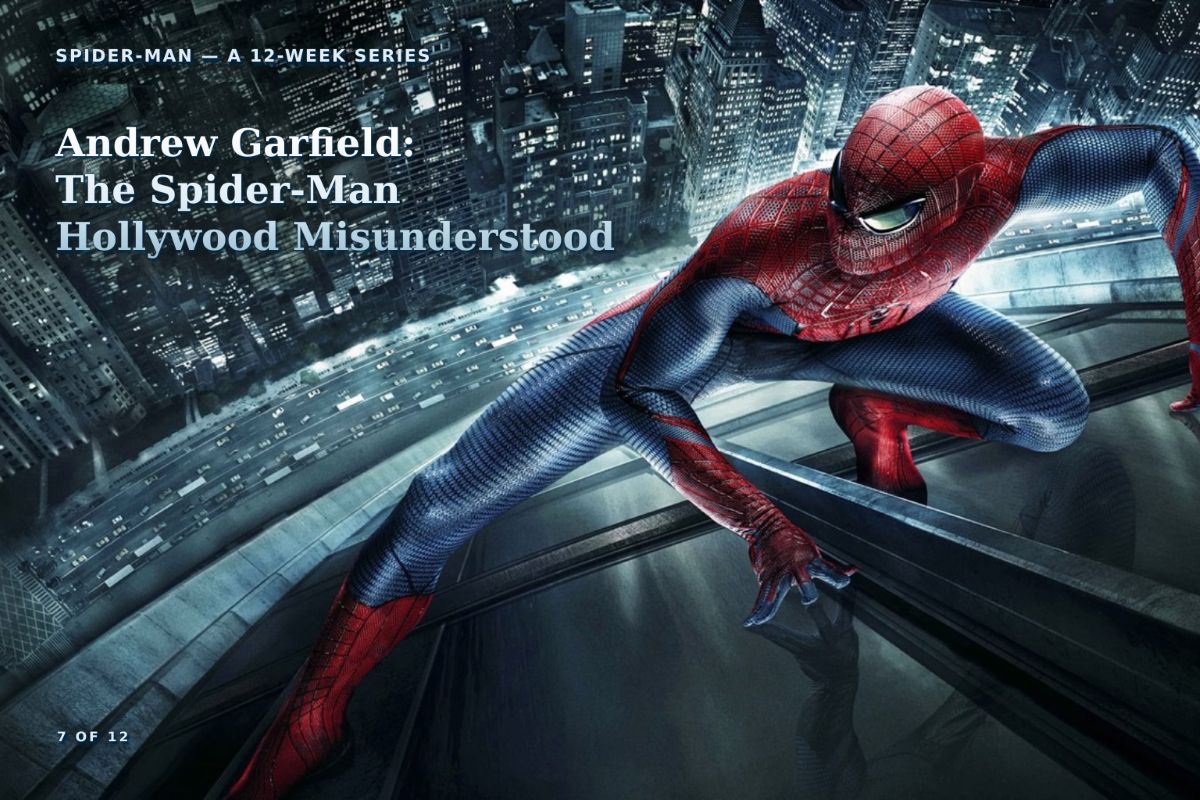
When Andrew Garfield first appeared as Peter Parker in Marc Webb’s The Amazing Spider-Man in 2012, he inherited a role that audiences had not been given enough time to miss. Only five years had passed since Tobey Maguire’s final performance in Spider-Man 3, and Sony’s decision to reboot the franchise after the cancellation of Sam Raimi’s proposed fourth film created an almost impossible cultural assignment. Garfield was expected to establish a new Spider-Man identity while repeating an origin story still vividly remembered, differentiate himself from Maguire without appearing to reject him and justify the rapid reconstruction of a franchise whose previous incarnation had generated enormous emotional loyalty. The Amazing Spider-Man earned approximately $758 million worldwide and successfully launched a new series, yet its central performance was frequently assessed through comparison rather than examined on its own psychological terms.
Andrew Garfield’s Peter Parker was not simply a more fashionable, athletic or romantically confident variation on the adolescent outsider created by Stan Lee and Steve Ditko. His performance was organized around a different form of alienation. Tobey Maguire’s Peter often internalized humiliation until it became sorrow, whereas Garfield’s Peter converted abandonment into restless movement, defensive humor and flashes of anger that made his intelligence feel socially dangerous rather than merely studious. The skateboard, camera and contemporary clothing did not automatically make him a popular young man; they gave him a visible style through which he could manage the deeper instability created by his parents’ disappearance. Garfield’s Peter was less an invisible outsider longing to be admitted into the social world than a wounded observer who distrusted the world’s ability to remain present after admitting him.
Reconsidering Andrew Garfield’s Spider-Man requires looking beyond the question of whether the 2012 reboot arrived too soon and examining the performance hidden inside the franchise strategy surrounding it. This article explores how Garfield used physicality to distinguish Peter Parker from Spider-Man, why his chemistry with Emma Stone’s Gwen Stacy created the most emotionally equal romance in the live-action Spider-Man films, how Martin Sheen’s Uncle Ben represented an imperfect but deeply human form of fatherhood and why the film’s mystery surrounding Richard Parker simultaneously enriched and distorted Peter’s search for identity. It also considers how a gifted actor became trapped inside a cinematic universe being designed faster than it was being emotionally understood—and why his return in Spider-Man: No Way Home allowed audiences to recognize the wounded, compassionate hero who had been present from the beginning.

Unlock the Entire Empowering Entertainment Library
This article is only the beginning.
Become a member and enjoy unlimited access to every premium magazine article, expert interviews, in-depth features, practical guides, and a growing digital library of hundreds of books covering business, entrepreneurship, film production, personal growth, health, relationships, AI, ADHD, and much more.
One membership. Hundreds of resources. New content added every week.