
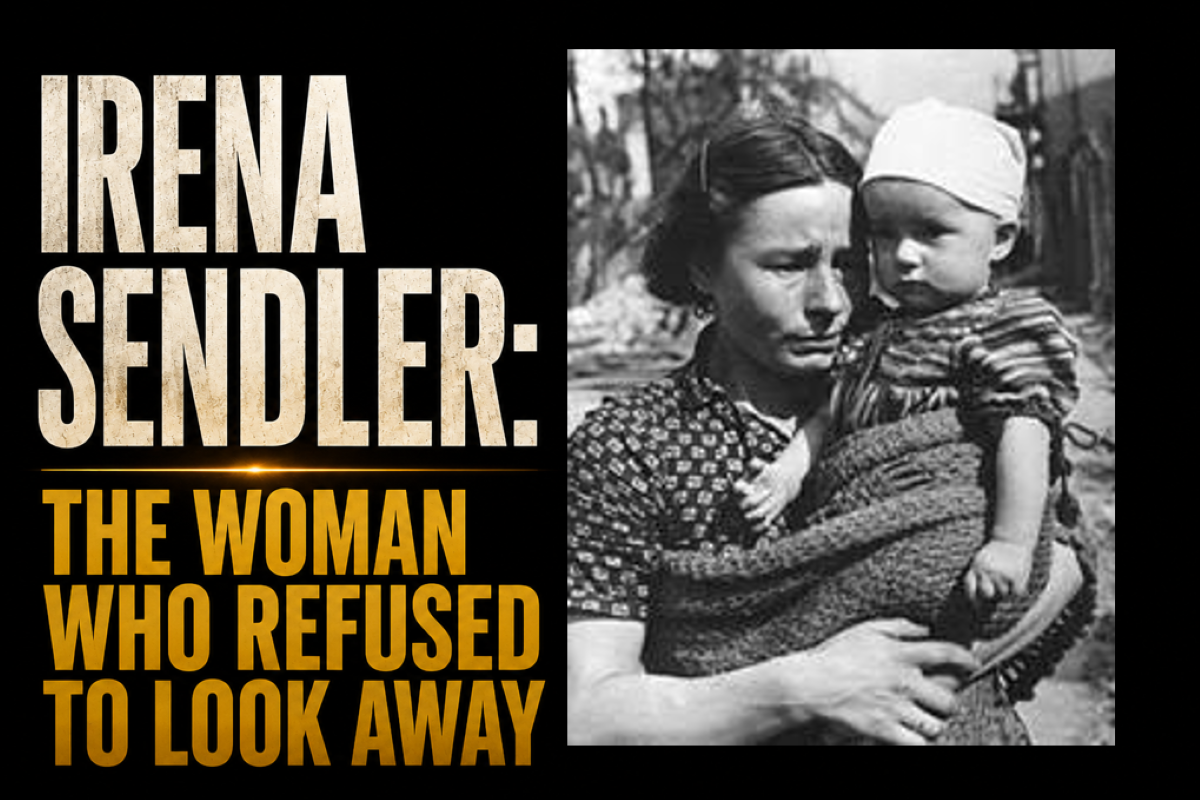
Irena Sendler was a Polish social worker and resistance activist who became one of the most remarkable figures associated with the rescue of Jewish children from the Warsaw Ghetto during the Holocaust. Working with a clandestine network and later with Żegota, the Council for Aid to Jews, Sendler helped provide Jewish children with routes out of the ghetto, false identities and places of refuge. Arrested by the Gestapo in 1943, tortured and sentenced to death, she refused to betray her collaborators and survived after the underground arranged her escape. Her extraordinary story is now at the heart of Irena’s Children, a forthcoming historical drama with two-time Academy Award-nominated and Palme d’Or-winning filmmaker Roland Joffé attached to direct.
Yet understanding Irena Sendler requires looking beyond the mythology that inevitably grows around extraordinary historical figures. She did not act alone, she could not know that she would survive, and the rescue operation depended upon a network of people prepared to accept extraordinary risks. What makes her story so powerful is not that she possessed some superhuman absence of fear, but that she continued to act in circumstances in which fear was entirely rational. To understand the woman behind Irena’s Children, we must return to the world that formed her, the occupation that transformed her life, and the moment when helping another human being became an act punishable by death.

Unlock the Entire Empowering Entertainment Library
This article is only the beginning.
Become a member and enjoy unlimited access to every premium magazine article, expert interviews, in-depth features, practical guides, and a growing digital library of hundreds of books covering business, entrepreneurship, film production, personal growth, health, relationships, AI, ADHD, and much more.
One membership. Hundreds of resources. New content added every week.