
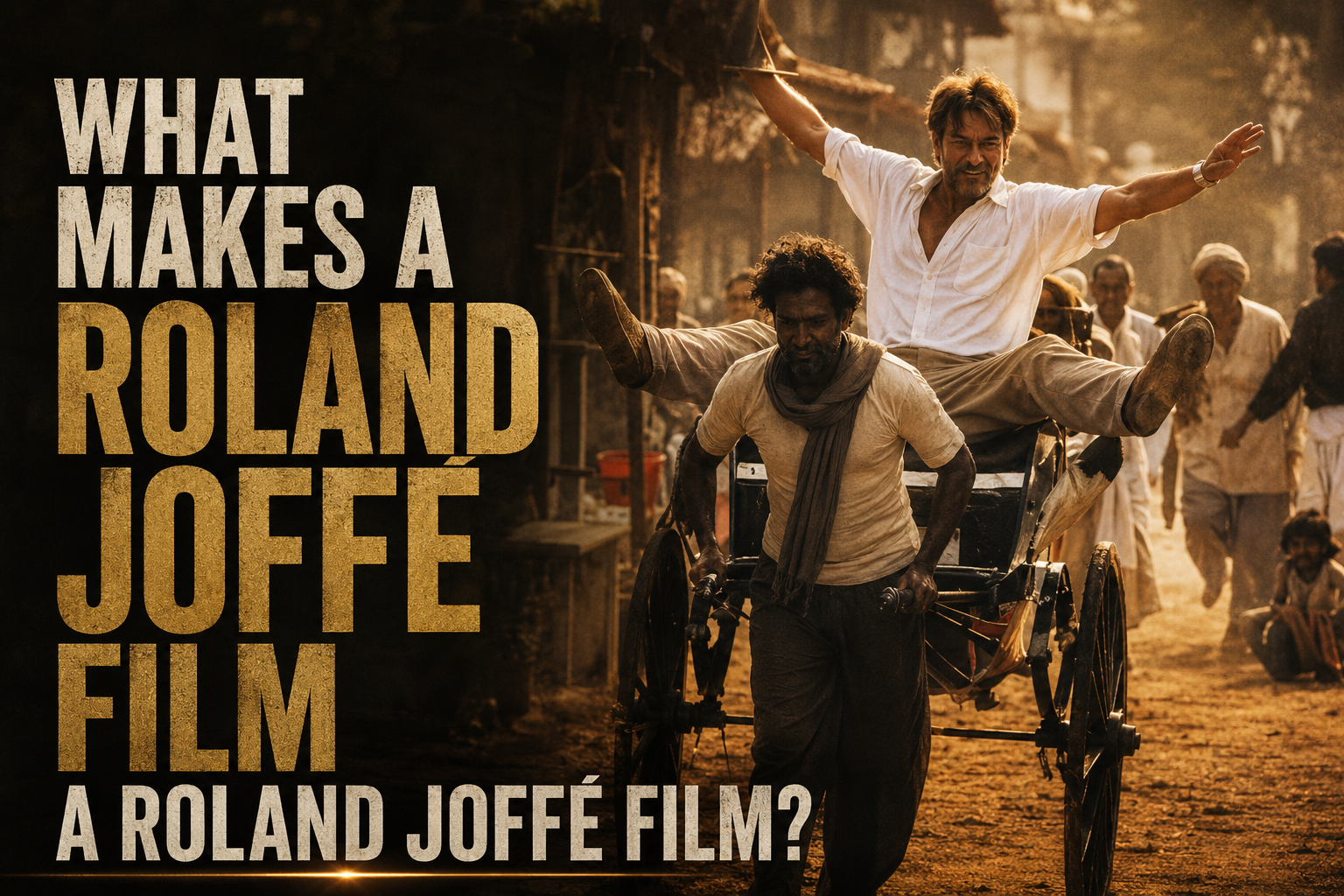
What defines a Roland Joffé film? From the Oscar-winning world of The Killing Fields and the Palme d’Or-winning The Mission to City of Joy, Fat Man and Little Boy and Vatel, Joffé has repeatedly been drawn to stories in which enormous historical forces collide with intimate human lives. The two-time Academy Award-nominated director has explored war, genocide, colonialism, faith, poverty, scientific responsibility and political power, yet beneath those dramatically different subjects lies a remarkably consistent fascination: what happens to ordinary human beings when conscience demands that they stand against forces far more powerful than themselves?
That question may offer the clearest explanation for Joffé’s attachment to Irena’s Children, the forthcoming historical drama based on the extraordinary true story of Irena Sendler and the clandestine network that helped rescue Jewish children from the Warsaw Ghetto. On the surface, Nazi-occupied Poland represents another historical world entirely. Cinematically, however, Sendler's story contains many of the elements that have defined Joffé's most celebrated work: history experienced through individuals, impossible moral decisions, the collision between institutional power and personal conscience, and the extraordinary things human beings become capable of when doing nothing is no longer morally acceptable.
Looking across more than four decades of filmmaking, a distinctive Roland Joffé cinematic language begins to emerge. Understanding that language may also tell us something important about the film he is preparing to make next.

Unlock the Entire Empowering Entertainment Library
This article is only the beginning.
Become a member and enjoy unlimited access to every premium magazine article, expert interviews, in-depth features, practical guides, and a growing digital library of hundreds of books covering business, entrepreneurship, film production, personal growth, health, relationships, AI, ADHD, and much more.
One membership. Hundreds of resources. New content added every week.