

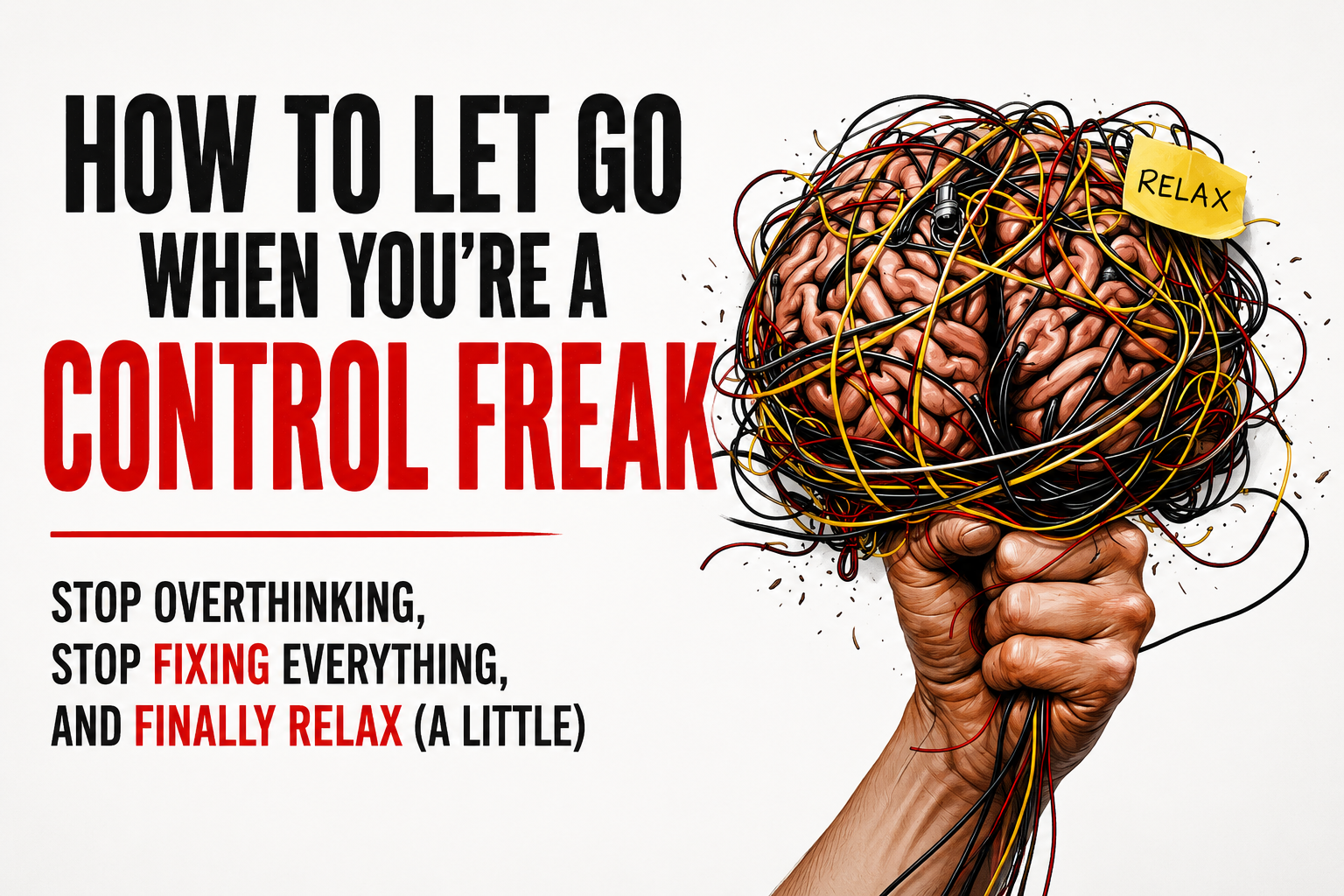
The Exhausting Psychological Cost of Overthinking, Hyper-Responsibility, Emotional Control, and the Inability to Fully Relax
There is a particular form of exhaustion that does not necessarily come from physical overwork, dramatic crisis, or visible instability, but instead develops quietly through years of sustained mental vigilance, emotional management, anticipatory thinking, and the relentless internal pressure to remain one step ahead of everything that could potentially go wrong. It is the exhaustion experienced by individuals who appear highly capable from the outside, who function well professionally, manage responsibilities efficiently, anticipate problems before they happen, and often become the reliable person everyone else depends upon, while internally carrying a nervous system that rarely, if ever, fully powers down.
For many people living inside this pattern, rest itself becomes strangely inaccessible. Even during moments of external calm, the mind continues scanning, rehearsing, calculating, preparing, analyzing, organizing, fixing, predicting, and mentally managing variables that may never actually occur. The body remains subtly tense. The shoulders rarely soften completely. Relaxation feels temporary rather than natural. Stillness often creates discomfort instead of peace because the nervous system has become conditioned to associate vigilance with safety and control with emotional survival.
What makes this dynamic particularly deceptive is that it is frequently rewarded socially. High-functioning overthinkers are often perceived as responsible, dependable, productive, organized, intelligent, proactive, and emotionally strong. They are the individuals who remember everything, anticipate needs, solve problems quickly, and carry invisible mental labor that frequently goes unnoticed by others because it happens internally long before any external action occurs. Yet beneath this apparent competence, many live with chronic mental overstimulation, emotional fatigue, decision exhaustion, sleep disruption, perfectionism, and a persistent inability to feel psychologically settled.
Over time, this pattern begins affecting nearly every dimension of life, including relationships, physical health, emotional regulation, communication, self-worth, and the capacity to experience genuine peace without immediately searching for the next issue requiring management.
One of the most important psychological realities underlying this behavior is that control is rarely about preference alone. More often, control develops as an adaptive strategy designed to reduce uncertainty, vulnerability, unpredictability, emotional exposure, disappointment, or fear. For many individuals, overthinking does not feel irrational internally because the mind has learned to equate constant preparation with protection. The nervous system therefore begins treating hypervigilance as responsibility and mental over-functioning as evidence of competence and safety.
This is why telling chronic overthinkers to “just relax” is almost never effective. The issue is not intellectual understanding. Most individuals trapped inside control patterns are already aware that their thinking is excessive, exhausting, and emotionally unsustainable. The problem is that the nervous system experiences letting go as psychologically unsafe, even when the individual consciously desires relief.
In many cases, overthinking disguises itself so convincingly as productivity and responsibility that individuals fail to recognize how much emotional energy is being consumed simply maintaining internal control systems. Endless mental rehearsing, excessive planning, constant checking, overexplaining, decision analysis, emotional monitoring, and anticipatory thinking all create the illusion of preparedness while quietly draining enormous amounts of cognitive and emotional capacity. The individual often feels tired even during periods where little external activity occurred because the exhaustion originates neurologically rather than physically.
This internal pressure becomes especially destructive inside relationships. High-control individuals frequently assume disproportionate emotional responsibility for communication, outcomes, harmony, problem-solving, and future stability. They may overanalyze conversations, attempt to prevent conflict preemptively, explain themselves excessively to avoid misunderstanding, or unconsciously take ownership over situations that do not fully belong to them emotionally. Over time, this creates relational imbalance because the individual remains psychologically “on duty” even in spaces that should feel emotionally safe.
One of the most frustrating consequences of chronic control patterns is decision paralysis. Ironically, individuals who constantly seek certainty often become trapped by over-analysis itself because every possible outcome, mistake, interpretation, or consequence is mentally processed simultaneously before action occurs. The mind attempts to eliminate uncertainty completely before movement becomes permissible, which creates enormous internal friction around even relatively small decisions.
This is why sustainable healing rarely occurs through dramatic personality change or unrealistic detachment. Most high-functioning overthinkers do not need to become careless, passive, emotionally disconnected, or irresponsible in order to experience peace. What they require instead is a gradual recalibration of their relationship to uncertainty, emotional safety, and nervous system regulation.
The process is not about abandoning control entirely.
It is about loosening the grip enough for life to stop feeling like a constant management operation.
This distinction matters enormously because individuals trapped in chronic control patterns often fear that reducing vigilance will immediately create chaos, failure, irresponsibility, or vulnerability. Yet paradoxically, many discover that excessive control itself has become one of the primary sources of emotional depletion, relational tension, and psychological burnout in their lives.
Small behavioral shifts therefore become extraordinarily powerful. Allowing delayed responses without catastrophizing, resisting the urge to overexplain, tolerating incomplete certainty, permitting others to solve their own problems, reducing compulsive mental rehearsing, and learning to pause before automatically taking responsibility all begin teaching the nervous system that safety can exist without constant psychological tightening.
Over time, this creates something many overthinkers have rarely experienced consistently: internal spaciousness.
The realization that peace does not come from controlling every possible variable, but from reducing the amount of pressure the mind continuously places upon itself in order to feel temporarily secure.
Because ultimately, many high-functioning individuals do not actually need more control in order to feel safe.
They need permission to stop carrying the impossible responsibility of controlling everything in the first place.
READ MORE HERE
